Wearing a tuxedo on television: lights, cameras, microphones
Choosing a tuxedo for TV: avoid small patterns that shimmer on camera, why pure black can lose detail, where the microphone goes, and how to sit in the chair.
Editor: Mon Amie · Published · about 4 min read
In this article
Studio lights and cameras read cloth differently from the human eye. A tuxedo that looks superb in the room can shimmer, lose its detail or crease visibly on screen. So when you are invited onto a programme, pick a plain, deep colour such as midnight blue or a textured black, a cut that still fits when you are seated, and tell the crew in advance so they can wire you neatly. These notes come from the tailor's side of the camera.
Avoid small patterns that interfere with the picture
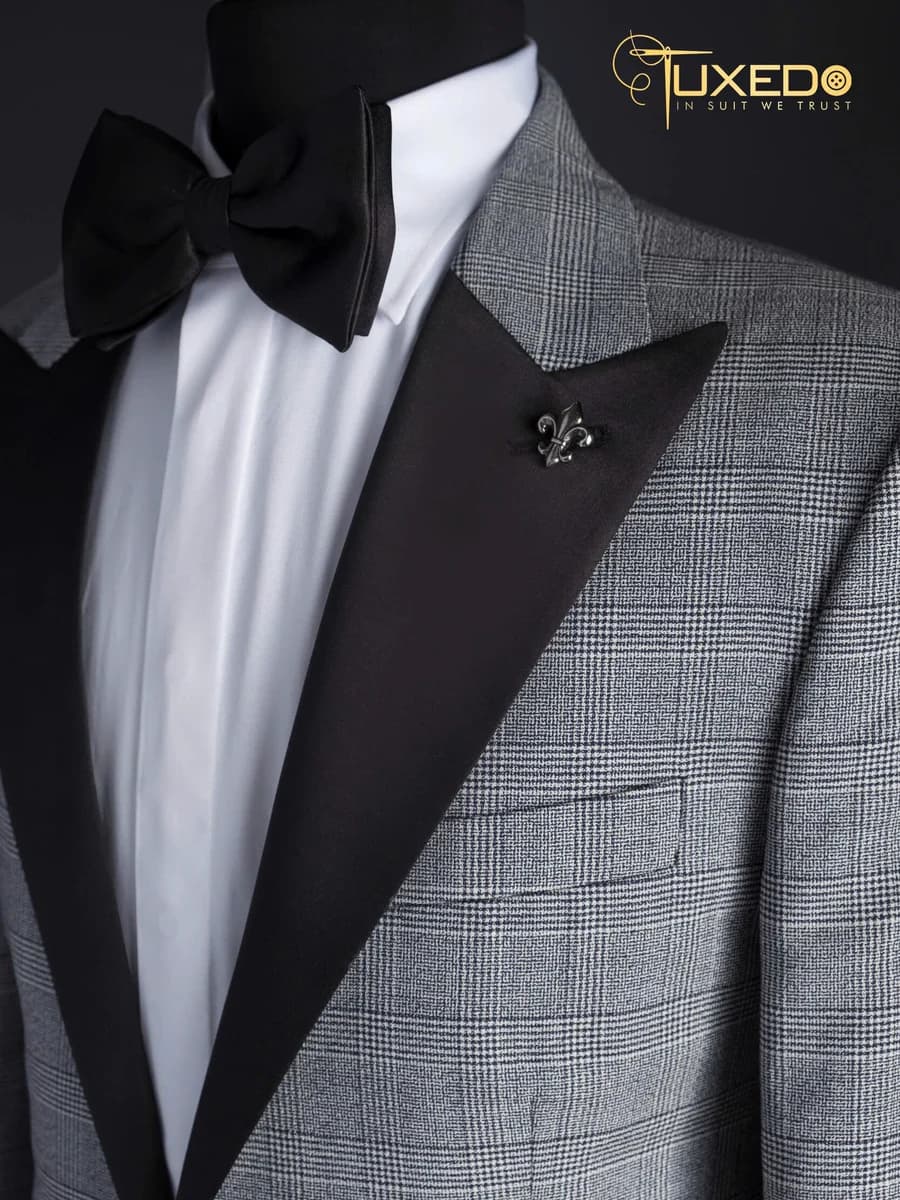
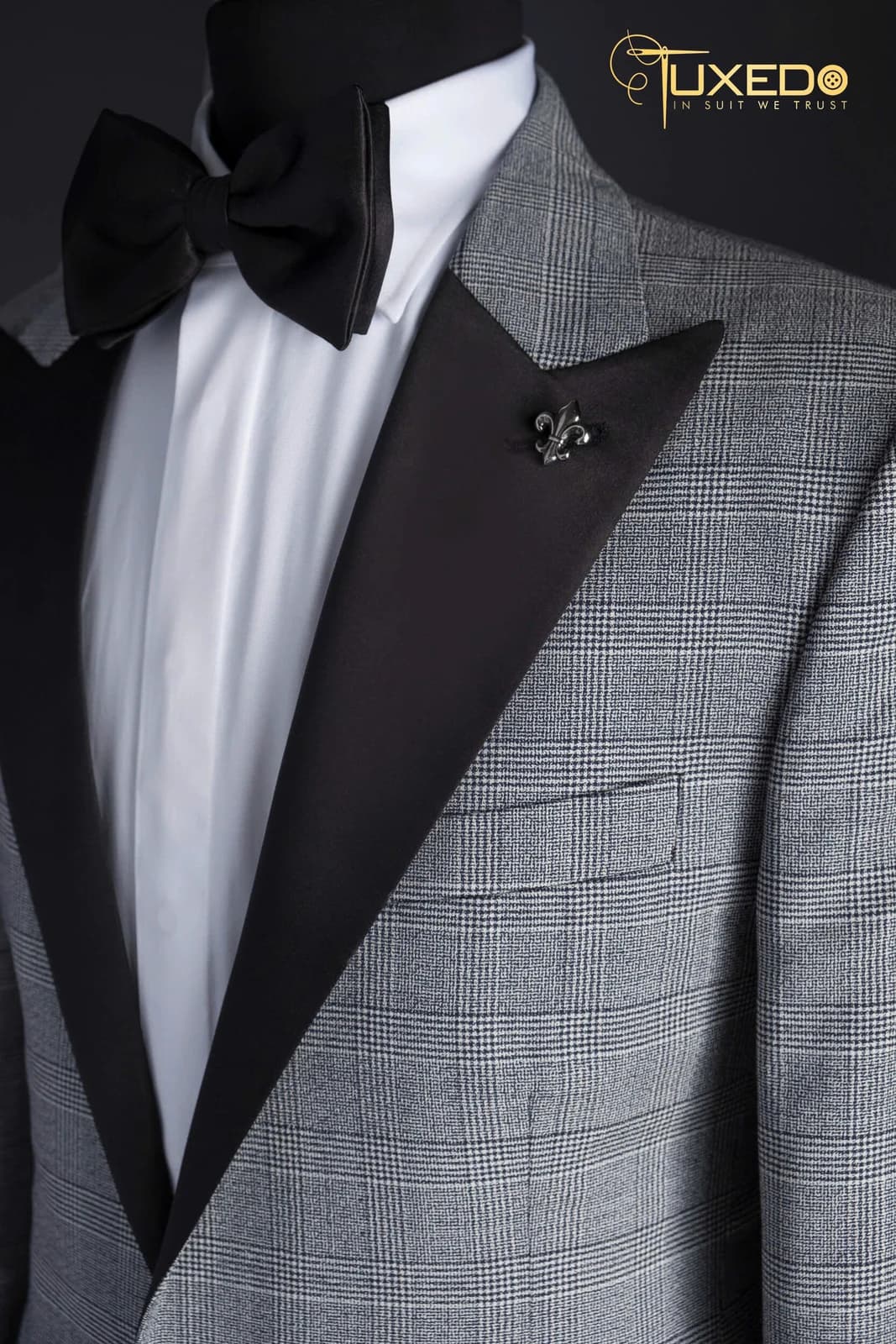
A digital camera records through a grid of pixels. When the grid meets tight, fine lines or dots, such as small houndstooth, fine herringbone, narrow pinstripe or micro check, the two patterns interact and produce moiré: the cloth seems to crawl, swim or change colour. It is a familiar problem in film and broadcast work, and the reason crews often ask guests not to wear fine checks.
For a tuxedo that means:
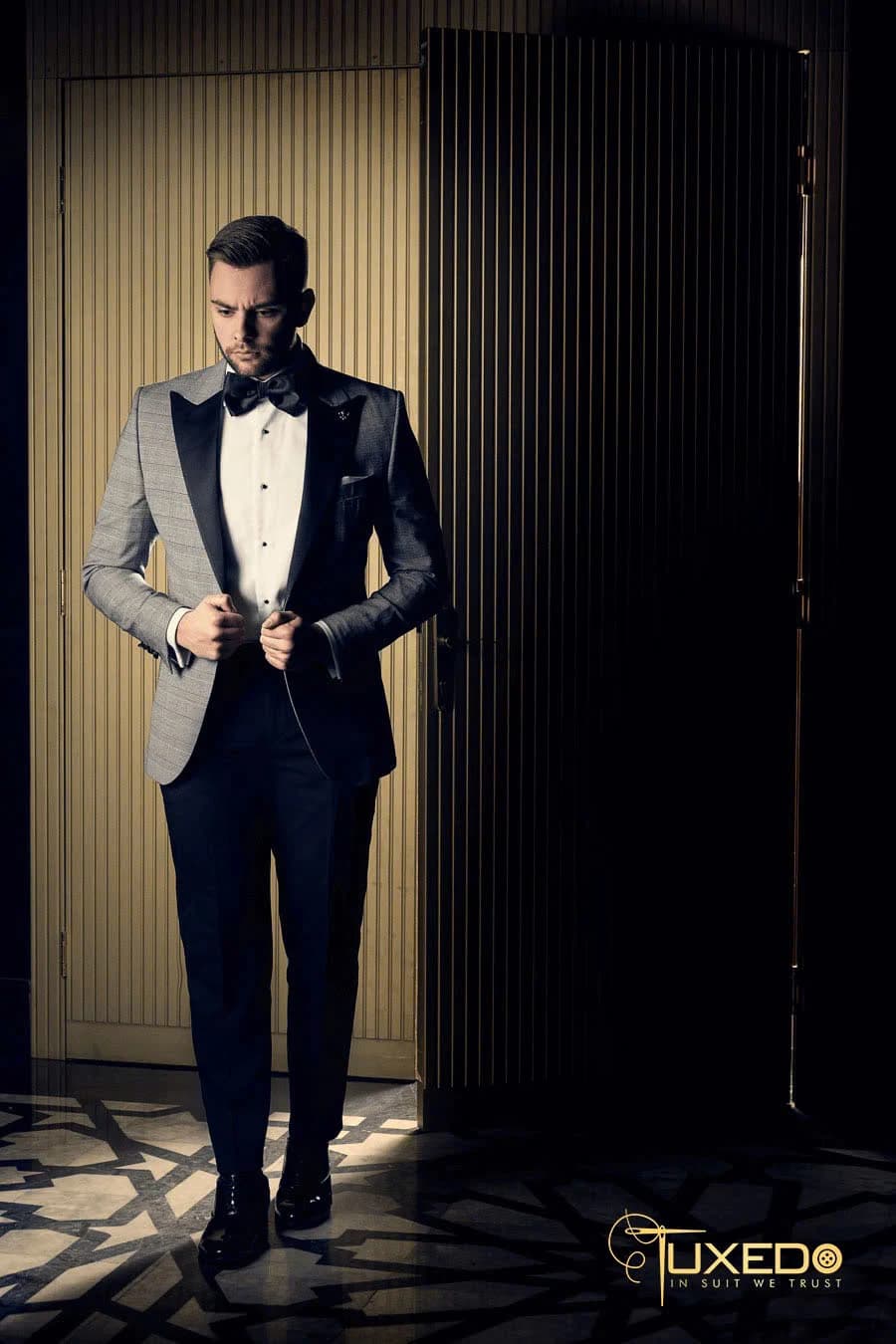
- Choose plain cloth or a close textured weave. A check such as TUX-029 (silver-grey Prince of Wales) is handsome in person; ask the crew for a test shot first, since fine lines are what interfere most.
- Large, open patterns are usually safer than small, dense ones.
- Plain white shirt; if there is pleating, choose broad pleats rather than a fine woven texture. See also why tuxedos and tiny patterns do not mix.
Pure black can lose its detail
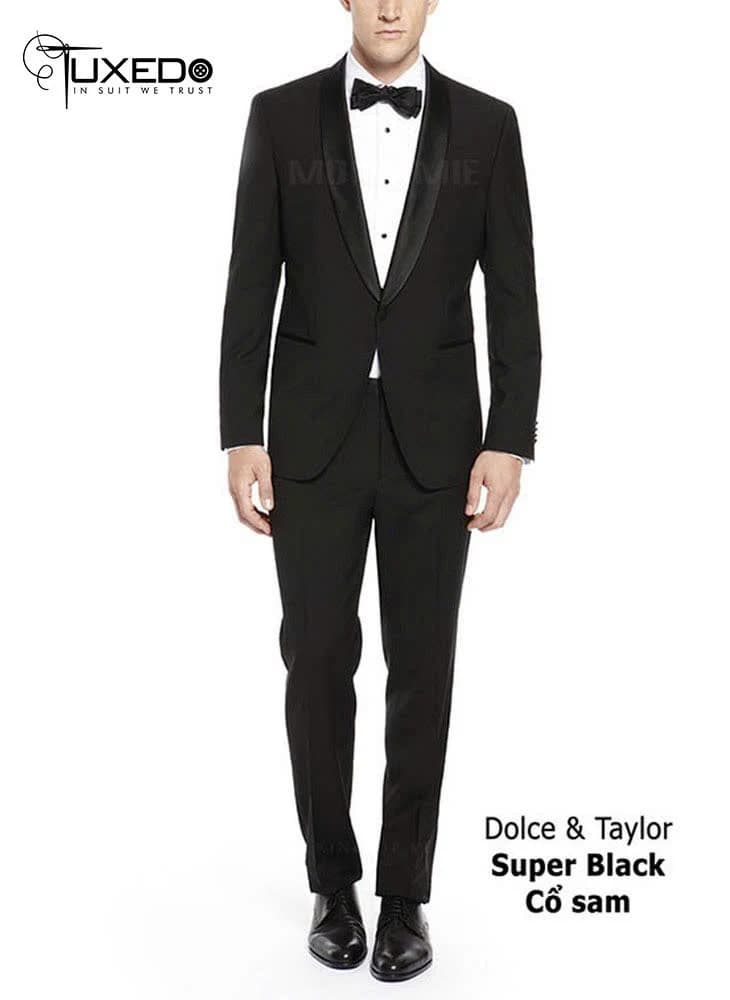
Camera sensors handle shadows less well than the eye does. A completely black suit under strong lights can turn into one flat shape: seams disappear, pocket details vanish, even the satin lapel loses its form. Meanwhile a bright white shirt beside it can blow out into a plain white patch.
What helps:
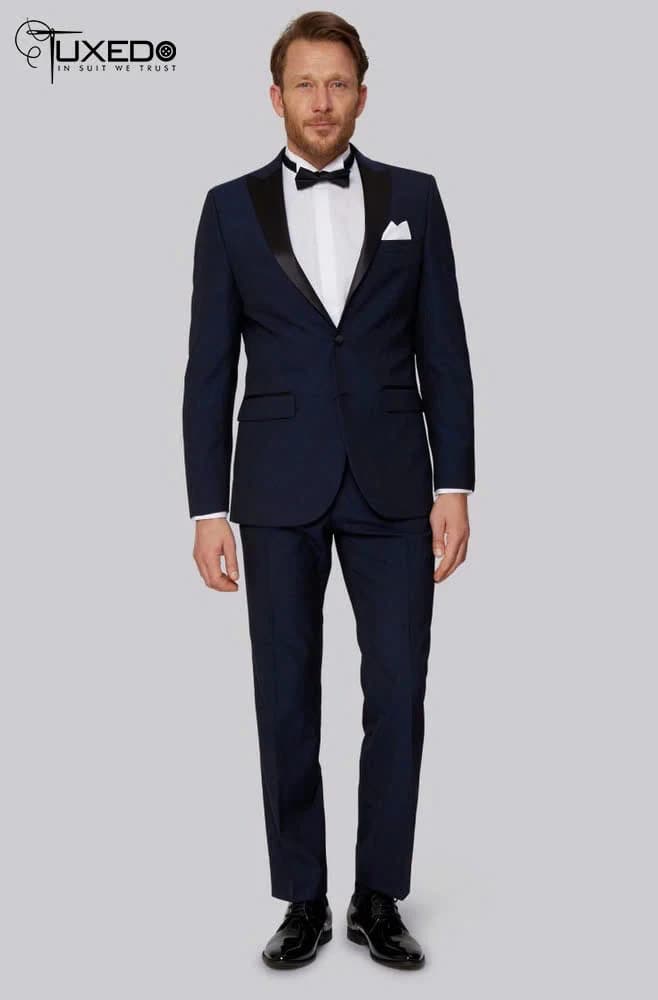
- Midnight blue, or a black with visible weave, gives more depth on camera than a dead black. More in tuxedo colours under lights.
- An ivory or very pale blue shirt is kinder to skin and cloth than a glaring white.
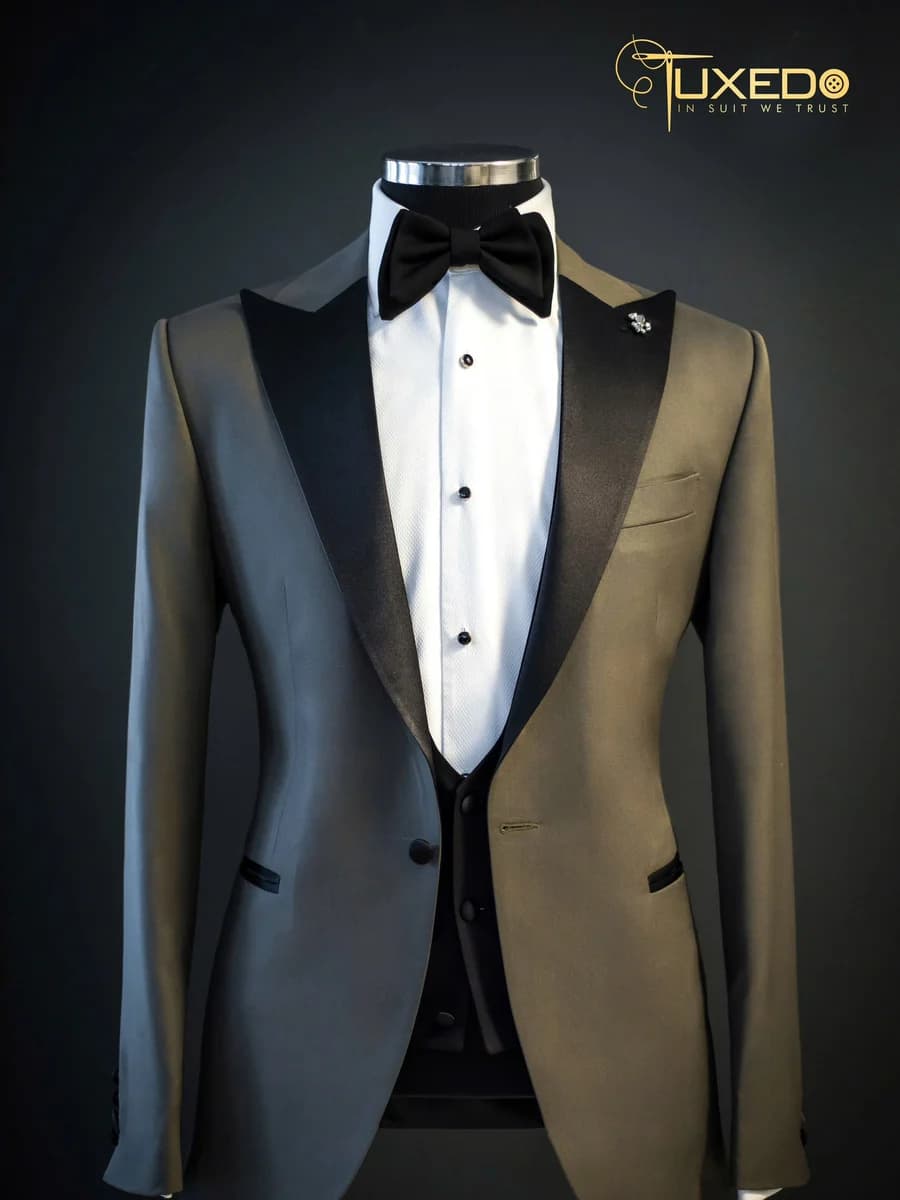
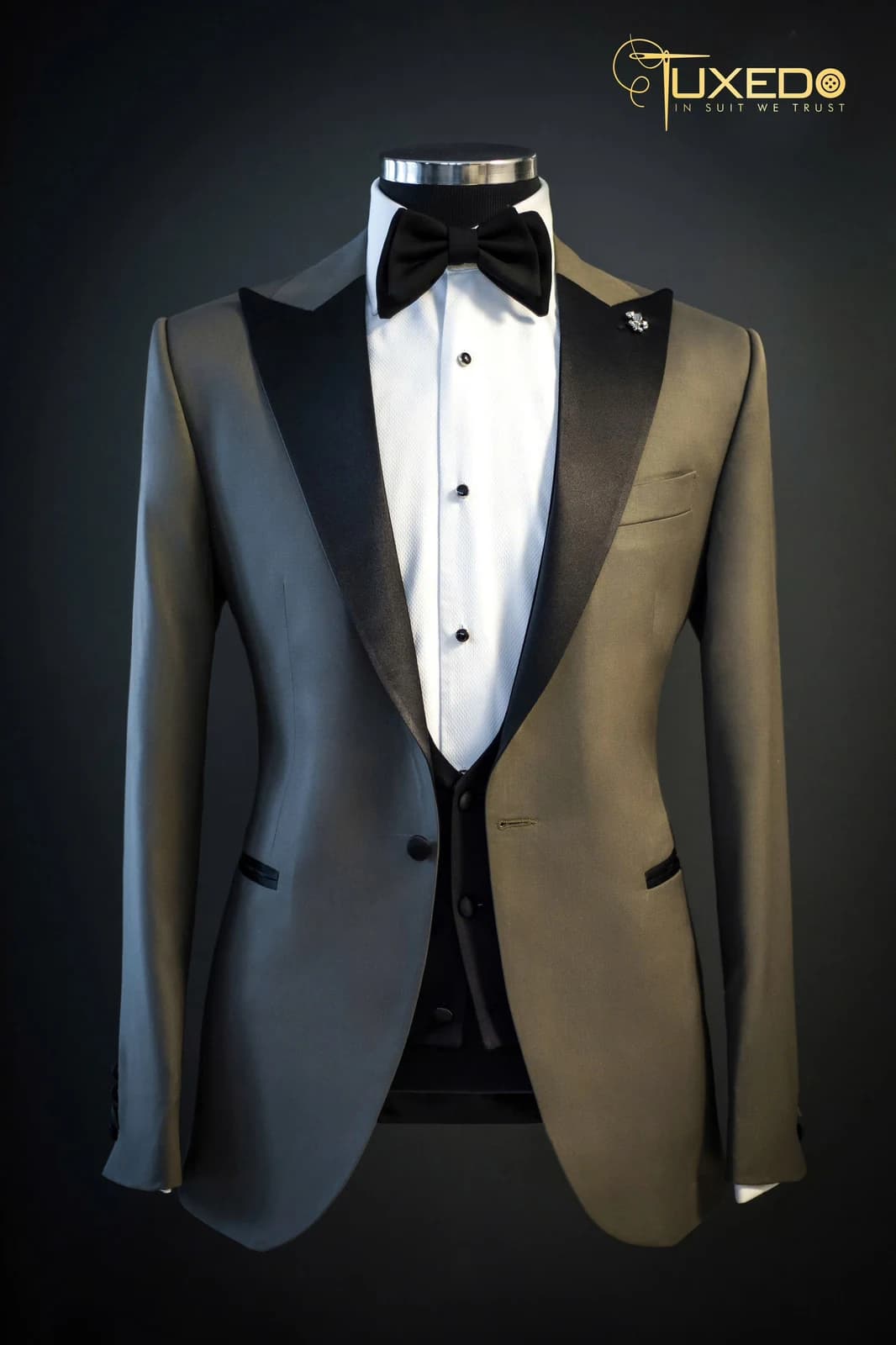
- A glossy satin lapel can flare under hard lighting; grosgrain or matte satin sits calmer. If your jacket has satin facings, ask the lighting team about their angles.
- Avoid dressing in the tone of the backdrop. A dark blue jacket against a dark blue set makes you vanish into it.
Ask the broadcaster in advance what colour the set is. One question saves a rushed change later.
Microphone and earpiece
Most programmes use a clip-on lavalier microphone and a small transmitter. On a tuxedo the crew will usually:
- Clip the microphone to the shirt placket or near the lapel edge, with the cable hidden beneath the clothing.
- Place the transmitter at the back of the waistband or in an inside pocket.
- Route any earpiece for prompts behind the collar.
So wear a shirt that closes fully down the placket, and trousers with a belt or side adjusters so the transmitter has something to hold on to. With a waistcoat or cummerbund, the waistband is a good anchor. Tell the crew you are in evening dress, so they do not clip the microphone to a satin lapel, which shows the clip and rustles when you move. Have it fitted before you sit, and walk a few steps to listen for fabric noise.
Our article on clipping a microphone to a tuxedo goes further.
Sitting in the interview chair
Interview chairs are usually low and soft, and the camera frames the upper half of the body. A tuxedo jacket tends to ride up at the shoulders and pull at the middle when you sit.
- Unbutton when seated and button again as you stand. It is ordinary courtesy and also prevents a crease across the waist.
- Tug the back of the jacket down lightly as you sit so it does not bunch at the neck.
- Sit near the front of the seat, back straight, leaning slightly toward the interviewer.
- Wear long black socks so no bare shin shows when you cross your legs.
- Keep hands on the lap or armrest; broad gestures make the microphone pick up fabric noise.
The jacket should hold the shoulders and underarms closely but leave ease in the body so you can move. A made-to-measure suit fitted for sitting posture feels very different from a hired one that is looser than your frame.
Advice from the Mon Amie workroom
If you are on camera regularly, for magazine shows, broadcast events or brand interviews, a made-to-measure tuxedo built for the lens is worth having: plain, firmly woven cloth, an easy body and a fitting adjusted for sitting. Tell our adviser at the measuring that it is for television. Making time depends on style and fitting schedule; order well before the shoot. Book a fitting.
Published 17/11/2026 · 20:30 · Editor: Mon Amie