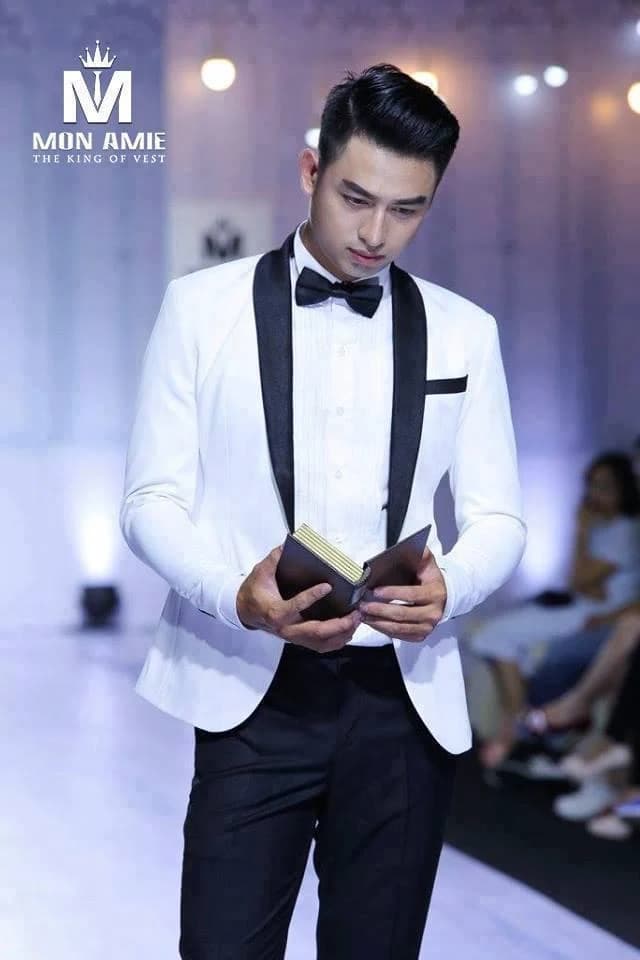
Portrait Photography in a Tuxedo: Colour and Fabric on Camera
How a tuxedo photographs: black loses detail while midnight blue holds form, controlling satin highlights, pressing, collar checks and posture.
Editor: Mon Amie · Published · about 4 min read
In this article
For a tuxedo to photograph well in portraits, three things matter: the colour of the cloth (midnight blue often holds form better than pure black), how light falls on the satin of the lapels and trousers, and how flat the jacket is at the moment of the shutter. A camera does not see what the eye sees, so a jacket that looks perfect in person can become a flat black mass or a blown-out streak of light.
Black loses detail, midnight holds form
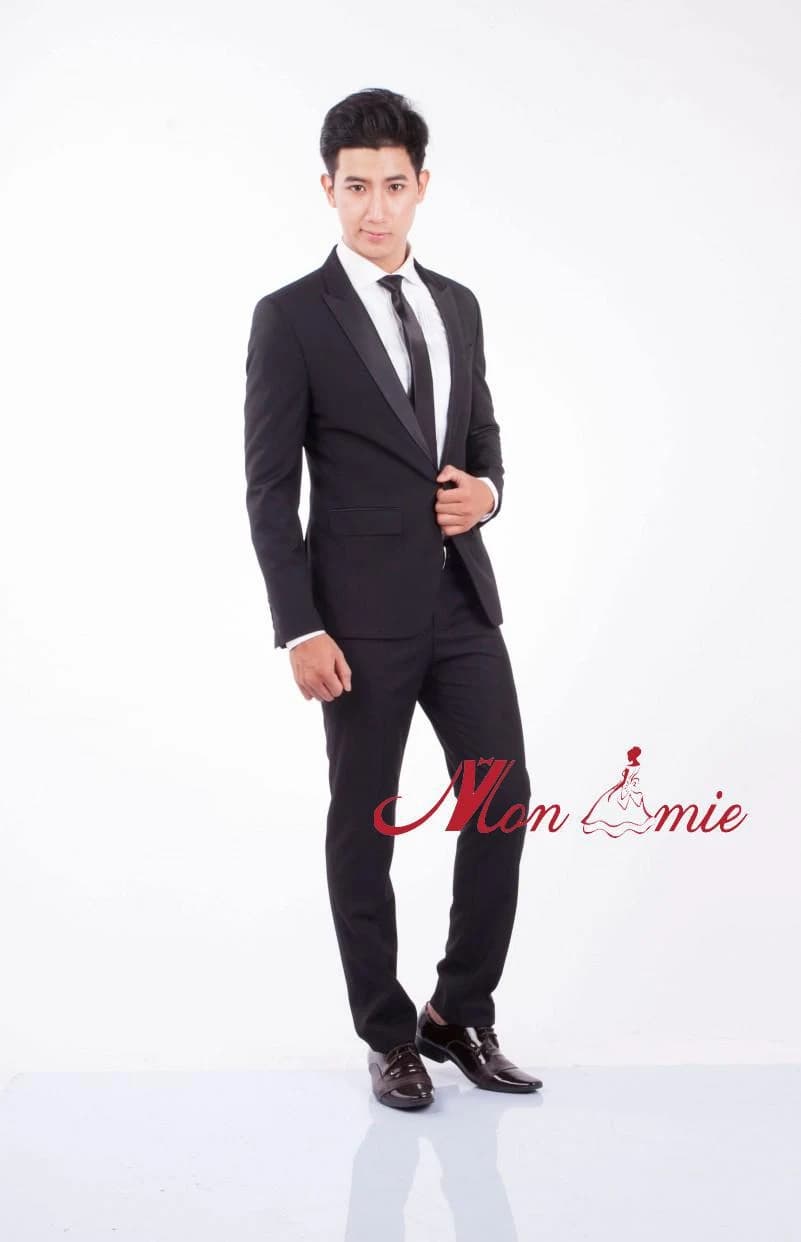
Black absorbs nearly all light, so in a photograph the folds, seams, jetted pockets and shoulder line sink into one dark patch. If the background is also dark, the subject seems swallowed by it. When the exposure is lifted to show the cloth, skin tones tend to burn out.
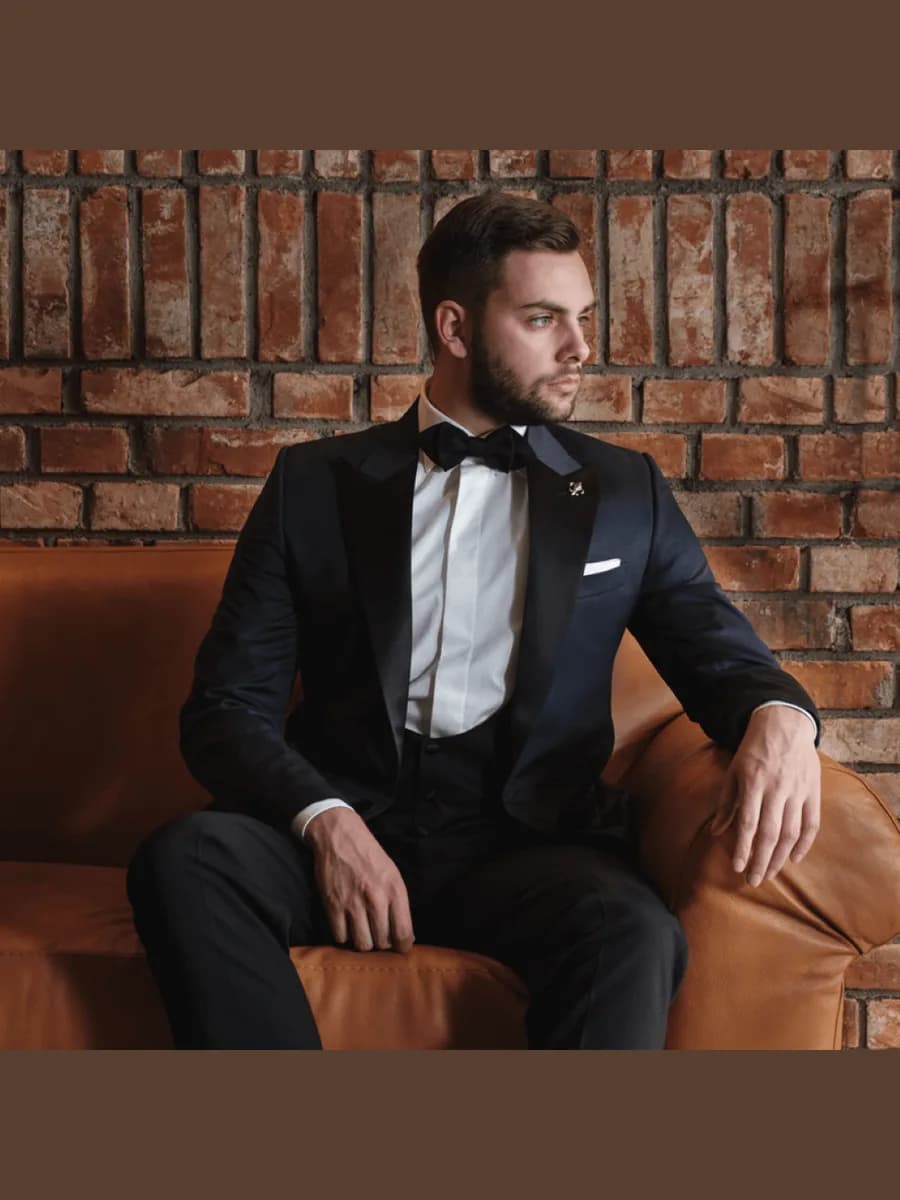
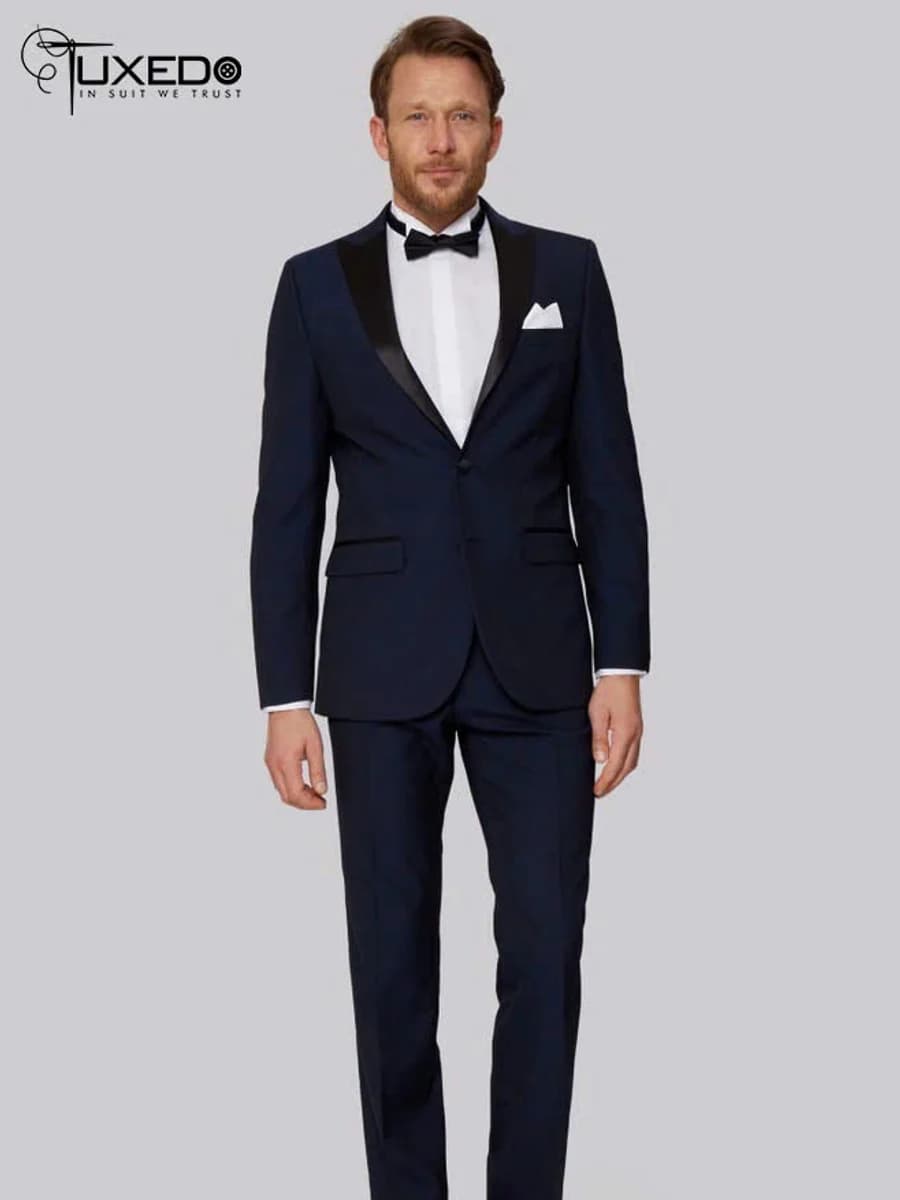
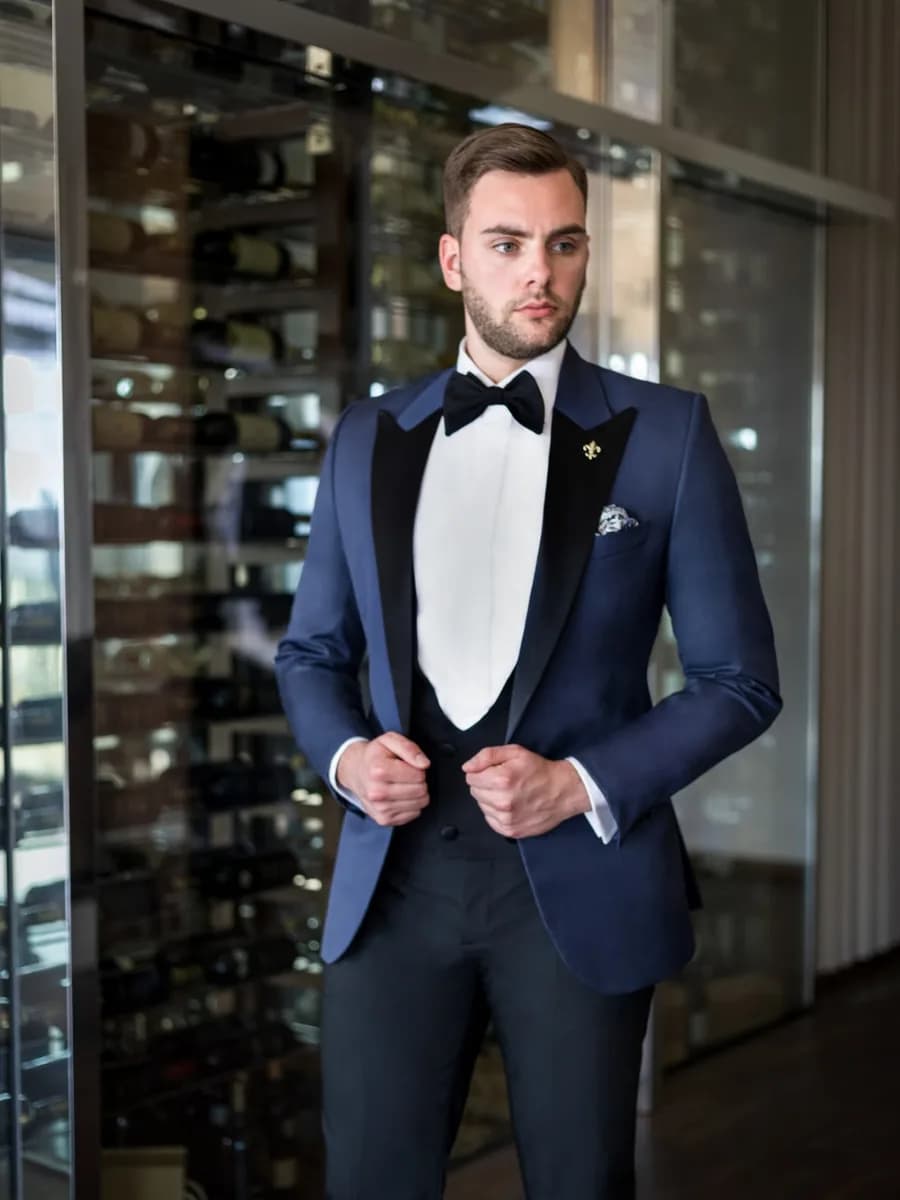
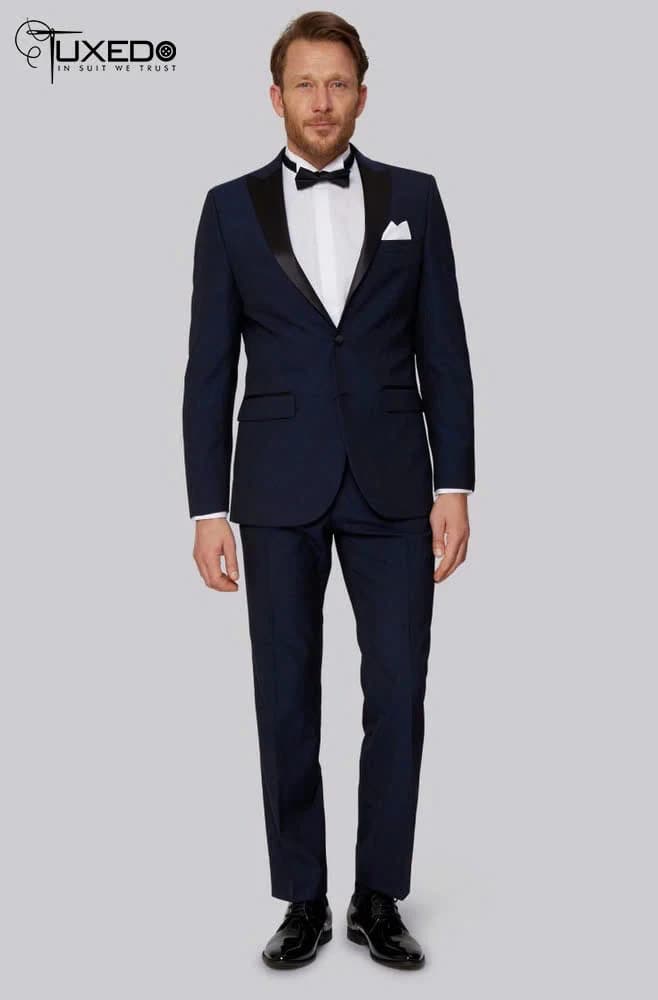
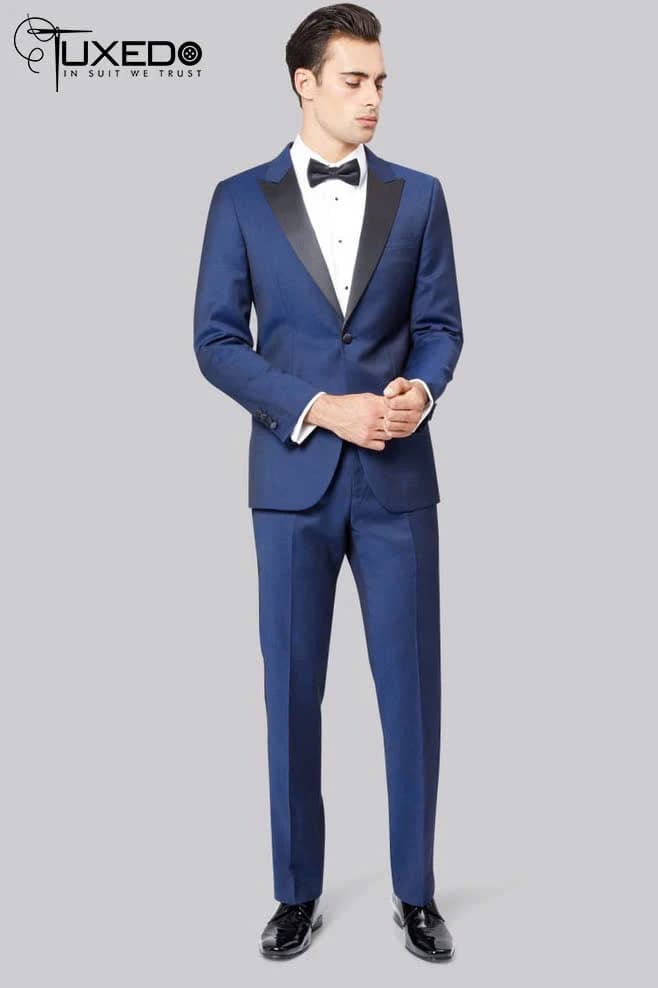
Midnight blue, a very deep navy, keeps depth of colour while still reflecting a little light, so the shoulder line, drape and lapel remain readable under studio lights. There is a familiar idea that midnight blue looks "blacker than black" under artificial light. That wording reflects how eye and camera read it as a black with depth, but it holds only for a truly deep shade. To test, look at TUX-105, a night navy with a black waistcoat, or TUX-018, a night navy single-button with peak lapels, in the Midnight Blue and Navy collection. The article on tuxedo colours under artificial light compares them in more detail.
If you still choose black, pick a cloth with a fine grain rather than a flat glossy one, and stand a distance from the backdrop so the photographer can separate you with rim light.
Satin catches light: control the lamps
Satin lapels and trouser braid are the most reflective parts. A frontal light or an on-camera flash can turn the lapels into two white streaks that hide their curve. Common remedies:
- Use soft light: a large softbox or diffused window light, set about 45 degrees to the subject rather than straight on.
- Turn slightly, so the lapels do not face the light squarely.
- Meter for the face, then check the lapel area; if the satin burns out, lower the exposure or change the angle of the light.
- Outdoors, avoid harsh midday sun; gentle light gives the cloth a soft sheen.
Matte satin or grosgrain controls reflections better than high-gloss satin, which is worth considering if you will be photographed often. For help selecting pieces that suit the camera, see tuxedos that photograph well.
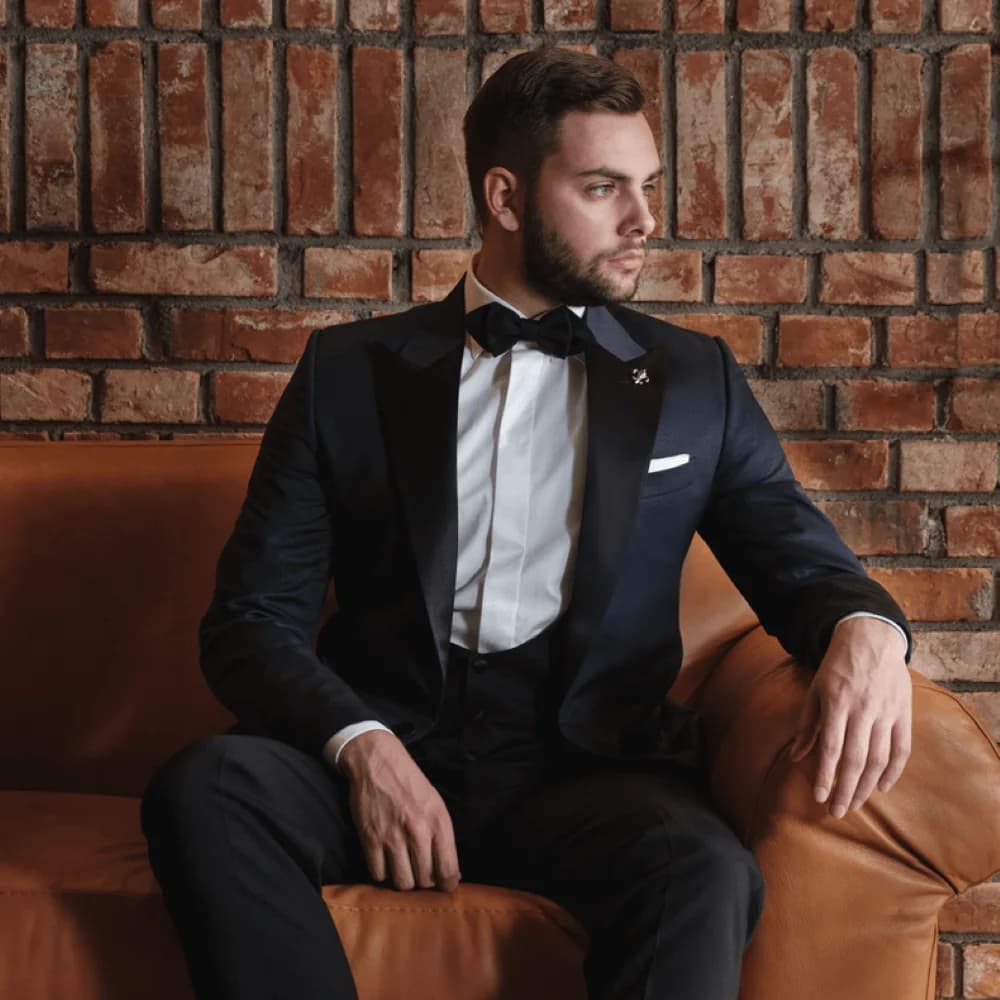
Press carefully and check the collar
A close portrait shows every crease. Before the shoot, do the following:
- Steam or press the jacket and trousers beforehand; press on the reverse side or with a thin cloth so you do not shine the lapels or cloth. Never put a hot iron straight on satin.
- Check that the shirt collar sits against the jacket collar with no gap or flipped edge. The jacket collar should hug the neck and not stand away from the shirt.
- Make the bow tie level and straight; if it is hand-tied, even out the wings, though it need not be perfectly symmetrical.
- Fold the pocket square flat, showing about a centimetre or two.
- Show about a centimetre of shirt cuff beyond the sleeve so the cufflinks appear.
- Check the back and sides too, since a full-length portrait shows the back of the jacket.
Hair, beard and shoes also need to be tidy, because portraits shot outdoors or from a low angle bring the shoes into frame.
Posture standing and seated
Posture decides whether the jacket looks good:
- Standing: put your weight on the back foot, turn your body about half an angle from the camera, then turn your face to the lens. This slims the waist and shoulders. Button the jacket when standing; one hand in a trouser pocket with the thumb out, the other hanging naturally.
- Seated: unbutton the jacket, smooth the front skirts before you sit, then sit slightly forward rather than leaning against the back. Rest your hands on your knees or the armrest, and avoid crossing the legs so high that the trouser hem rides up.
- Avoid stuffing the pockets, because jetted pockets bulge and show at once in a photograph.
- Breathe normally. Tensing your stomach or puffing the chest pulls the cloth tight and draws horizontal creases.
Advice from the Mon Amie workroom
If you plan professional portraits, wear the tuxedo to a trial session with your photographer, or take a few test shots on your phone during the fitting to see how the cloth reads on camera. Book a fitting at a showroom and bring ideas about the backdrop and lighting so a consultant can advise on cloth and lapel.
Published 01/11/2026 · 11:30 · Editor: Mon Amie