Merino wool: the foundation of tuxedo cloth
Merino has fine, springy, breathable fibre, so it underpins tuxedo cloth. Why wool suits hot climates, where merino comes from, and how it beats synthetics.
Editor: Mon Amie · Published · about 3 min read
In this article
Most good tuxedo cloth starts life as merino wool. The fibre is fine, soft, naturally springy and breathable, so cloth woven from it wears comfortably, recovers from creases and holds its shape. What surprises many people is that this wool also suits a hot climate, provided the cloth is woven light and open.
Fine, springy, breathable
Merino is a breed of sheep that grows very fine wool. Fibre fineness is measured in microns, thousandths of a millimetre. Wool for fine suiting is considerably finer than the coarse wool of a heavy knit, and that fineness gives the soft hand and the lack of prickle.
Each wool fibre has natural bends called crimp. It works like a tiny spring, helping the cloth to:
- Stretch slightly, so the jacket does not bind when you move.
- Recover from creases: stand up after a long dinner and the wrinkles ease away.
- Hold air between fibres, making cloth light while keeping its shape.
The Super number on cloth, such as 100s or 150s, is simply a way of expressing this fineness; see Super 100s to 150s. A higher number gives softer cloth but not necessarily more durable cloth.
Why wool suits hot climates too
It sounds backwards, but wool is not a material "only for cold seasons". The fibre can absorb a considerable amount of moisture into its core while the surface still feels dry, so it does not turn clammy like synthetics when you sweat. As that moisture evaporates it carries off some heat, which feels cool.
What decides comfort is the weave as much as the raw material. Light wool with hard-twisted yarn and an open weave, often called tropical wool, lets air circulate. You can read more in tropical wool cloth. Dense, heavy wool does the opposite and will be hot outdoors in Ho Chi Minh City.

Where merino comes from
Merino has a long history linked with Spain, where the breed was developed and closely guarded for centuries. Later it spread widely, and today most merino wool for clothing comes from Australia, New Zealand and South Africa. The raw fleece is then scoured, combed, spun and woven at mills, many of the famous ones in Italy and England.
So it helps to separate where the sheep were raised from where the cloth was woven. "Made in Italy" on a selvedge refers to the weaving, not the farm. How to read such lines is covered in reading the selvedge.
Compared with synthetic fibre
Polyester, or cloth with a high polyester share, is cheaper, creases less and resists abrasion, which is why it has a place in uniforms. For a tuxedo, though, consider the following:
| Criterion | Merino wool | Synthetic |
|---|---|---|
| Breathability, moisture | Good | Poor, can feel stuffy and clammy |
| Drape, hand | Soft, natural fall | Often stiff, glaring sheen |
| Look under lights | Deep, gentle | Can look flat and cheap |
| Holding shape | Good with steam pressing | Sets by heat, hard to adjust |
| Price | Higher | Lower |
A small share of synthetic is sometimes blended in for durability or crease resistance, but the higher the share, the further the feel moves from a true tuxedo. Check the composition on your quotation and on the selvedge so you know what you are buying.
Practical points about merino tuxedos
- For wear in Ho Chi Minh City, choose light to medium weight merino. Do not pick very heavy cloth on the assumption that heavier means better. See choosing tuxedo cloth weight.
- Wool needs rest: hang the jacket on a broad-shouldered hanger and leave it for a few days between wearings so the fibres recover.
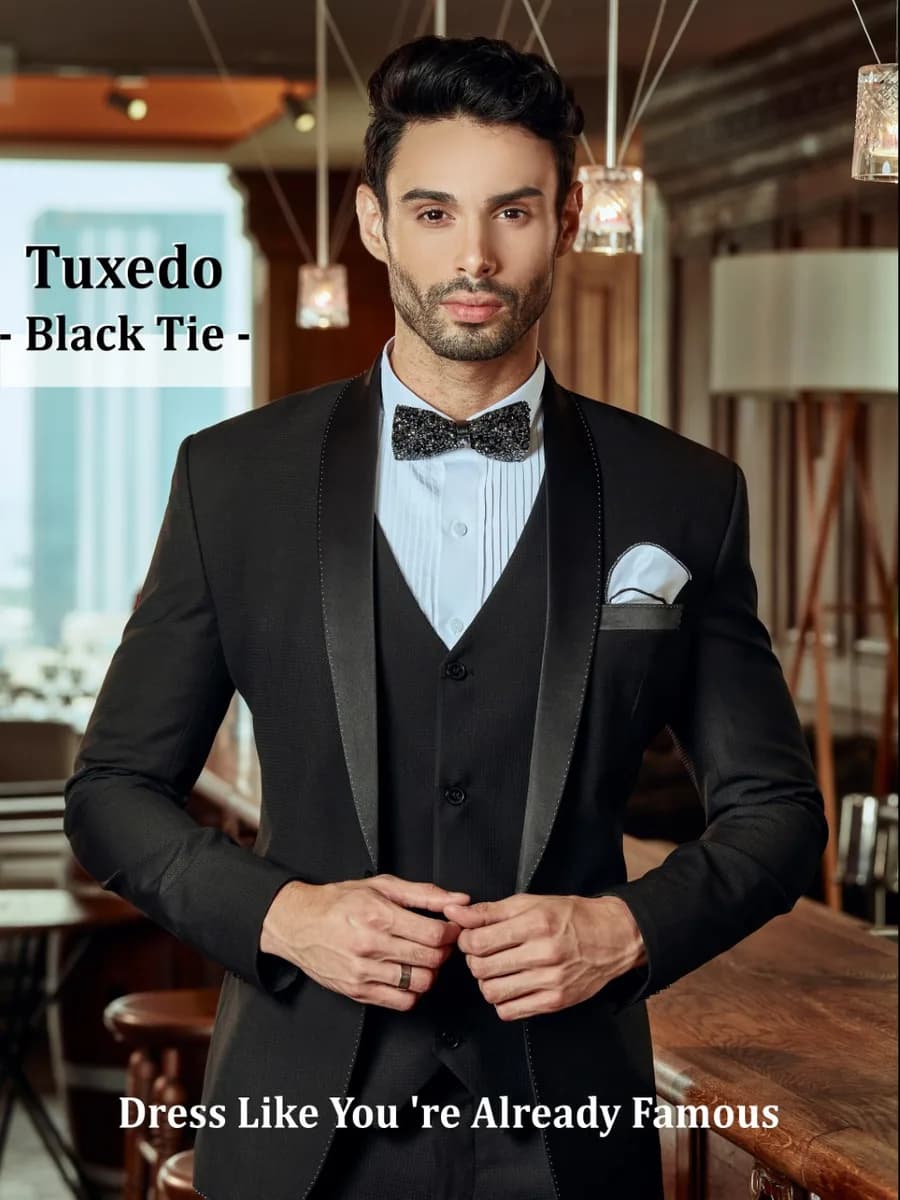
- A black wool tuxedo such as TUX-078 (black, shawl lapel, three-piece, built from just matte black wool and glossy satin) is an easy example of a classic dinner suit built on a wool base.
Choosing wool cloth at Mon Amie
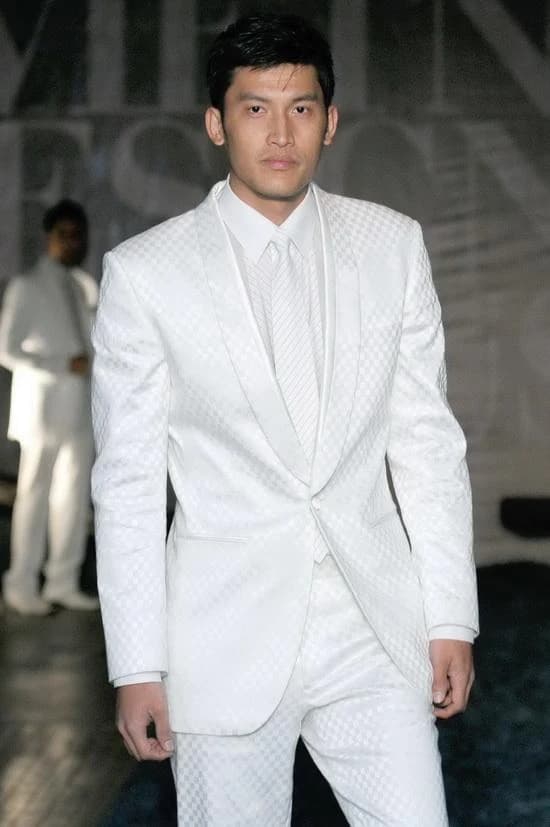
Two merinos can feel quite different. The sensible way is to handle the cloth, crumple it, and relate it to where you will wear it. The consultant will explain each bolt and suggest a weight for the climate. You can book a cloth viewing at a showroom to begin.
Published 11/11/2026 · 20:30 · Editor: Mon Amie