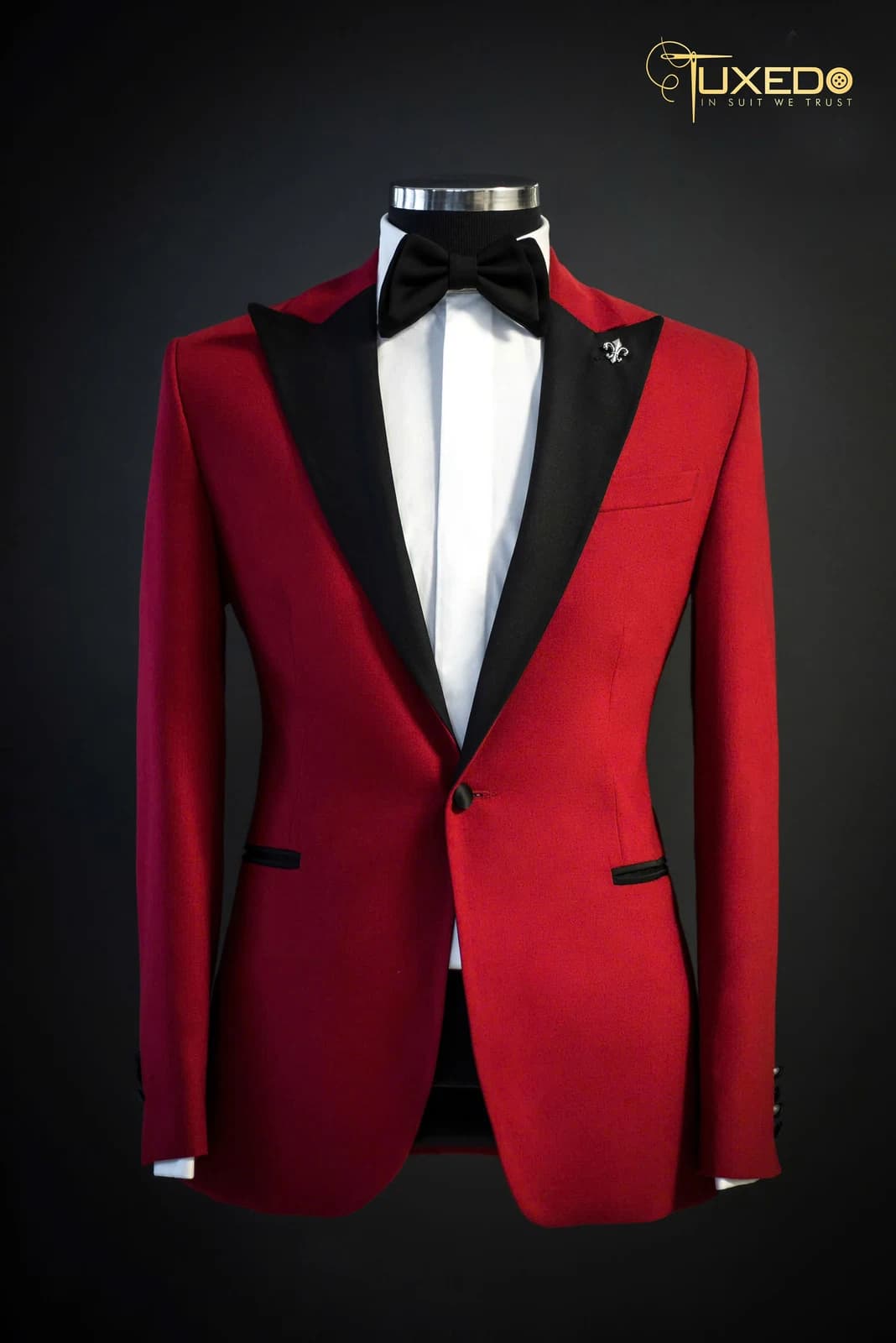
Clip-On Microphones and Tuxedo Lapels: Avoiding Damage
A mic clip can dent a satin tuxedo lapel. Choosing the buttonhole or shirt placket, routing the cable inside the jacket and where to put the transmitter pack.
Editor: Mon Amie · Published · about 4 min read

In this article
To wear a clip-on (lavalier) microphone on a tuxedo without damaging the satin lapel, do not press the clip straight onto the satin. Use the lapel buttonhole or the shirt placket as the anchor, run the cable inside the jacket and put the transmitter at the waist or in an inside pocket. Done properly, the audience hears clearly and the formalwear keeps its lines.
Why a mic clip dents satin
Lavalier mics usually come with a small metal or hard plastic clip with a spring. On a wool suit that clip leaves little trace because the cloth is springy. On a satin lapel it is different: the surface is smooth, glossy and reflects even tiny pressure marks.
Two kinds of damage are common:
- A dent where the teeth of the clip press, clear under stage lights that rake across the surface.
- Scuffing or pulled threads when the clip slides or is removed in a hurry backstage.
Once the sheen has been touched, it is hard to restore completely. See scratched or shiny satin lapels for ways to deal with it.
Placement: buttonhole or shirt placket
The two sensible anchor points on a tuxedo both avoid the satin face:
The lapel buttonhole. A tuxedo usually has a buttonhole in the left lapel, where a flower goes. You can pass the mic body or its clip stem through this hole to hold it steady without pressing on the cloth. It sits near the mouth and picks up sound well. More on this detail in the lapel buttonhole.
The shirt placket. The placket of a tuxedo shirt (especially a piqué or pleated bib) is thick fabric and less sensitive. Clip the mic to the edge of the placket, fairly high, about a hand's span below the chin, which usually gives clear sound and little contact with the bow tie. The clip body stays behind and from outside only the small capsule shows.
Two general points:
- Do not place it right against the bow or collar, because the rustle of cloth will be picked up by the speakers.
- Aim the capsule toward the mouth, not facing down.
If you use both a boutonnière and a mic in the buttonhole, the flower stem and the cable can tangle. Give priority to the mic and skip the flower for a speaking engagement.

Route the cable inside
The cable should go out of sight, both for tidiness and to avoid pulling:
- Run it from the anchor point down inside the jacket, along the lining or beneath the shirt.
- With a shirt, the cable can pass behind the placket and down to the waist.
- Leave a small slack loop near the mic (a strain-relief loop) so that turning your head does not tug the capsule.
- A soft medical tape can hold the cable to the shirt; do not tape onto satin or the jacket cloth, since adhesive can leave marks or lift fibres.
Avoid letting the cable hang free outside. For an MC, arm movements and turns easily snag it.
Where the transmitter goes
A bodypack transmitter is heavier than you think and can spoil the shape of the jacket if placed badly. Common places:
- The back waistband, if the trousers have an adjustable tab or belt loops. Note that classic tuxedo trousers often use side adjusters or braces rather than a belt, so check what you can clip to.
- An inside jacket pocket. The easiest option, with a short cable run. But a heavy pack on one side of the chest can pull the jacket sideways if the pocket is shallow or the cloth thin.
- A rear trouser pocket or a small pouch inside the back of the waistband, which suits someone who moves a lot.
A tip for regular microphone users: at the made-to-measure stage, tell your tailor beforehand so they can consider a small extra pocket in the lining or adjust the inside pocket to take the pack. It is a detail to agree at the fitting, and it fits with made-to-measure tuxedos. Professional MCs have needs of their own; see tuxedos for event MCs.
Check before you go on stage
A quick run-through avoids trouble:
- Wear everything, button up, stand and sit.
- Speak into the mic, turn your head, rotate your body and see whether the cable pulls.
- Check the mirror around the lapel and chest: any dents, any cable showing, any bulge from the pack.
- Ask the sound technician in advance how they attach it, so they use the placket or buttonhole rather than the lapel face.
If it has to come off, open the spring and release the clip; do not yank it.

How Mon Amie can help
If you often present or perform, bring the microphone and transmitter to a fitting so a consultant and a tailor can see whether the pockets and buttonhole suit it. Book a fitting at a showroom to prepare before the event.
Published 28/11/2026 · 19:00 · Editor: Mon Amie