Measuring Your Tuxedo Shirt Size at Home: Neck, Sleeve, Chest
How to measure neck, sleeve and chest to choose a tuxedo shirt size at home, why double cuffs need extra sleeve, common errors and why a fitting is more exact.
Editor: Mon Amie · Published · about 4 min read
In this article
You need three measurements: neck, sleeve length and chest. A soft tape, a helper and about ten minutes will do. Home measurements are enough to pick a reference size, but a tuxedo shirt has to agree in every detail, so a fitting at a showroom is still more exact.
A tuxedo shirt is less forgiving than an ordinary one. The collar works with the bow tie, the sleeve ends in a double cuff closed with cufflinks, and the pleated front will not tolerate creasing. A shirt half a size too loose can pull the bow off centre, and half a size too tight leaves the collar pressing all evening.
Before you measure
- Use a soft cloth tape, not a rolled metal one.
- Wear a thin T-shirt or thin shirt, not a sweater or thick jacket.
- Stand straight, shoulders relaxed, arms hanging naturally.
- Ask someone to help, since arm and chest are easy to misread when you measure yourself.
- Record the numbers in both centimetres and inches if you plan to order from somewhere that uses another unit.
Neck
Wrap the tape around the base of the neck, exactly where the shirt collar will sit, just below the Adam's apple. Keep the tape level, not high at the front and low at the back.
For comfort, slide one finger between the tape and your neck, then read the number. That allowance lets you swallow, turn your head and sit for hours without the collar pressing. For a shirt worn with a bow tie one finger is sensible; for a stiff collar leave a little more, because starch does not give.
Sleeve length
Shirt sleeve length is not measured from the shoulder but from the centre of the back of the neck:
- Place the tape at the centre point at the back of the neck, the bone that stands out when you bow your head.
- Run it across the top of the shoulder.
- Continue down the full arm, elbow slightly bent, to the wrist bone.
This figure is usually larger than people expect because it includes the width of the shoulders. If the tape is slack the number will be too short, so pull it moderately taut.
Chest
Wrap the tape around the fullest part of the chest, just under the armpits and across the shoulder blades at the back. The tape must run level and not slip down the back. Breathe normally and read the number as you breathe out; do not hold in your stomach or puff out your chest.
For a pleated-front shirt, allow a little extra at the chest so the pleats are not pulled tight when you move your arms. A tight chest throws the pleats out of line, and that is visible immediately between the lapels.
Why a double cuff needs more sleeve
A tuxedo shirt normally has a double (French) cuff closed with cufflinks. This differs from an ordinary shirt in two ways:
- A folded cuff is thicker and uses more cloth, so the sleeve needs to be a little longer than with a single cuff for the closed cuff to still reach the wrist bone.
- When you stand straight, the jacket sleeve should show a short length of shirt cuff, around one to two centimetres. That visible band is part of the black-tie look, so the shirt must be long enough to provide it.
If you choose a size from a seller's chart, ask specifically about double-cuff sleeve length. Many charts give a general sleeve length that was measured for ordinary cuffs.
Common errors
| Error | Consequence | How to avoid it |
|---|---|---|
| Pulling the tape too tight at the neck | Size too small, collar presses | Always leave one finger |
| Measuring with slumped shoulders | Sleeve comes up short | Stand straight, shoulders relaxed |
| Measuring over thick clothing | Chest and sleeve too generous | Wear a thin layer |
| Using an old shirt as the reference | Wrong if it has shrunk or stretched | Measure the body, not a worn garment |
| Tape tilted or slipping at the back | Chest off by a few centimetres | Have a helper check it is level |
| Inflating the chest | Size too large | Read the number as you breathe out normally |
A small tip: measure twice at two different times of day and take the average, since the body shifts slightly between morning and evening.
Why a showroom measurement is more exact
Home figures give a reference size; a fitting gives information a tape cannot. The tailor observes your posture, shoulder slope, whether one shoulder sits higher than the other and whether your arms differ in length, things a person measuring alone will not see. They also try the shirt directly with the jacket and bow tie to see how collar, sleeve and chest agree as a whole.
With a made-to-measure shirt the numbers are recorded for you, not taken from a general size chart. For more detail read the well-fitting tuxedo shirt and preparing for a tuxedo fitting so you know what to bring.
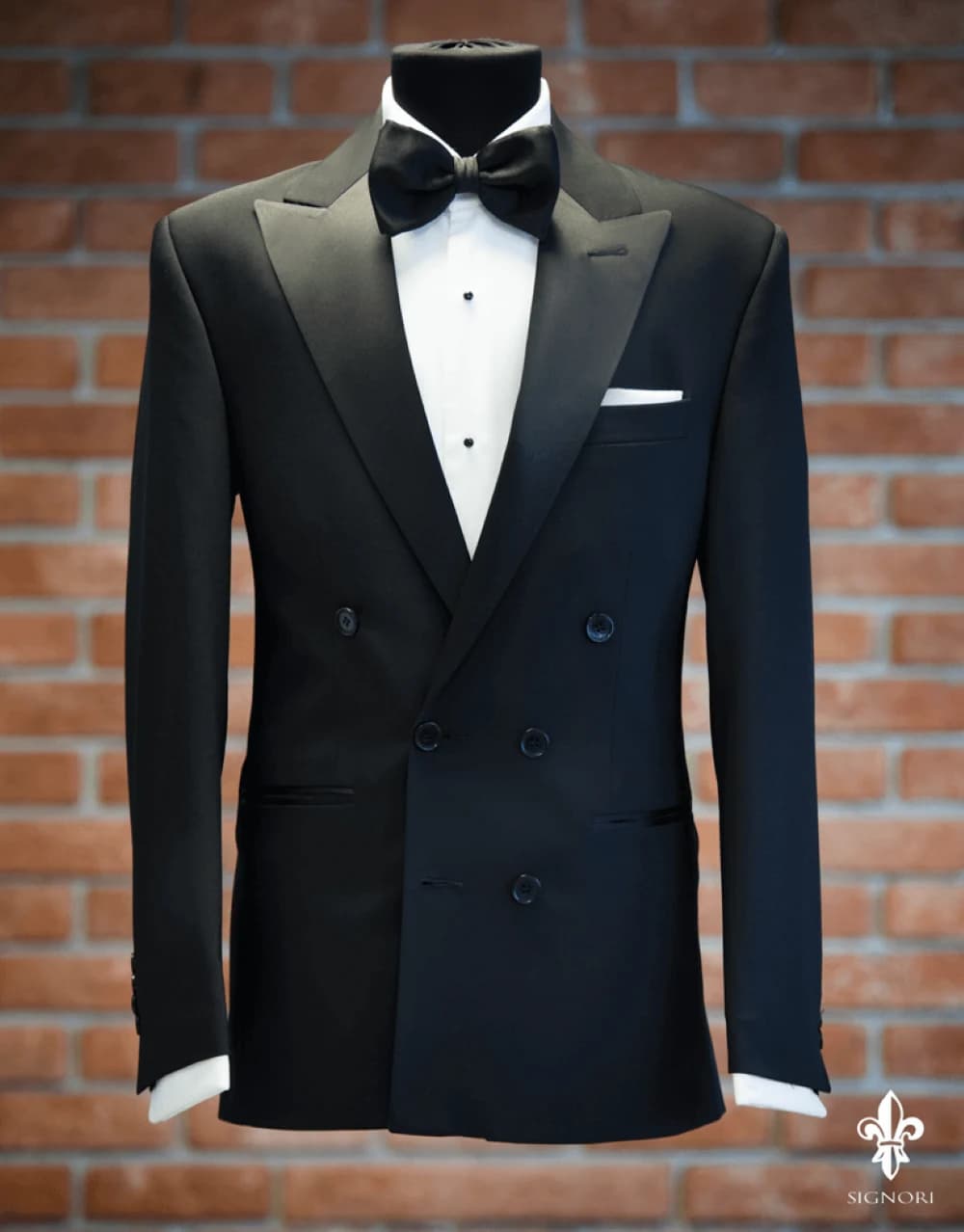
Booking a fitting at Mon Amie
If you have already measured at home, bring the numbers so the consultant can compare and adjust them. You can read about our made-to-measure tuxedo process or book a fitting at the nearest showroom.
Published 18/11/2026 · 10:00 · Editor: Mon Amie