Standing, sitting and walking in a tuxedo
How to sit, stand, walk and hold a glass in a tuxedo: unbutton before sitting, adjust the trousers, pose for photographs and avoid habits that crease the lapel.
Editor: Mon Amie · Published · about 4 min read
In this article
A well-cut tuxedo can be undone in minutes by small habits: sitting without unbuttoning, propping your elbows on the table, shoving both hands into your pockets. Here are the simple movements that keep the suit's lines from the moment you greet your hosts until the last dance.
Unbutton before you sit, button as you rise
The base rule of men's tailoring: a single-button jacket is opened when you sit and fastened when you stand. The practical reason is that a closed jacket pulls tight at the waist when you bend, the skirt flares open and creases form across the stomach. The motion takes a second: as your hand reaches the chair, open the button with your fingers, sit, and fasten it again with a smooth stroke when you rise.
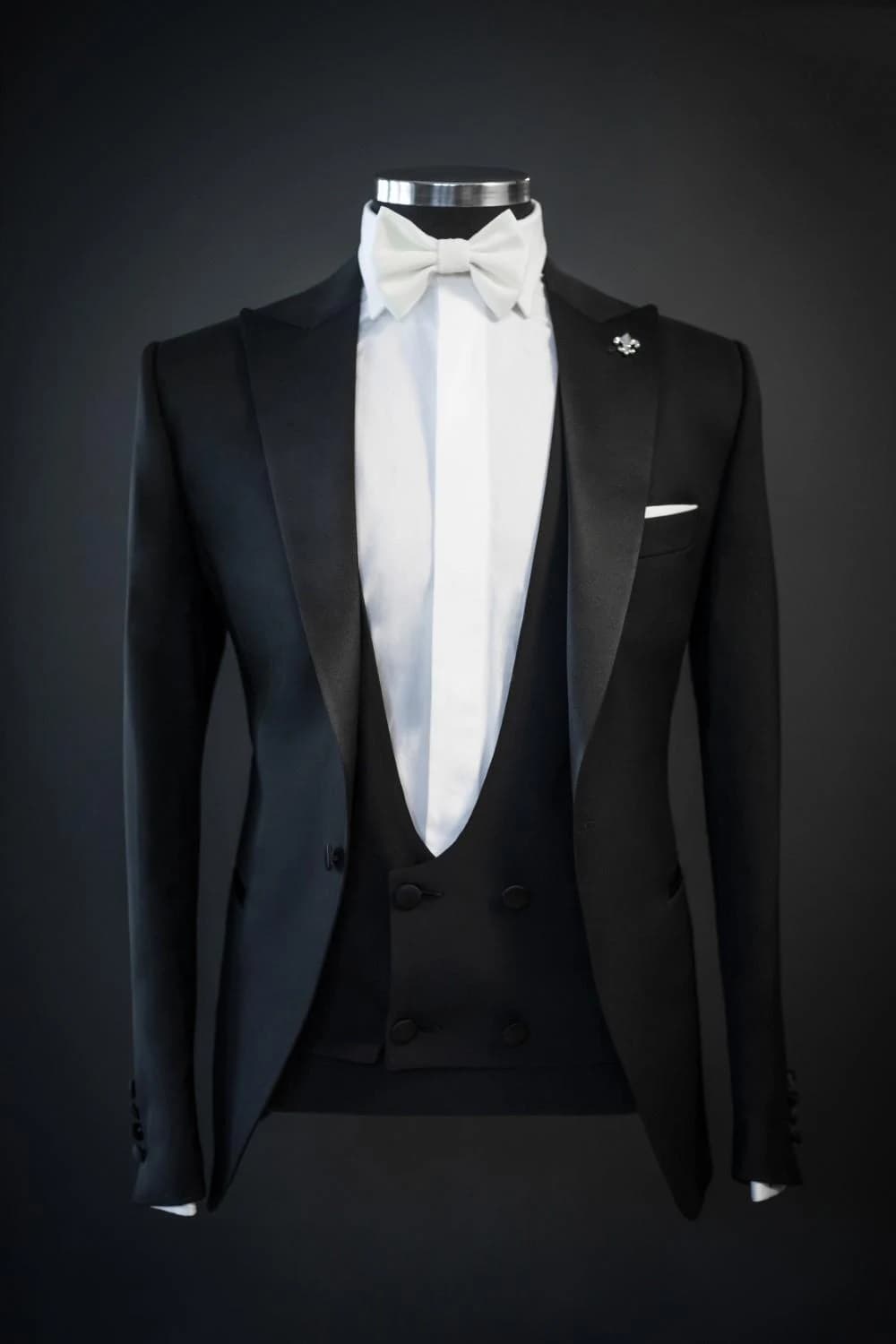
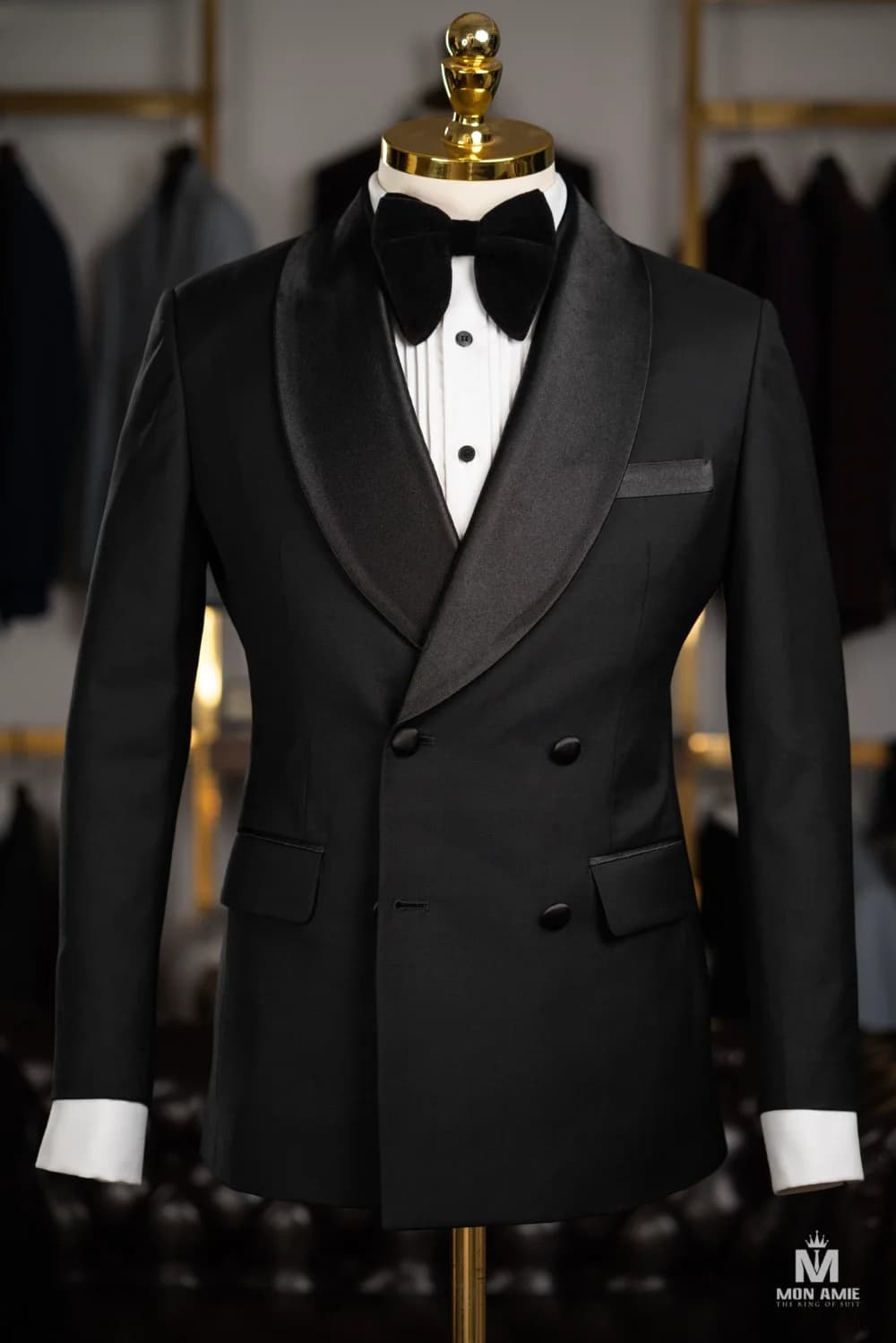
With a double-breasted jacket, the inner button always stays fastened and the outer one can be opened when sitting for a long time. Standing, both are fastened. With a three-piece, the waistcoat is buttoned except for the bottom one, in the traditional manner.
A tailor's tip: do not sit on the back of the jacket. Sweep the skirts gently aside before lowering yourself so the back does not fold into a horizontal crease.
Lift the trouser leg slightly as you sit
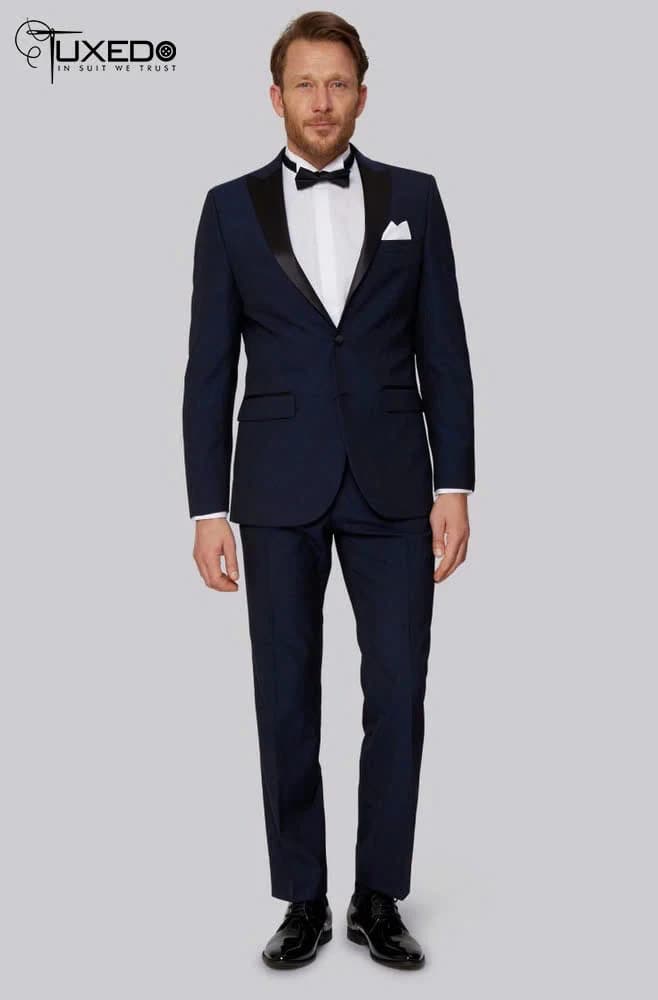
Tuxedo trousers carry a crease down the front of each leg. When you sit, your knees pull the cloth taut. Lift the cloth at the thigh with two fingers by an inch or so before lowering yourself. This preserves the crease, keeps the knees from bagging after a long evening, and stops the hem riding too far up.
Once seated, release the leg so the hem touches the shoe. If the trouser rides up, your sock shows. Evening socks should be over-the-calf so that no skin is visible when you cross your legs.
Crossing your legs is fine, as long as you lay one knee over the other gently. Sitting with legs wide, or hoisting an ankle high onto the opposite knee, pulls the trouser leg up.
Standing and photographing
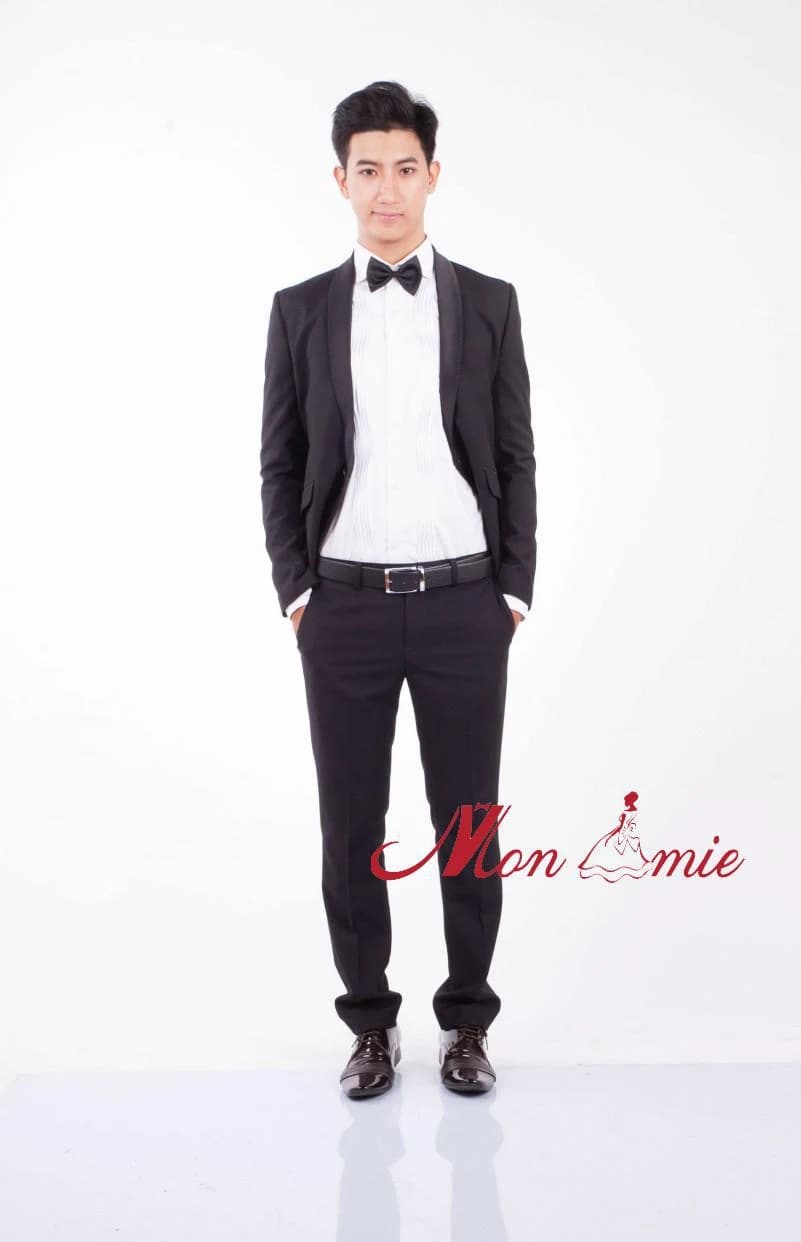
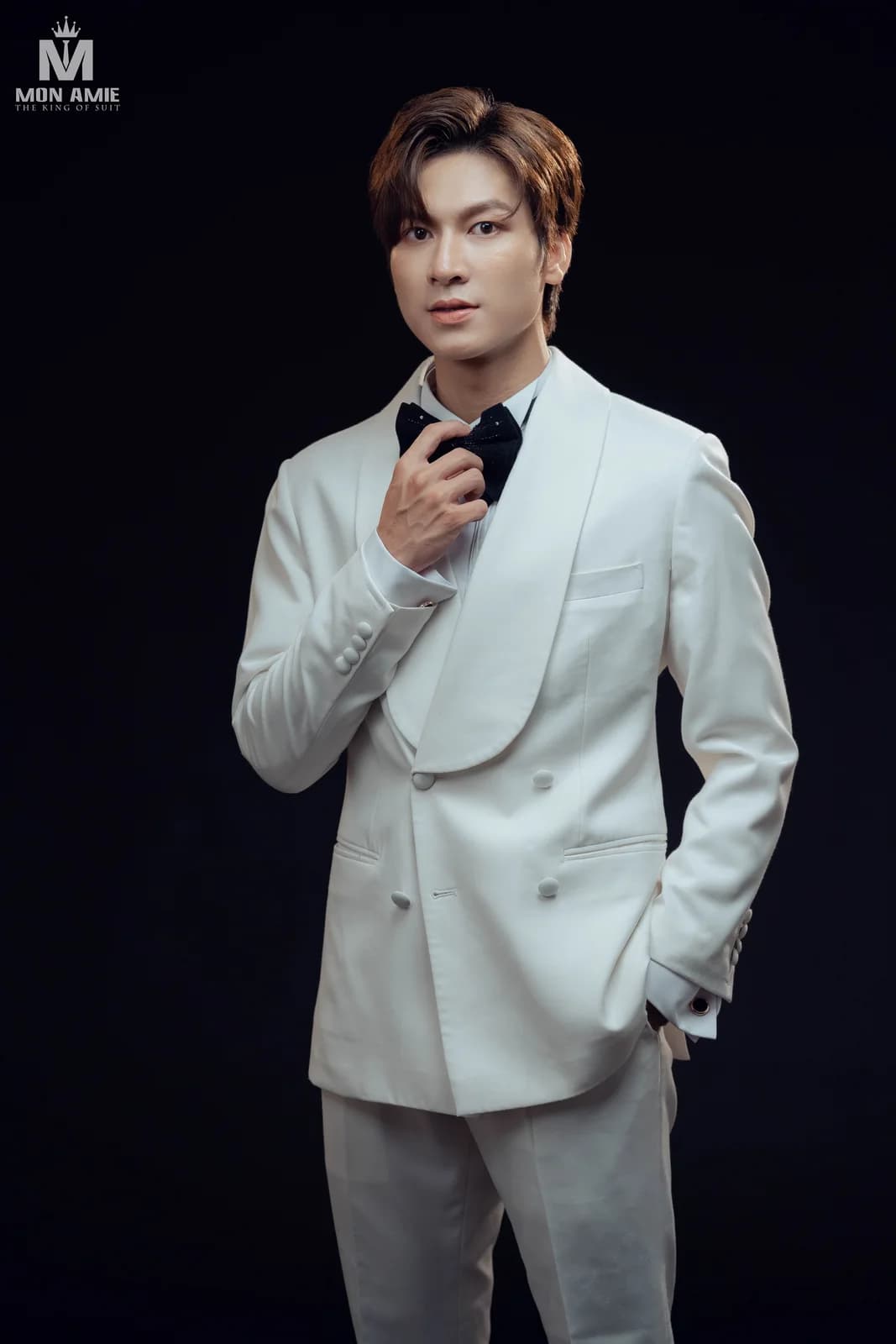
For photographs, posture does most of the work:
- Fasten the button (on a single-button jacket) and smooth the lapel so it lies flat.
- Put your weight on one leg, the other slightly angled, shoulders relaxed. Standing rigid like a soldier makes the jacket harder to lie flat.
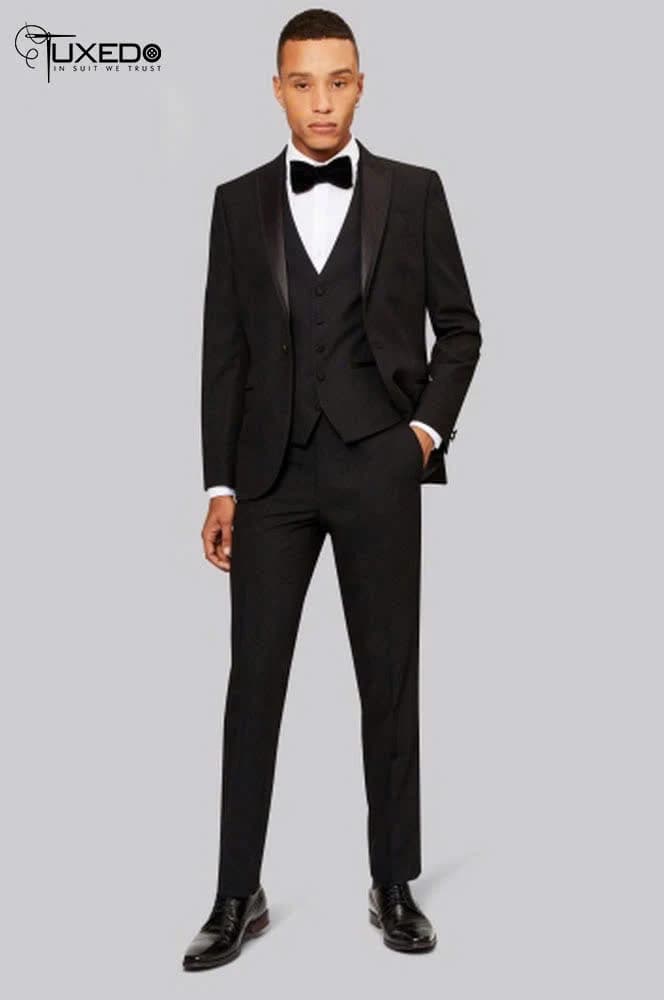
- One hand in a trouser pocket, thumb outside; the other hanging naturally or holding a glass. Do not push both hands in: the jacket drags backwards and the lapels twist.
- Push the chin slightly forward and tilt the head a little. This tightens the jaw line and seats the collar better.
- Stand at about three-quarters to the camera rather than square on; the shoulders look neater.
See portrait photography in a tuxedo for how to combine posture with light and background.
Walking
Walk naturally, without over-long strides. A starched shirt and structured shoulders can make you stiff, so loosen your shoulders before entering the room. On stairs or when leaving a car, fasten the jacket so it does not fly open.
When holding a glass, carry it in your left hand so the right is ready for a handshake. If you need both hands, put the glass down rather than tucking it against the jacket.
Avoid propping that creases the lapel
Lapels, especially satin and velvet, mark easily:
- Elbows on the table push the shoulder and armhole up and drag the lapel.
- Folded arms across the chest crush the lapel and leave creases at the elbow.
- Leaning against a wall or bar wrinkles the back and presses the facing.
- Full pockets (wallet, phone, keys) distort the line. The pockets of a tuxedo are largely decorative; give things to a companion or leave them elsewhere.
If a lapel has creased on a chair or in the car, do not rub it. Hang the jacket in open air and the wool fibres will relax. Never iron satin yourself, because it can polish the surface and damage the cloth.
The courtesies that go with the clothes are summarised in tuxedo etiquette; the dress-code levels are explained on the dress code page.
How Mon Amie can help
A good way to learn your posture is to try the suit in front of a mirror, seated, standing and with arms raised. At the measuring, ask the tailor to check the jacket in those positions: shoulder, armhole and sleeve length should allow movement without pulling. You can book a fitting at a showroom and try it with the shoes and shirt you will wear.
Published 07/11/2026 · 10:00 · Editor: Mon Amie