When the bride wears colour: choosing the tuxedo
If the bride wears a red, blue or pink gown, which tuxedo should the groom choose: black, midnight, grey or navy, and how to echo her colour with a bow tie.
Editor: Mon Amie · Published · about 3 min read
In this article
When the bride wears colour, the simple rule is that the groom plays the backdrop: a neutral tuxedo that lets her gown own the frame. What needs thought is which neutral suits which shade, and how far to echo her colour in small details.
Red gown: black tuxedo
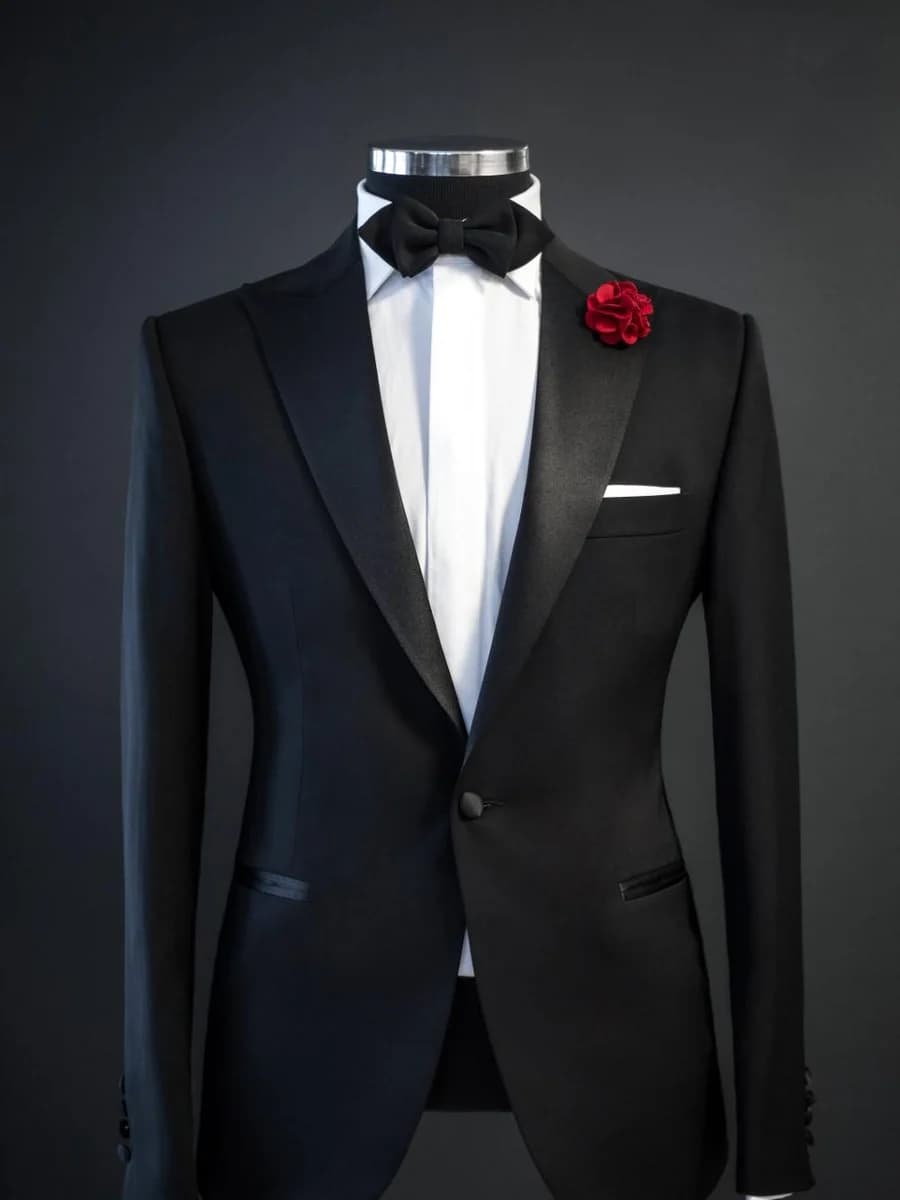
Red is a strong colour, even in wine or deep crimson. A black tuxedo with black satin lapels beside it makes clean, elegant contrast and lets the red stand out. Avoid dressing the groom in the same red family, since two red masses compete for attention.
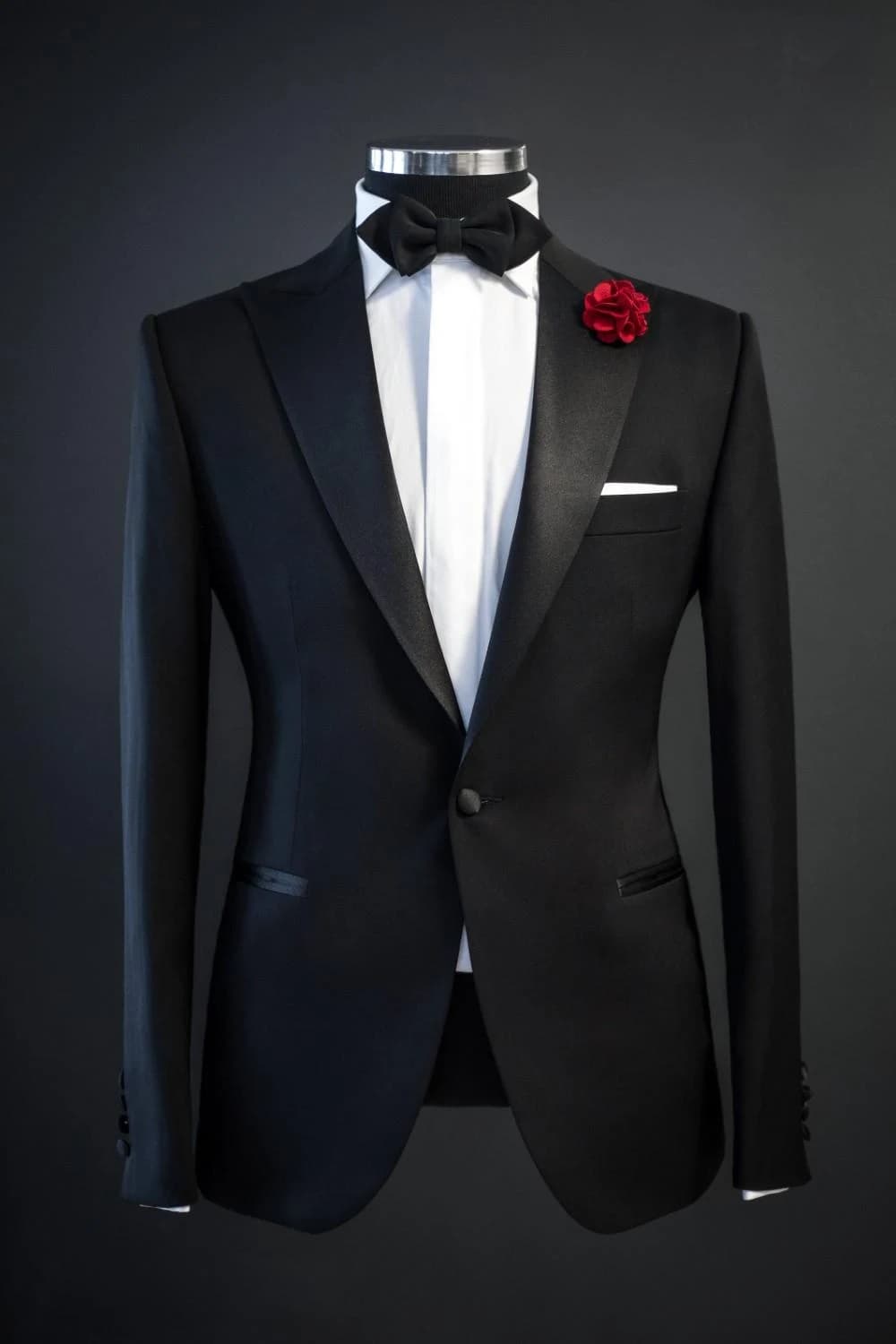
- A solid black tuxedo, shawl or peak lapel. TUX-060, classic black with peak lapel or TUX-067, solid black shawl lapel are examples.
- White shirt and black bow tie. For bright red, a black bow tie is enough; for a dark crimson, you might add a pocket square in the same shade.
- Do not add too many red details to a black suit. One is enough.
Blue gown: midnight or black
With a blue gown, first ask which blue.
- Navy or deep cobalt: black keeps the balance; midnight blue would harmonise, but if the colours sit too close the pair can read as a single block. Place a swatch beside the gown to compare.
- Green, jade or emerald: black works well; midnight blue is also handsome, since its near-black blue gives depth beside green.
- Pastel blue or mint: black can feel heavy; midnight or navy makes a softer pair.
Browse the midnight blue and navy group to compare shades before choosing.
Pink gown: grey or navy
Pink comes in many shades, from blush to peach to plum.
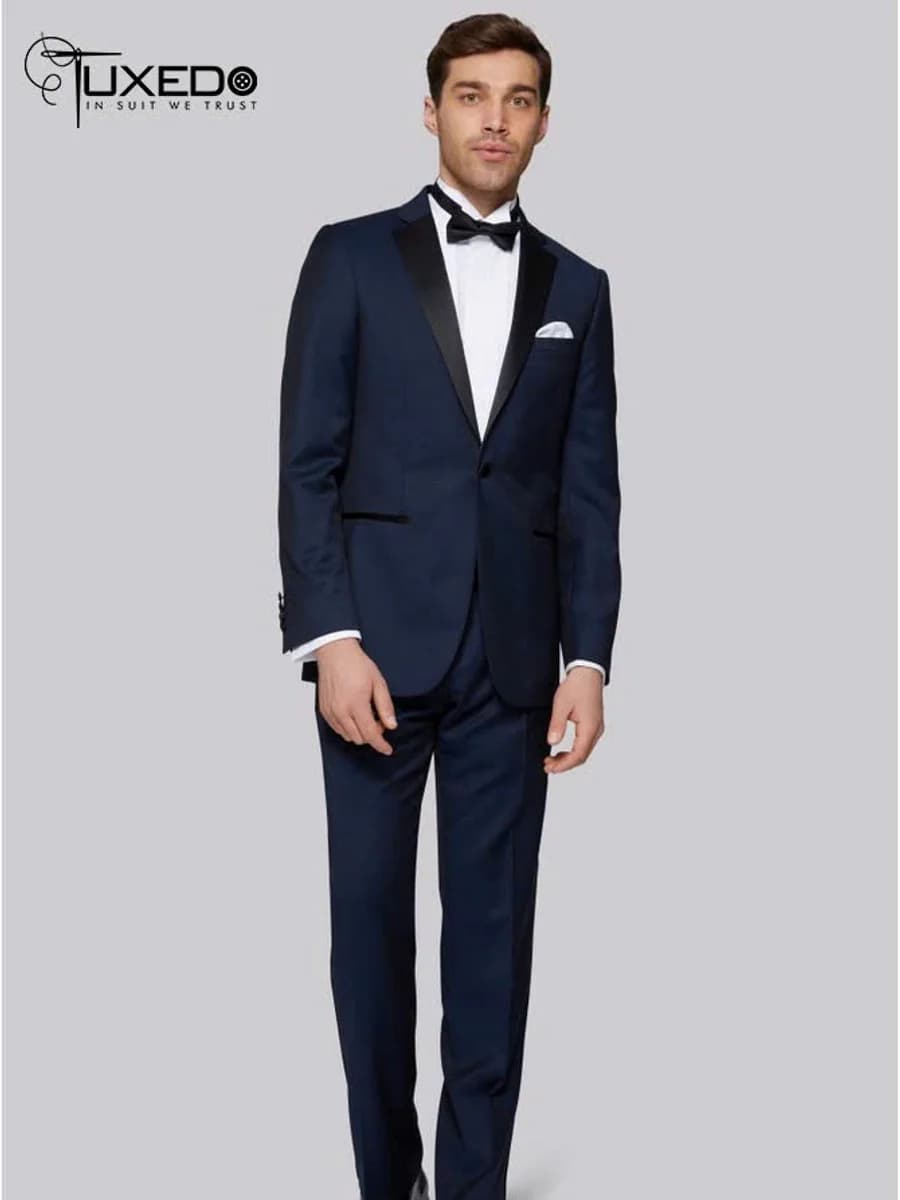
- Blush or pale pink: a charcoal or navy tuxedo makes the backdrop. Black can feel heavy for the lightness of the gown, though it is acceptable for an evening reception.
- Deep pink or plum: deep navy or black; charcoal also works.
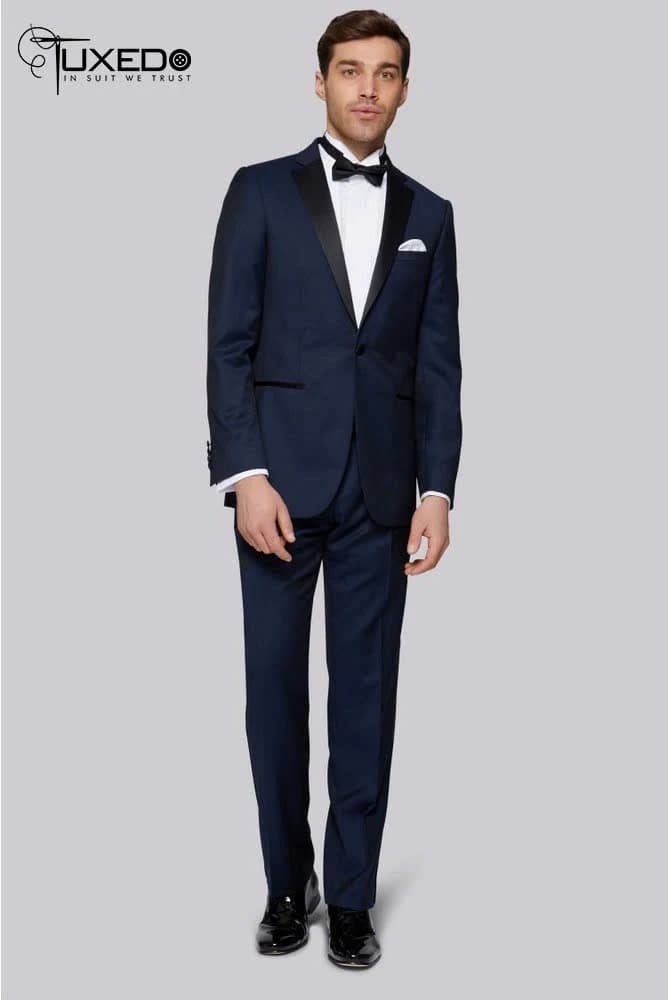
- TUX-022, smoke grey with satin peak lapel and TUX-011, navy with black peak lapel are two directions worth seeing.
A white shirt is almost always right; pale pink is hard to pair with a coloured shirt.
Echoing the gown with a bow tie or flower
Echoing the gown in the groom's outfit makes the two of you look as if you belong together, but overdoing it becomes formulaic. A few principles:
- One point only: bow tie, boutonniere or pocket square, not all three.
- Same family, not the same shade: different dye lots never match exactly. Choose a harmonious cloth rather than trying to match every shade.
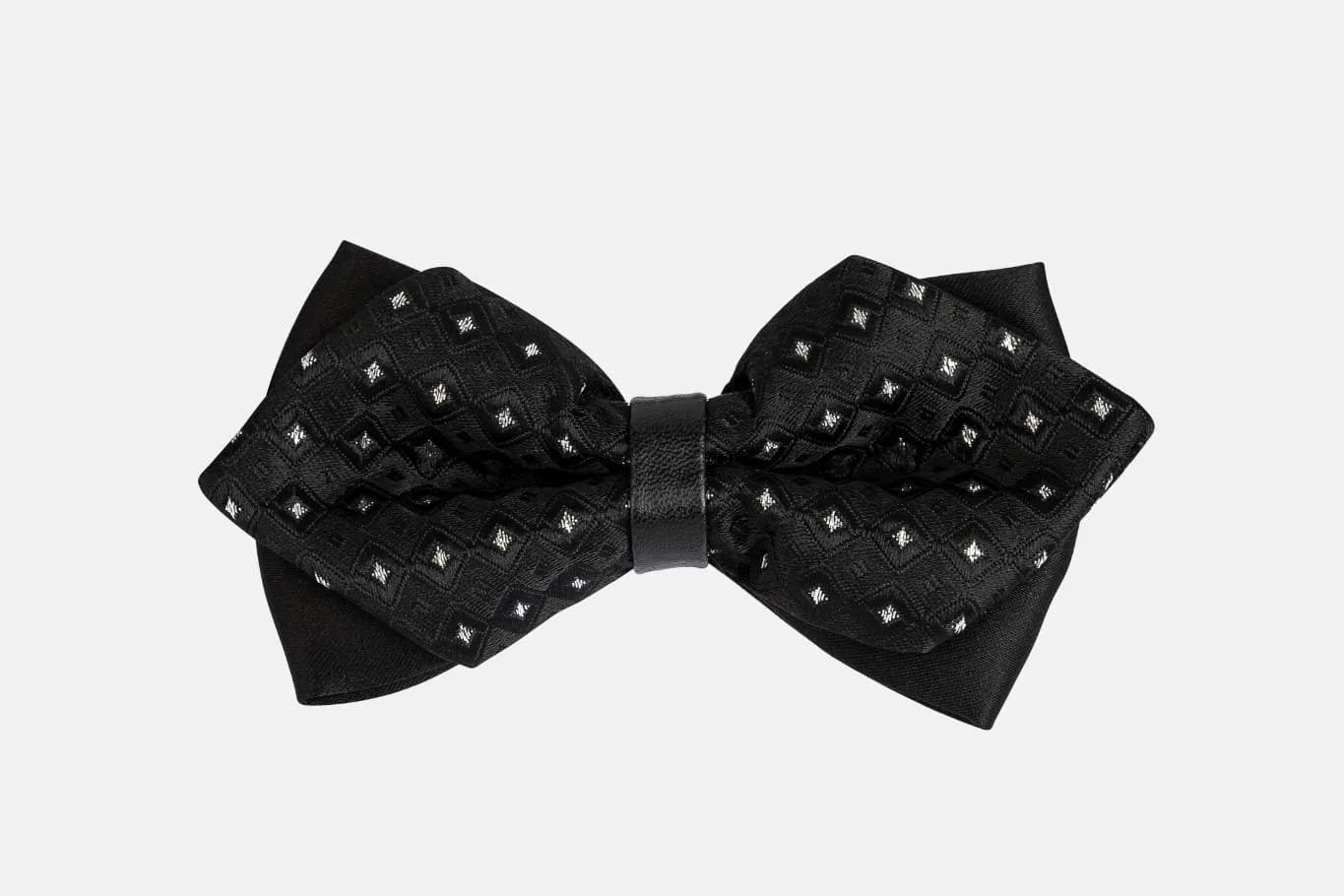
- A different texture: if the gown is satin, the bow tie can be velvet or matte silk, to avoid repeating the finish.
- Take the boutonniere from the bouquet: the most natural way, and it needs the least styling.
If the bride changes into a second gown of another colour, keep the tuxedo fixed and change the bow tie or flower.
A multicoloured or patterned gown
An embroidered floral gown or one that mixes two shades makes matching harder. Find the dominant shade on the gown, usually the colour covering the most area, and treat it as "the gown colour" when you choose the tuxedo. The groom's outfit should be plain, with few details and a satin lapel that agrees with the body of the jacket; let the bride carry all the pattern. If you want to echo her, take one very small secondary shade from the gown for the pocket square.
Adding colour to a black tuxedo
If you want your black suit to carry a subtle touch of colour, see adding colour to a black tuxedo for when to use a bow tie, cummerbund or lining.
For white, ivory or champagne gowns, read matching your tuxedo to the bride's gown. More choices for the groom are on the wedding tuxedo page.
When to ask your tailor
If you already know the gown colour, tell the consultant before choosing cloth. At the fitting, standing beside a gown sample or a photograph shows at once which suit belongs. Book a fitting at a showroom.
Published 05/11/2026 · 13:00 · Editor: Mon Amie