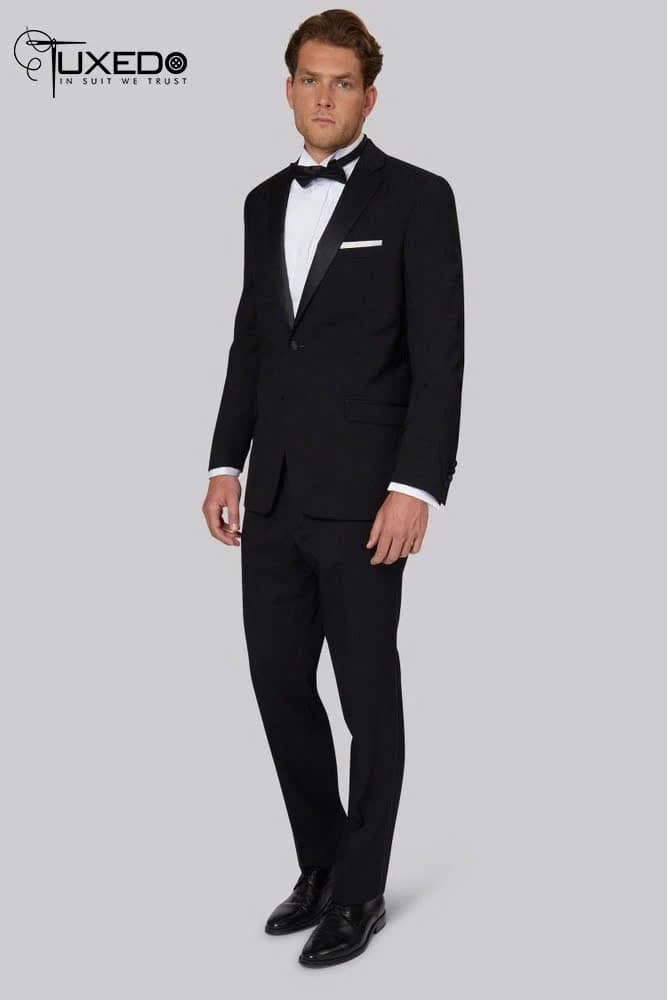
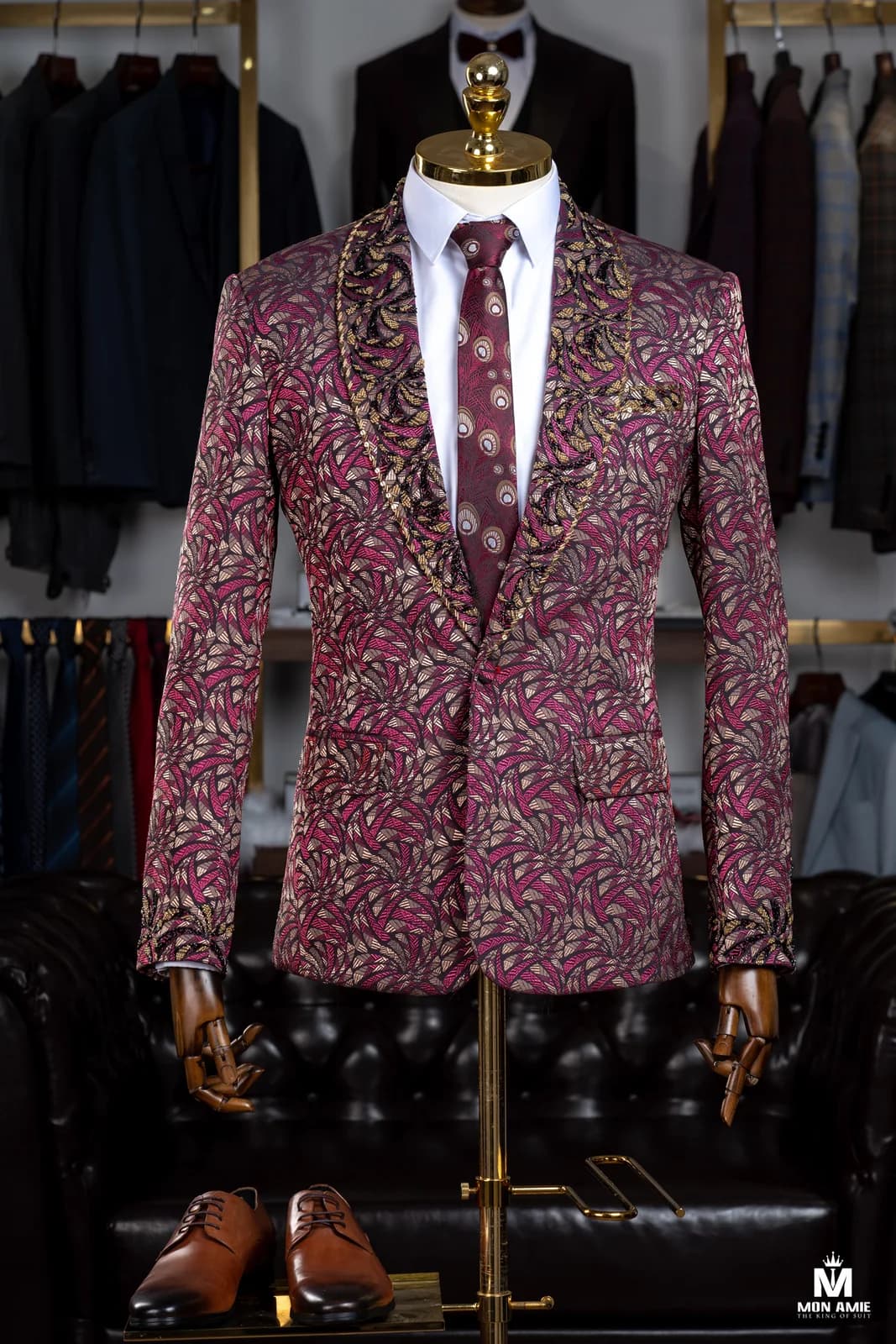
Matching your tuxedo to the bride's white, ivory or champagne
Pairing a tuxedo and shirt with a pure white, ivory or champagne wedding gown: matching the white, satin sheen, and choosing the flower and pocket square.
Editor: Mon Amie · Published · about 3 min read
In this article
Look at the bride's gown before you choose your shirt, because the whites of the two need to belong to the same family. A black or navy tuxedo is the safe part; it is the shirt, pocket square and boutonniere that most often drift out of tune in photographs.
Pure white gown, white shirt
A pure white gown has a slightly cool cast, close to optical white. With this kind of gown, your shirt should be a bright, clean, cool white. Side by side, the photograph stays crisp and neither of you looks yellowed.
- A crisp white shirt in fine poplin or twill, with a piqué bib or small pleats depending on formality.
- A white pocket square, folded flat in a presidential fold, in tune with the shirt.
- A black or navy bow tie, with enough contrast against the white for the eye to rest.
Avoid an ivory shirt beside a pure white gown: next to it, the shirt looks aged.
Ivory or champagne gown, ivory shirt
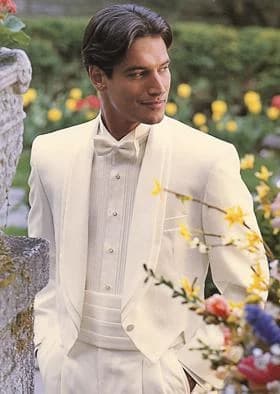
Ivory and champagne gowns have a warm cast. A brilliant optical-white shirt beside them always looks a little cold and mismatched.
- Choose a soft ivory or very light cream shirt, not an obvious beige. A hint of cream feels richer than harsh white.
- An ivory or champagne pocket square, perhaps in matte silk. Warm like the gown, without copying the colour exactly.
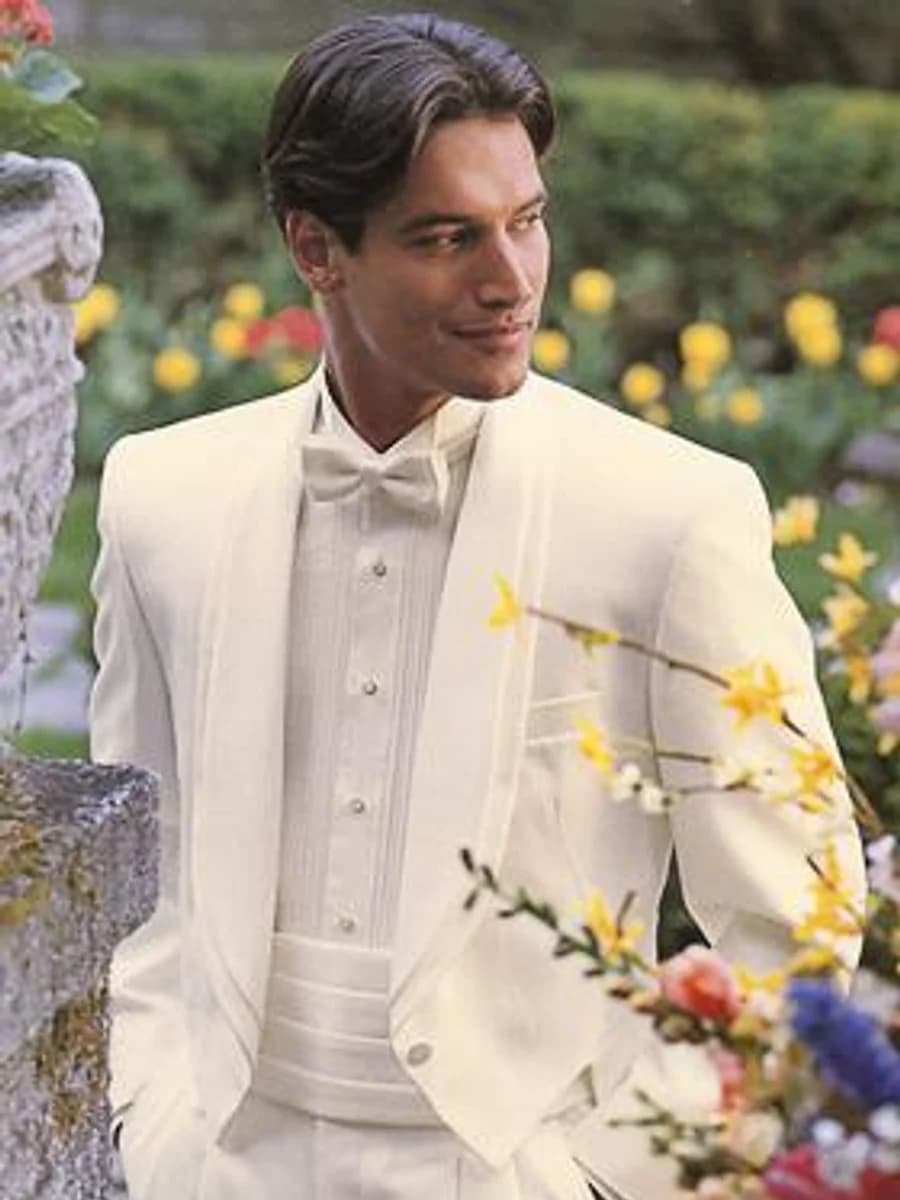
- With an ivory dinner jacket, check it against the gown fabric at the same time; two ivories from different families show at once. You can look at TUX-073, ivory with a silk sash.
The surest method is to bring a swatch of the gown or a daylight photograph and compare it with the shirt in the showroom. Shop lighting sometimes deceives the eye.
Sheen and satin
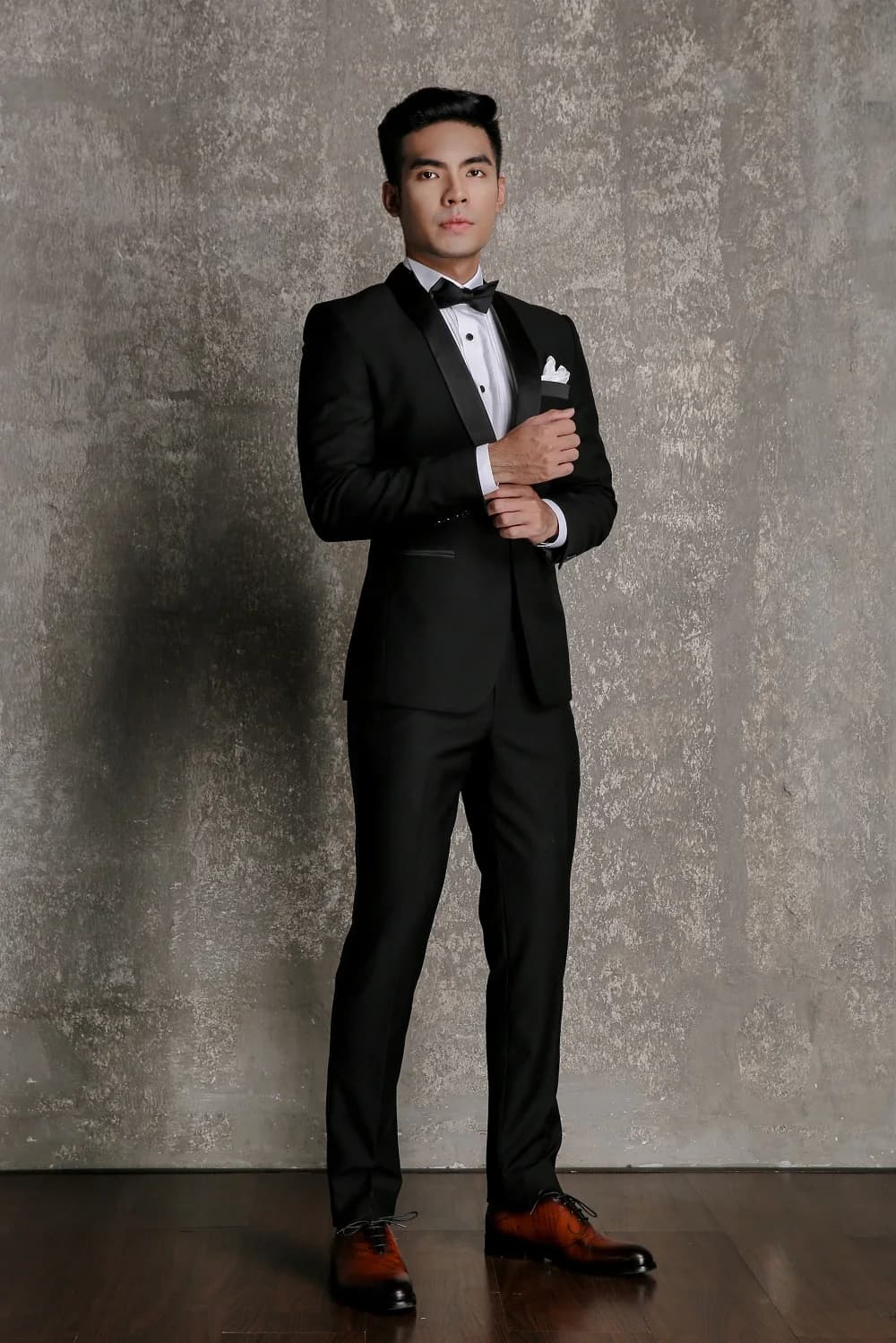
Wedding gowns often use satin, silk, tulle or lace, each with a different sheen. A tuxedo's lapel is also faced in satin or grosgrain. The two sheens should agree.
- High-sheen satin gown: the tuxedo's satin lapel catches light in a similar way and looks harmonious, but avoid piling on shine elsewhere, such as a glossy bow tie and patent shoes together.
- Lace, tulle or matte gown: a matte grosgrain or softer facing suits better; a harsh satin would overpower the gown.
- Minimal, clean-cut gown: a plain shawl-lapel tuxedo is a natural partner.
On a black tuxedo, black satin reflects light without changing colour, so it rarely clashes with the gown.
Boutonniere and pocket square
The boutonniere is the easiest way to echo the bride's bouquet. A tidy rule: one bloom, the same flower or colour family as the bouquet, in the left lapel buttonhole.
- White gown: white flowers such as rose, orchid or lily, with a touch of green.
- Ivory or champagne gown: cream or pale blush flowers.
- The pocket square should not match the boutonniere exactly; if the flower is white, the square can be plain white, and if the flower is coloured, choose a neutral square.
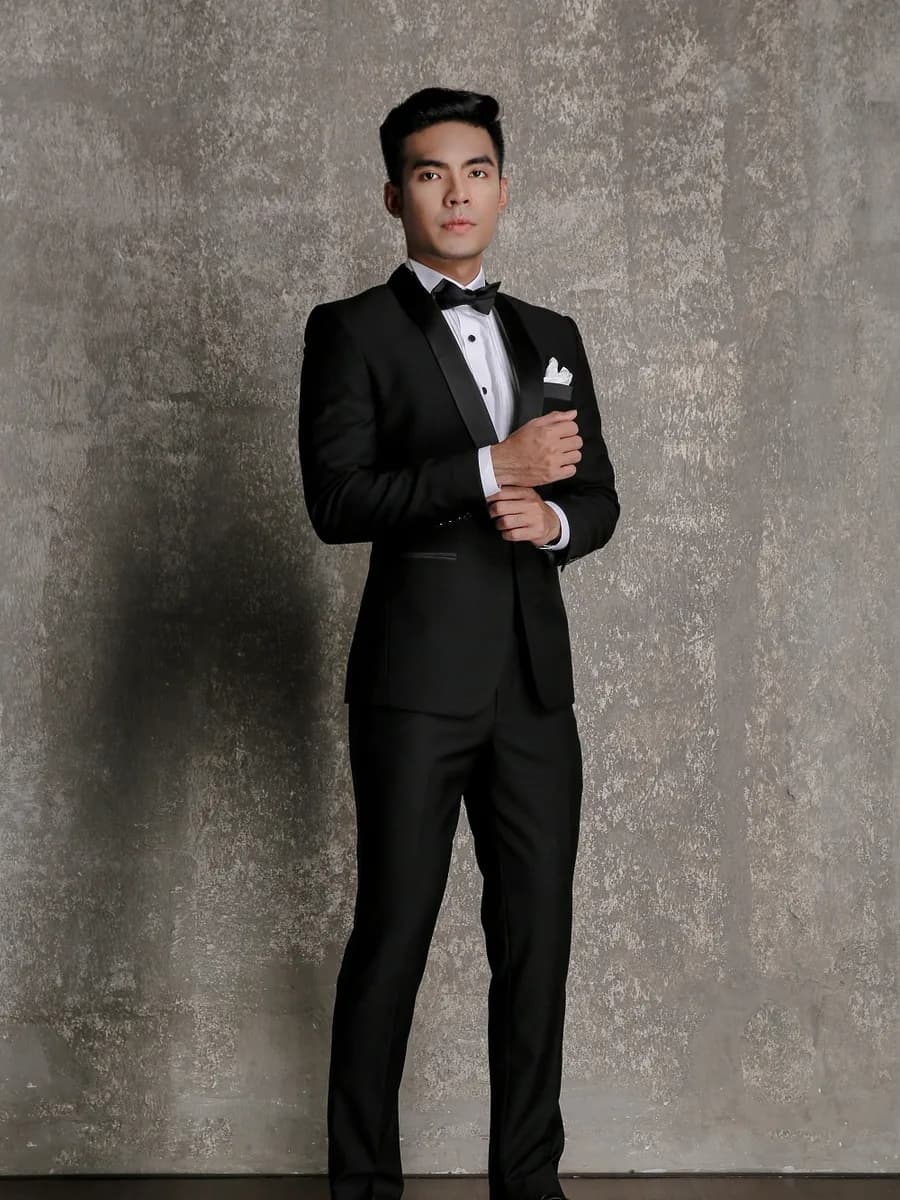
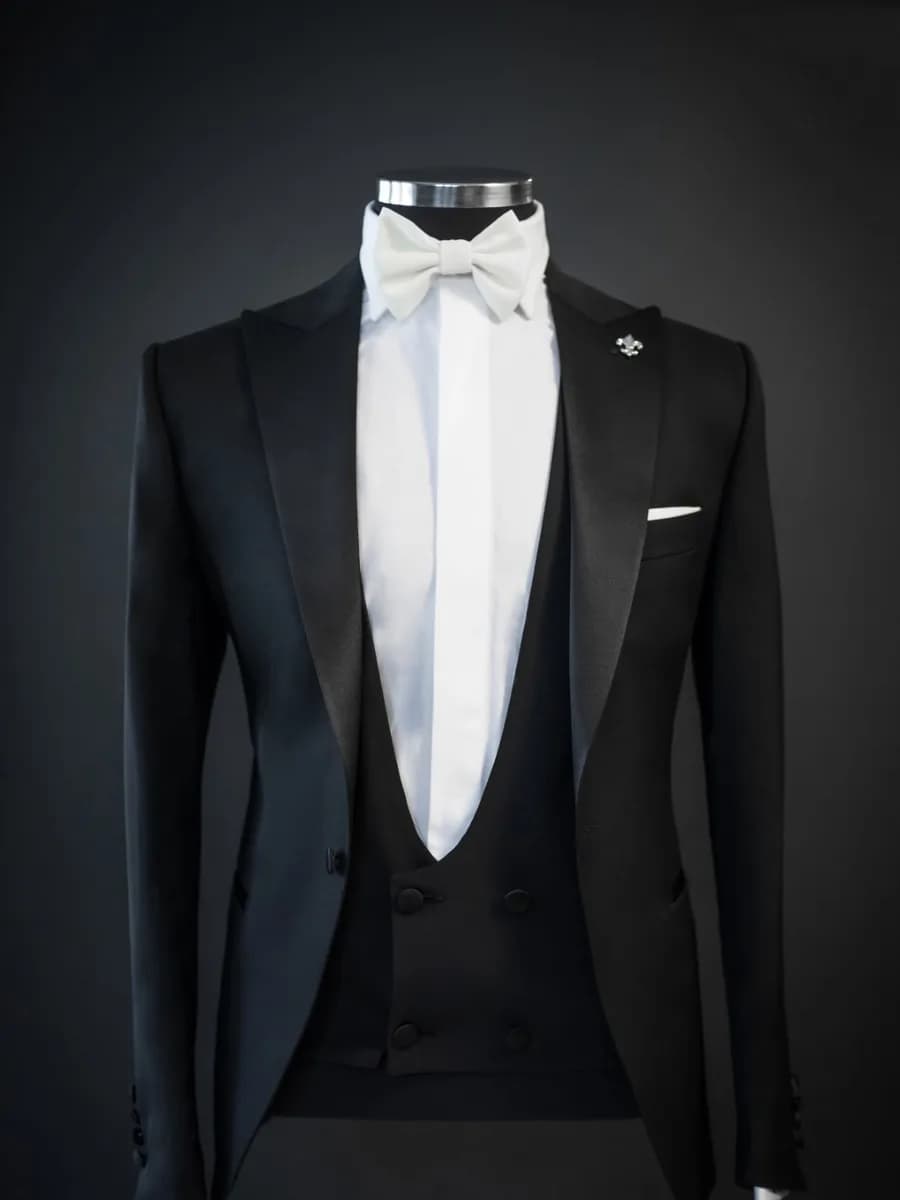
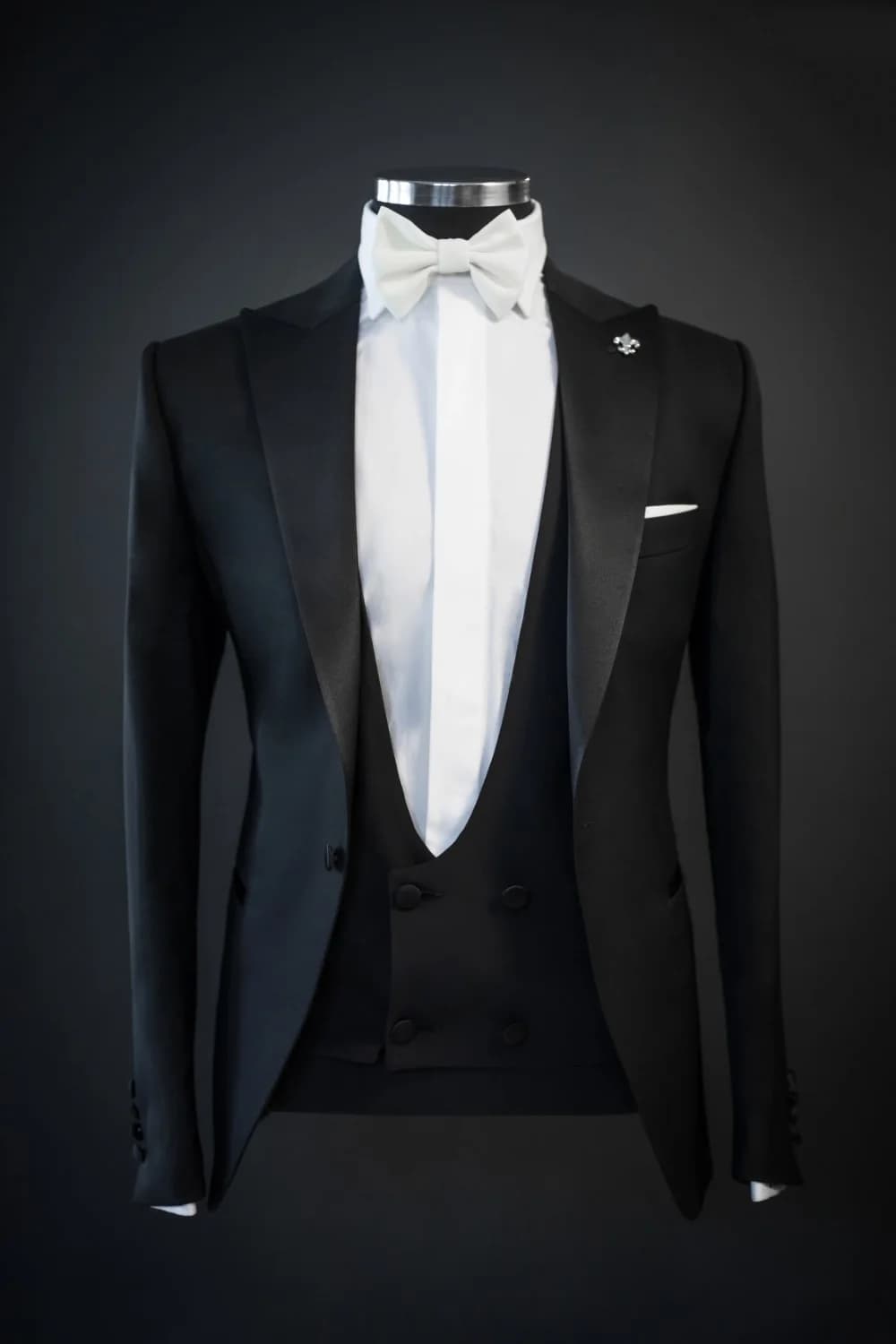
TUX-092, a black shawl-lapel with a white pocket square and TUX-093, black peak lapel with a white bow tie and lily pin show how flower and square lift a black suit.
When the bride changes gowns
Many brides wear two or three gowns in a day. If the second gown shifts from white to ivory or the reverse, do not change the whole shirt. Choose an in-between tone such as a soft white, and change through accessories: bow tie, pocket square, flower. When the gown turns to colour, see when the bride wears colour.
The wider picture of choosing for the groom is in wedding tuxedos for the groom and the wedding tuxedo page.
A tip from the Mon Amie workroom
When you come to a fitting, bring a photograph of the gown or a fabric swatch. The consultant will place shirt and pocket square against it in light close to the wedding's, to settle the white. Book a fitting at a showroom.
Published 04/11/2026 · 13:00 · Editor: Mon Amie