Keeping black cloth black: avoiding fading
Why does a black tuxedo fade to brown or grey? Causes in cleaning, sun and friction, dye quality, dry cleaning less often, and what to do once it has faded.
Editor: Mon Amie · Published · about 3 min read
In this article
A black tuxedo rarely fades because of one big mistake. It is many small things piling up: repeated cleaning, sun, years of friction and dye that did not go deep enough. The good news is that most of it is preventable, from the moment you choose the cloth to how you store the jacket after each wear. The bad news is that once black has truly faded, it is very hard to bring back.
Fading or just shine
First, separate two things that are often confused.
- Shine. Bright glossy patches at the elbow, seat, thigh and cuff, caused when pressing, hot ironing or rubbing flattens the fibres. The fibre is flattened, but the colour has not gone, and steam often helps.
- Fading. The dye is lost or shifts, so black drifts to brown, grey-blue or green. This is a change in colour and does not reverse easily.
Hold the jacket to the light and compare high-friction areas with a protected spot such as the inside seam or under the arm. If the high-friction area is clearly paler, it is fading.
Common causes
- Frequent dry cleaning. Solvent gradually strips colour and dulls the cloth. Wearing a suit once and sending it straight out is a common habit, and it is the quickest route to fading.
- Sun. UV shifts dye colour, especially if the jacket is dried outside or hung near a window for months. Black wool can turn brownish after months in sunlight.
- Friction. Elbows, trouser hems, car seats and bag straps rub the same spot repeatedly.
- Sweat and perfume. Chemicals in sweat, fragrance and personal-care products can dull colour around the collar and underarm.
- Harsh stain treatment. Scrubbing a stain with chemicals leaves a pale patch.

Dye quality
Two cloths that look equally black when new can age very differently. The difference lies in dye quality: whether the dye penetrates deep into the core of the fibre or sits on the surface, and how well the dyeing process is controlled. Cloth from established mills is usually dyed with more care, which is part of why higher price lines tend to hold colour better under regular wear.
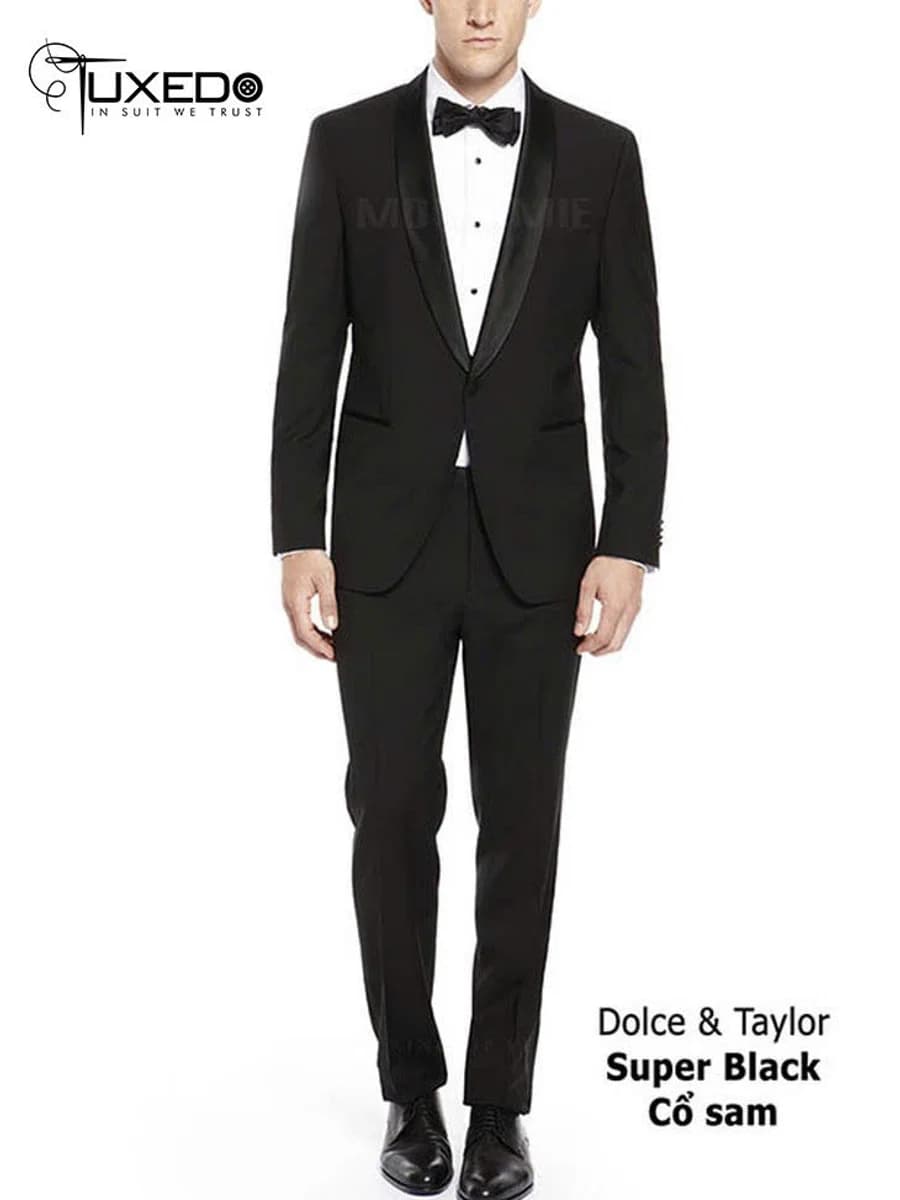
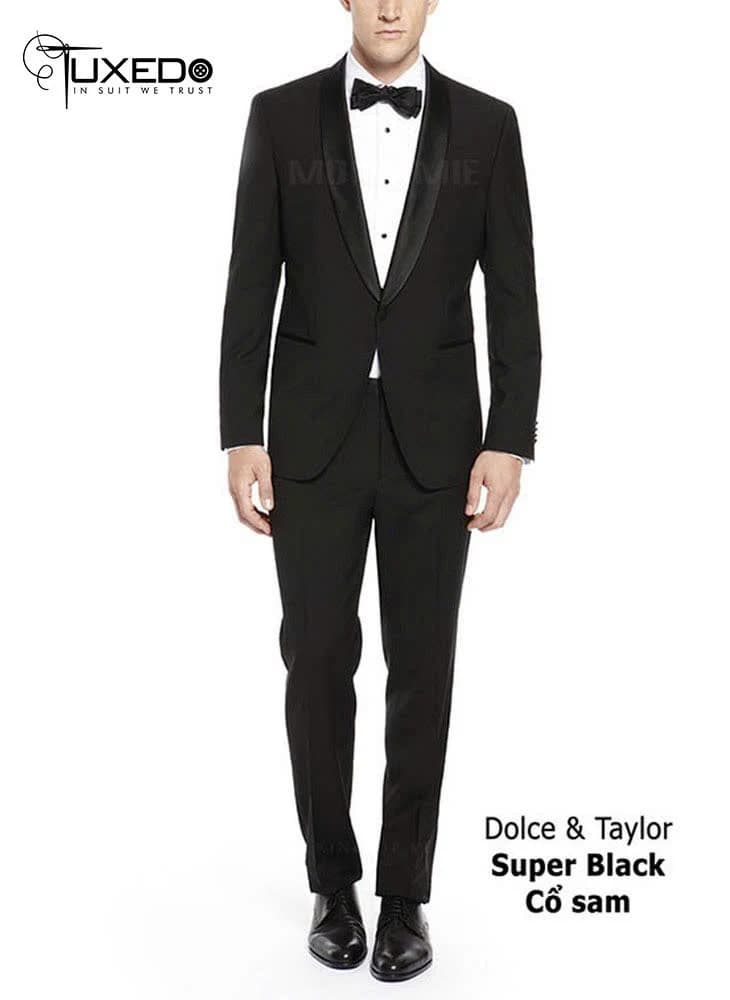
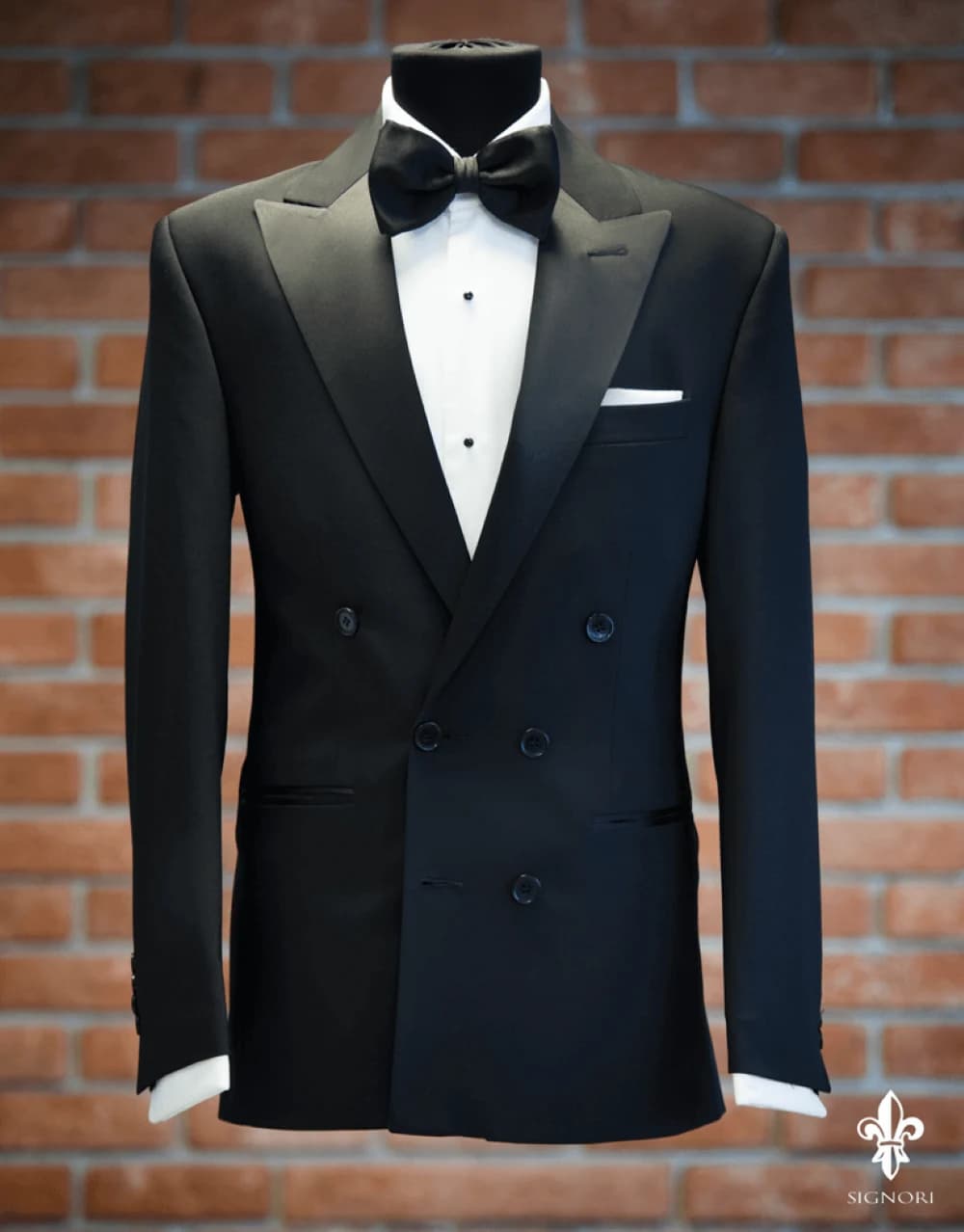
You cannot easily judge this by eye in a shop. The practical approach is to ask your adviser where the cloth comes from, look at it under the lights to judge depth (a deep black does not lean brown or blue), and buy from someone who can explain. Our piece on super black discusses depth of black. For a style reference, see TUX-047, a solid black tuxedo with a rounded satin shawl collar and single button.
Dry clean less often
This is the habit most worth changing.
- Clean only when truly needed: a stain, an odour, or after several wears in a row.
- Between wears, hang the jacket somewhere airy and shaded, on a broad-shouldered hanger, until moisture and odour have gone.
- Brush with a soft brush along the grain after each wear.
- Treat small marks with a clean damp cloth, blotting rather than rubbing.
- Tell the cleaner it is black with satin facings and ask for a gentle process.
Our guide to dry cleaning a tuxedo covers these steps in more detail.
Once it has faded
- Check whether it is shine or fading. If it is only shine, a cleaner can often treat it with steam and a brush.
- Do not re-dye at home. Blended wool, satin facings and linings take dye differently, which risks patchy colour and a mismatch between jacket and trousers.
- Ask your tailor about replacing the parts that can be replaced, such as satin facings, lining or trousers. A habit tailors recommend is to make a second pair of trousers in the same cloth from the start, since trousers wear and fade faster than the jacket.
- Change its role. A faded suit can serve for less formal occasions rather than black tie.
- Consider a new suit when fading shows in places everyone sees, such as the lapel and shoulder.
Book a fitting at Mon Amie
If you plan to commission a black suit to wear for years, look at the cloth under showroom lights and ask where the mill is before you choose. Book a fitting and your adviser will set several black cloths side by side so you can compare depth of colour.
Published 04/11/2026 · 20:30 · Editor: Mon Amie