Vintage tuxedos: how to date one and whether to buy
Read the label, stitching, lapel and trouser width to date an old tuxedo; check moth, satin and lining damage and tally alteration costs. Vintage or new?
Editor: Mon Amie · Published · about 4 min read
In this article
A vintage tuxedo is worth buying when the cloth is still sound, the cut can be altered and the price plus alteration still makes sense. It is not worth buying when the wool has gone brittle, the satin has dulled, or the work needed would approach the cost of a new made-to-measure suit. What follows covers how to read the label, stitching, lapel and trouser width to estimate the era, and what to check before you commit.
Start with the label
The label inside the chest pocket tells you most. A tailor's label usually carries the shop name, the city and sometimes the client's name and order date, which marks a bespoke garment. A ready-to-wear label gives the maker, fabric and origin. Small printed fibre-content labels mostly came later, so a jacket carrying a clear one is rarely very old.
Treat the label as a clue only; labels get replaced or moved from other garments. A missing label proves nothing either way.
Stitching and construction
Older bespoke work often has hand-finished lapel edges, pocket mouths and buttonholes: small, even stitches that are not quite as straight as a machine's. Lift the lapel and look at the canvas. If it is hand-stitched and the lining is free-hanging, the jacket is usually durable and alterable. If the inside is fused with adhesive interlining, deep reshaping becomes far harder.
Give the seams at the back and underarm a light tug. If the thread has rotted and the seams open easily, expect a lot of repair work.
Lapel, trouser width and silhouette
The silhouette hints at the era, though only as a guide because fashion recycles itself:
- Double-breasted jackets, built shoulders and high-waisted pleated trousers point to the middle decades of the twentieth century.
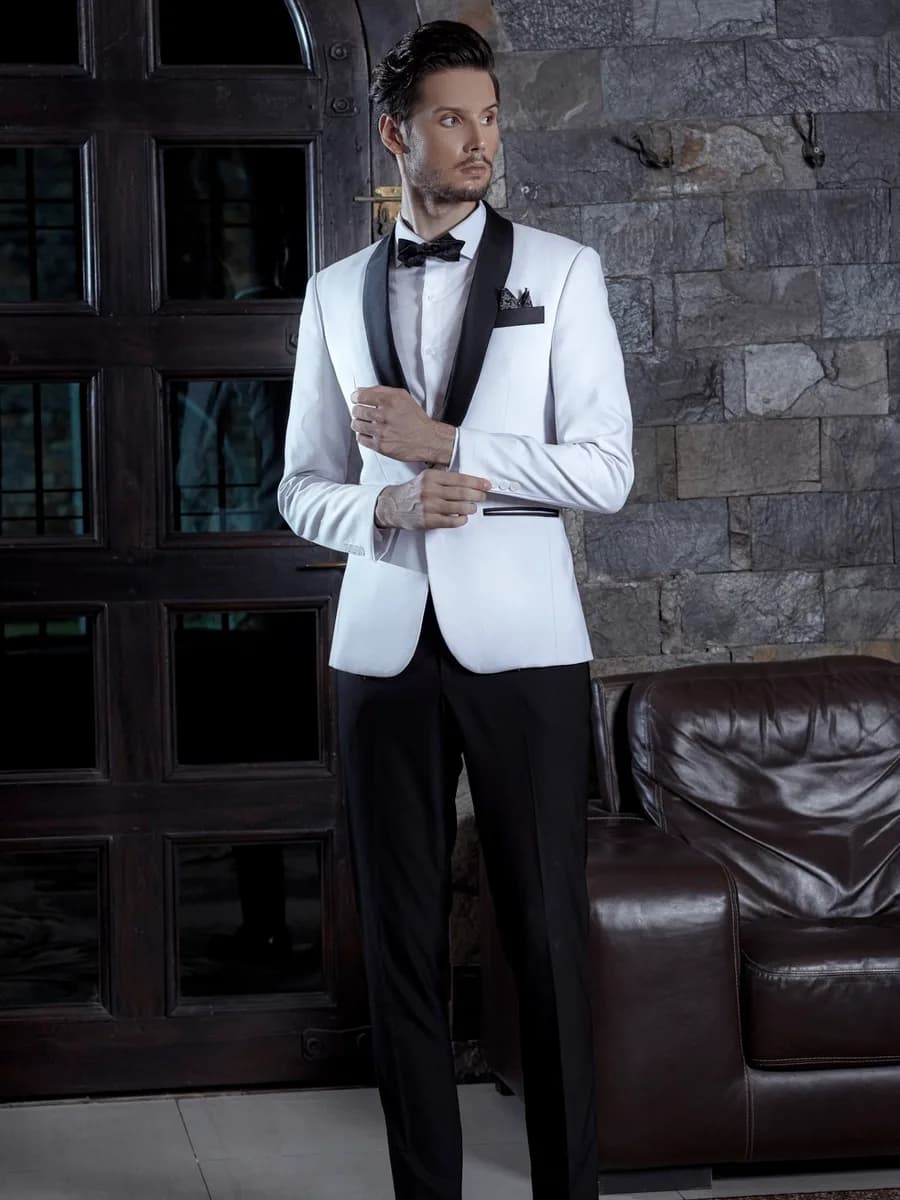
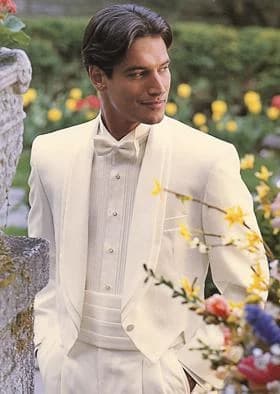
- The white shawl-collar dinner jacket is a familiar image of warm-season parties in the 1950s.
- Very wide lapels and flared legs suggest the 1970s.
- Big shoulders, a roomy body and deep pleats suggest the 1980s.
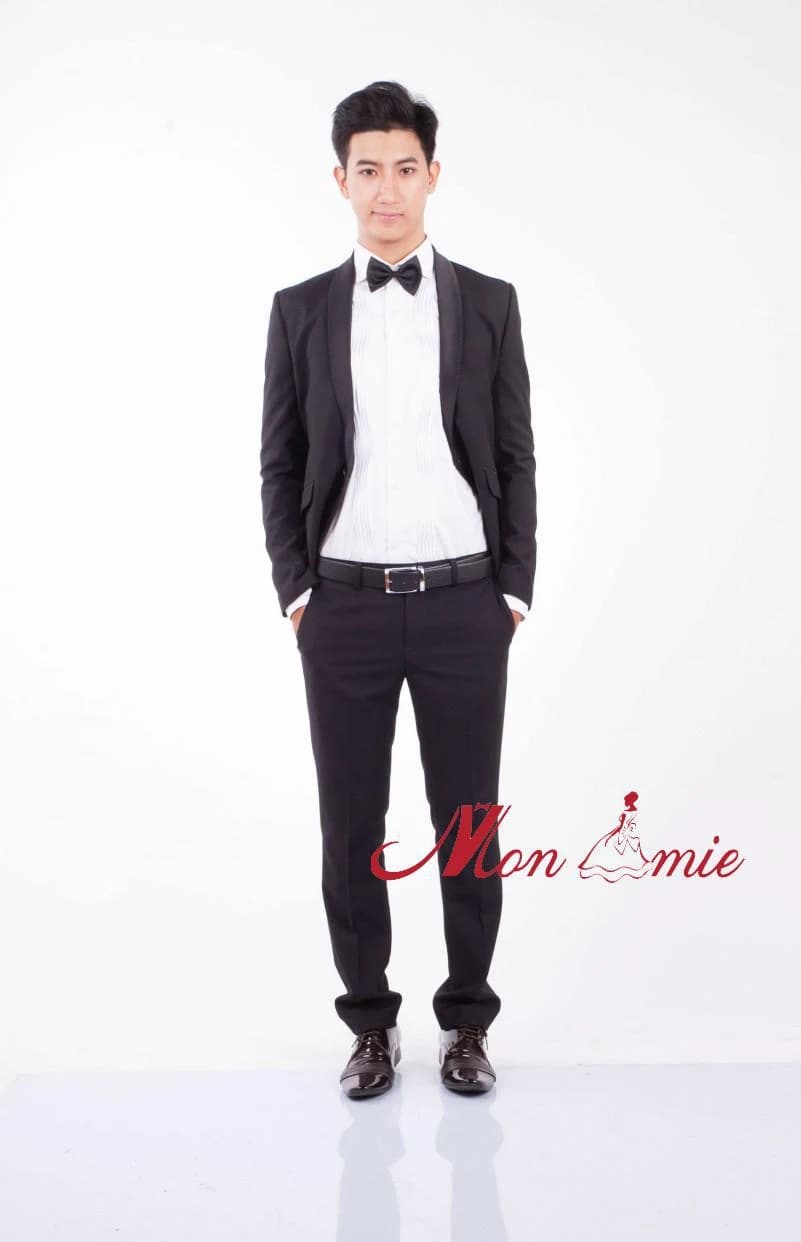
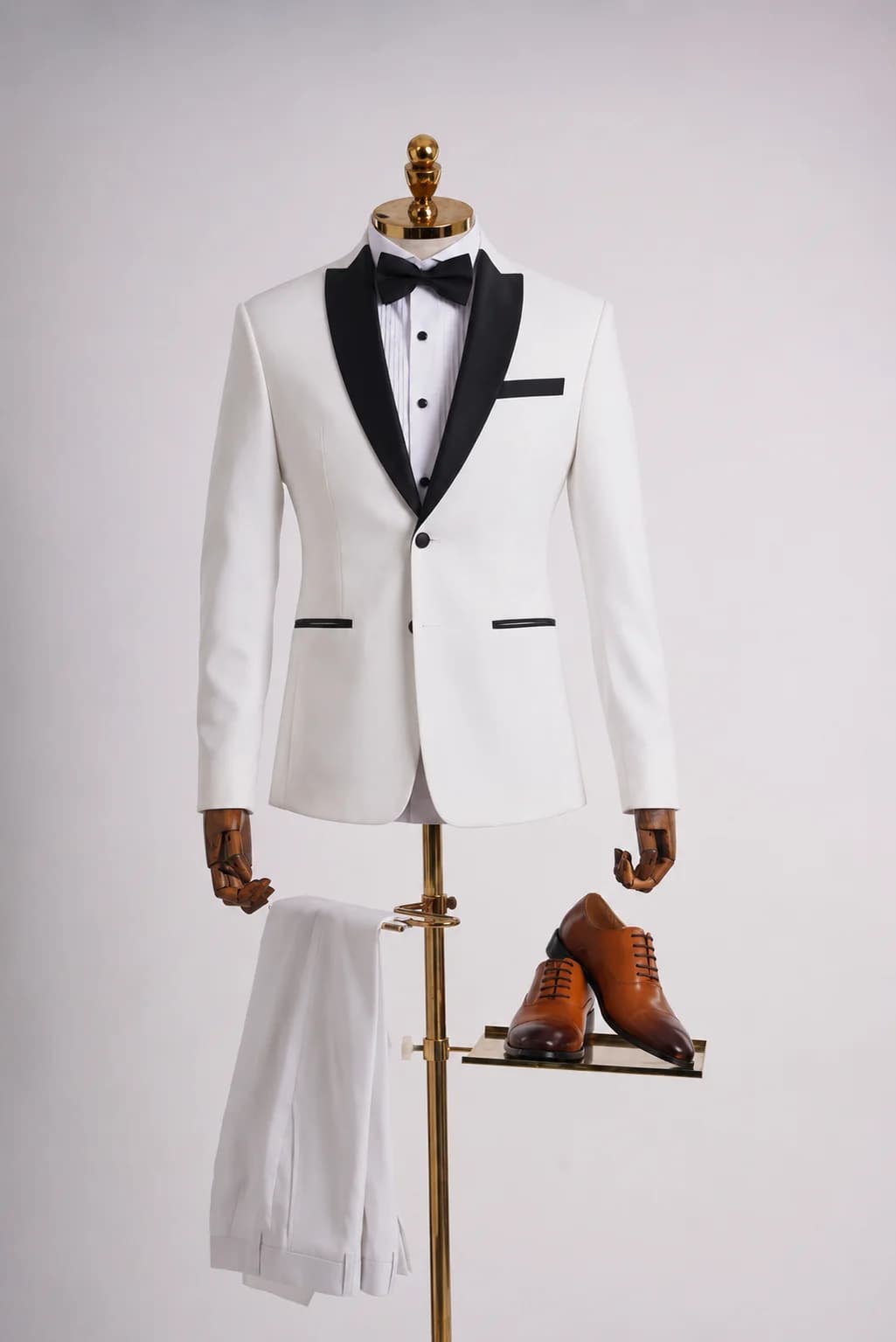
- A slim cut, narrow lapel and straight leg belong to the 2000s onward.
A correct tuxedo trouser has no turn-ups and carries a single satin braid down each leg. If you find turn-ups, the trousers probably do not belong to that jacket.
What to inspect
Go through these in daylight:
- Moth damage: small round holes in the wool, especially along folds, under the lapels and inside pockets. Scattered holes are hard to mend, and live moths can spread to your wardrobe.
- Satin facings: if the sheen has turned dull, worn or lifted, replacing the facing is laborious because the whole edge has to be taken apart. Yellowed or stained satin rarely cleans out.
- Lining: old silk linings split at the underarm and back; if it makes a tearing sound under a gentle pull, the fibre is brittle. A new lining can be fitted, but it takes work.
- Smell and stains: damp odour or long-set perspiration marks under the arms may never wash out fully.
- Buttons: fabric-covered buttons wear easily; old horn or bone buttons usually remain serviceable.
What alterations cost you
A tailor can usually adjust sleeve length, jacket length, trouser hem and, within limits, the body. The shoulder and lapel are the frame of the jacket and are practically off limits. If the shoulders do not fit from the start, walk away: reworking a shoulder is costly and easily spoils the cut.
The usual jobs are taking in the body, adjusting sleeves, lowering the waist and letting out seam allowances. Add the purchase price to the alteration bill and the total often lands close to a new made-to-measure suit. For adjusting an existing jacket, see altering a ready-made tuxedo and refreshing an old tuxedo.
When vintage pays and when to make new
Vintage is worth considering if the wool or mohair is still dense, the shoulders fit as they are or are slightly wide so they can be taken in, the satin is intact, the lining is sound, and you like the period character and a piece few others will wear.
Make new if you need the suit for an important occasion such as a wedding with no room for repeated fittings, if the shoulders sit wrong, if moth has gone deep, or if you want a modern clean line. A new bespoke tuxedo lets you choose cloth, lapel and silhouette, starting from your own measurements; see made-to-measure tuxedos.
Bring the vintage piece to a cutter
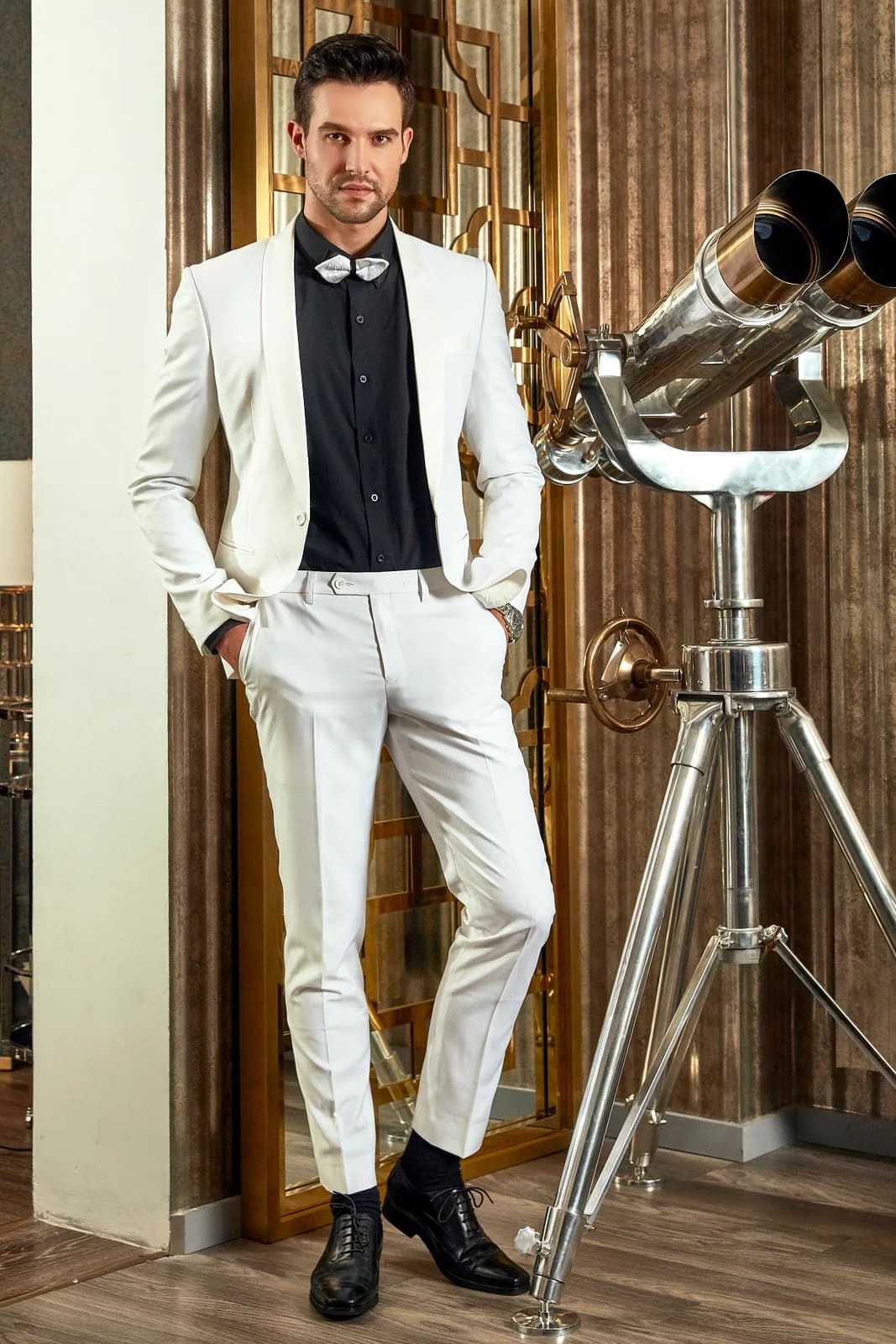
Before you pay, ask a master tailor to look. A few minutes is enough to tell whether the jacket can be saved. Book a visit at Mon Amie and bring the suit with you.
Published 24/11/2026 · 08:30 · Editor: Mon Amie