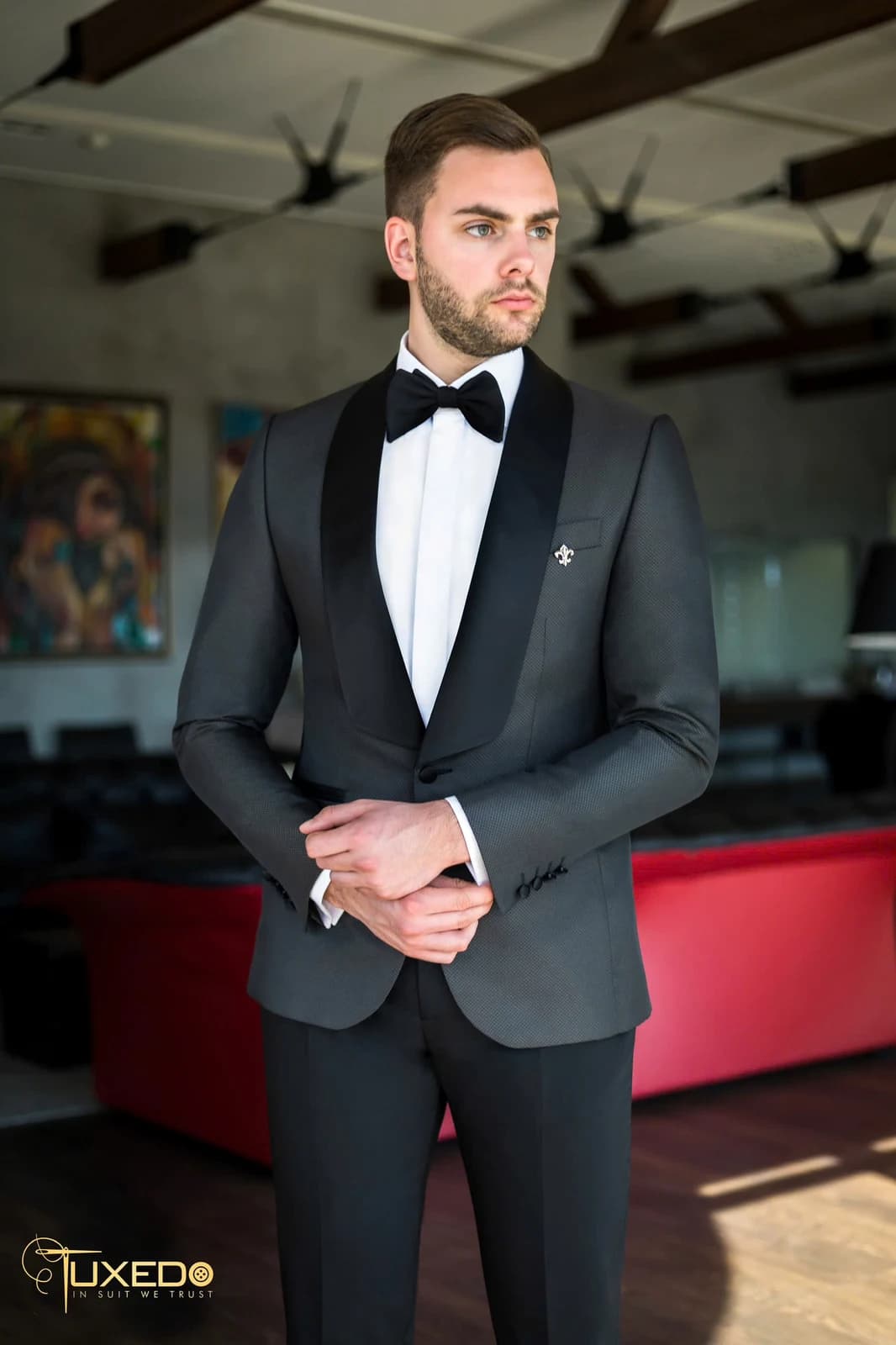
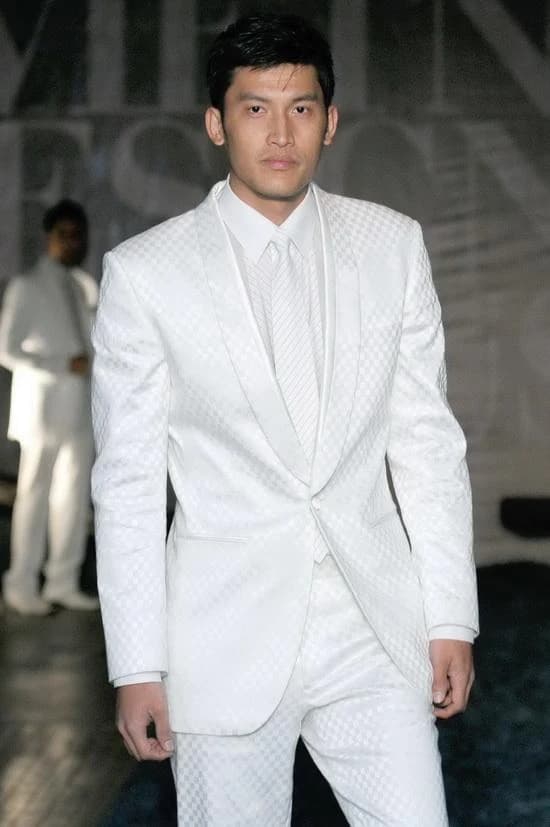
Tuxedos with a subtle sheen: refined or showy
A subtle sheen looks refined when the gloss is moderate and showy when flat and harsh. Where sheen comes from, the TUX-094 navy, and when it suits.
Editor: Mon Amie · Published · about 3 min read
In this article
A tuxedo with a subtle sheen looks refined when the gloss is just enough to play with movement, and showy when it is flat and harsh like plastic. The line sits at the level of gloss, and at keeping the lapel shinier than the jacket body. Hold both and a lightly glossy cloth gives your outfit a depth that plain black does not.
Where sheen comes from
Not all shiny cloth is alike. Several sources give different results.
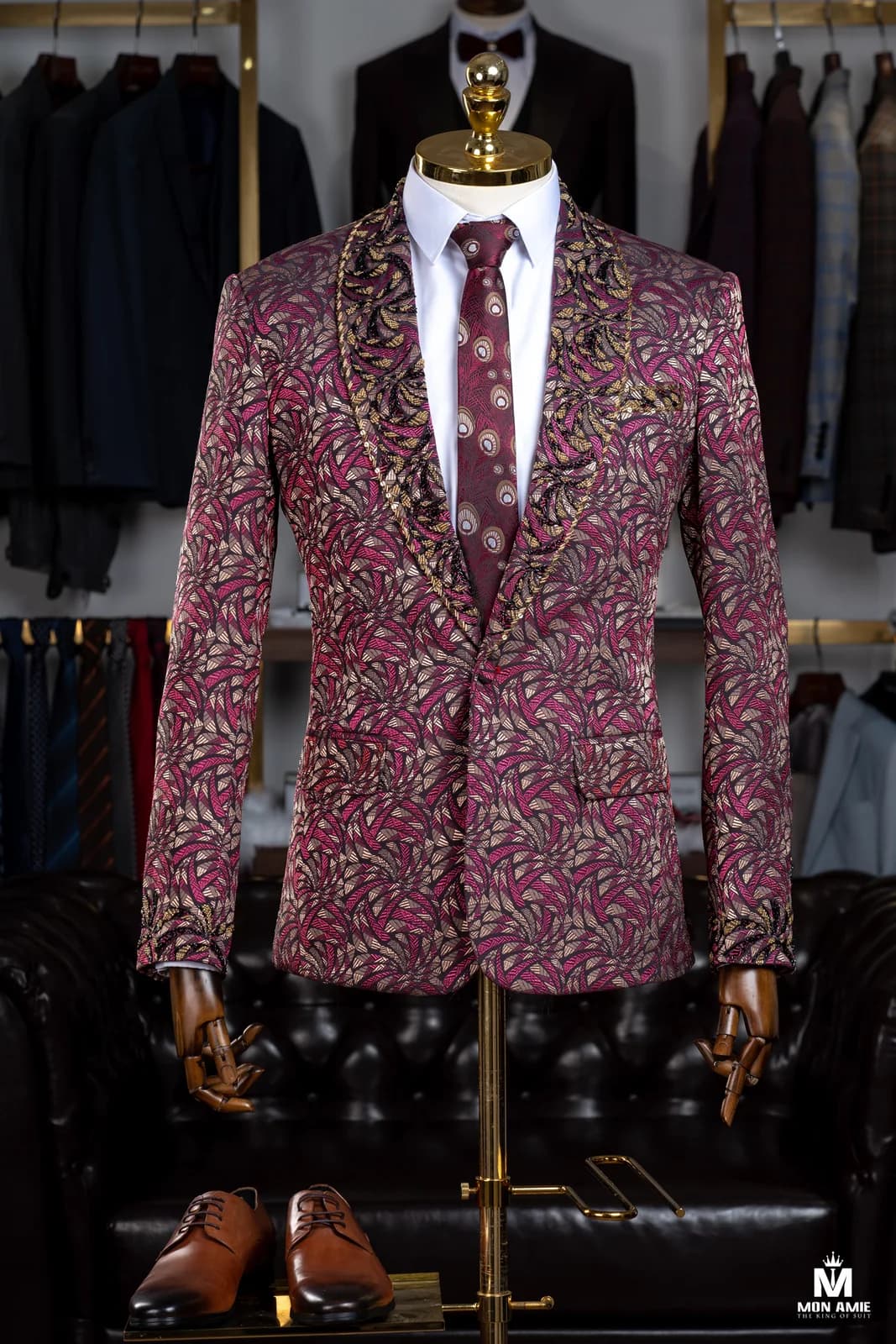
- Mohair and mohair-wool blends. Mohair is fibre from the Angora goat, with a natural lustre, crisp hand and good resistance to creasing. Blended with wool, it gives a dry, sharp, gentle sheen. More in mohair-wool cloth.
- Silk or synthetic blends. A little silk gives a soft glow. Synthetic blends can give an even, durable shine, but too much tends to turn flat and glossy.
- Weave. A tight twill or a light satin weave reflects more light than a matte plain weave.
- Finishing. Surface treatments change the level of gloss too.
In the same navy, a matte wool and a mohair blend feel very different under a lamp.
A real piece: TUX-094
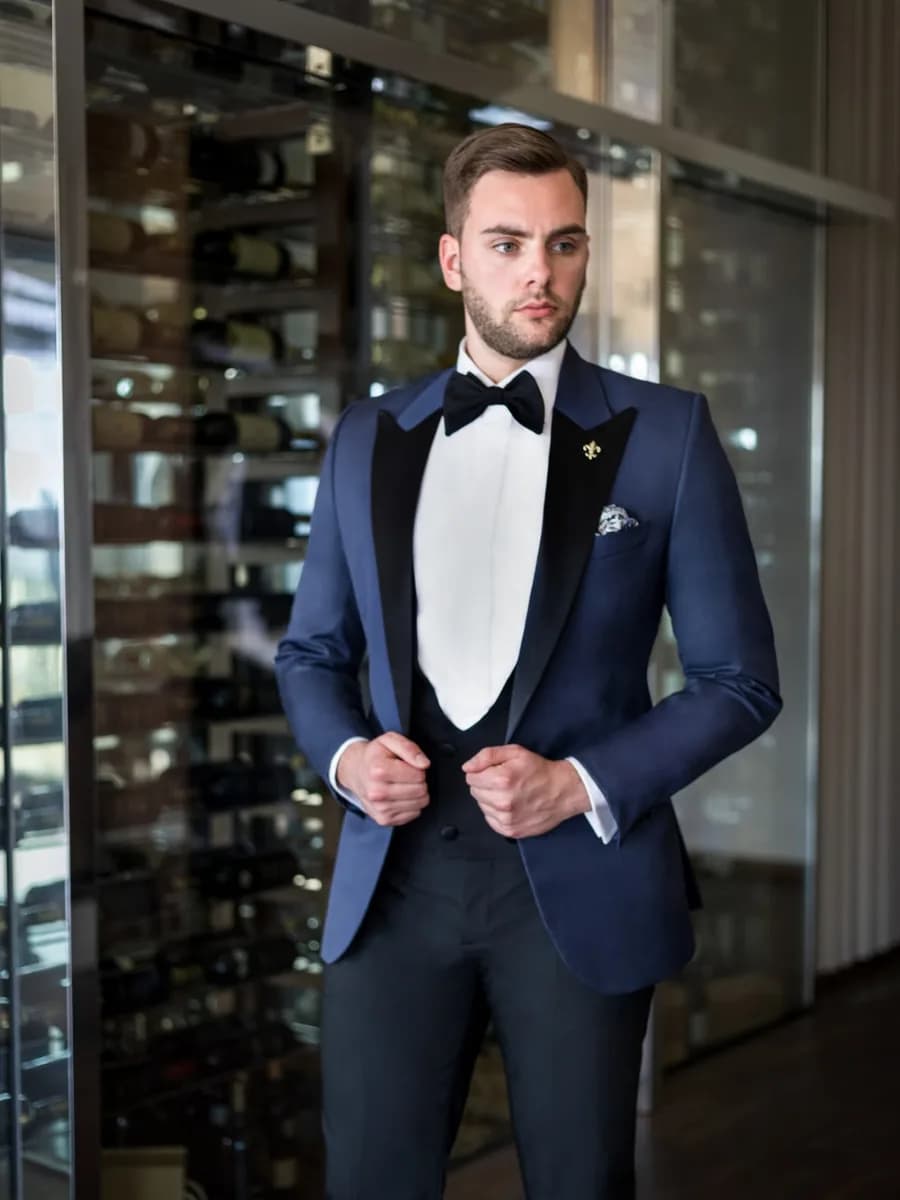
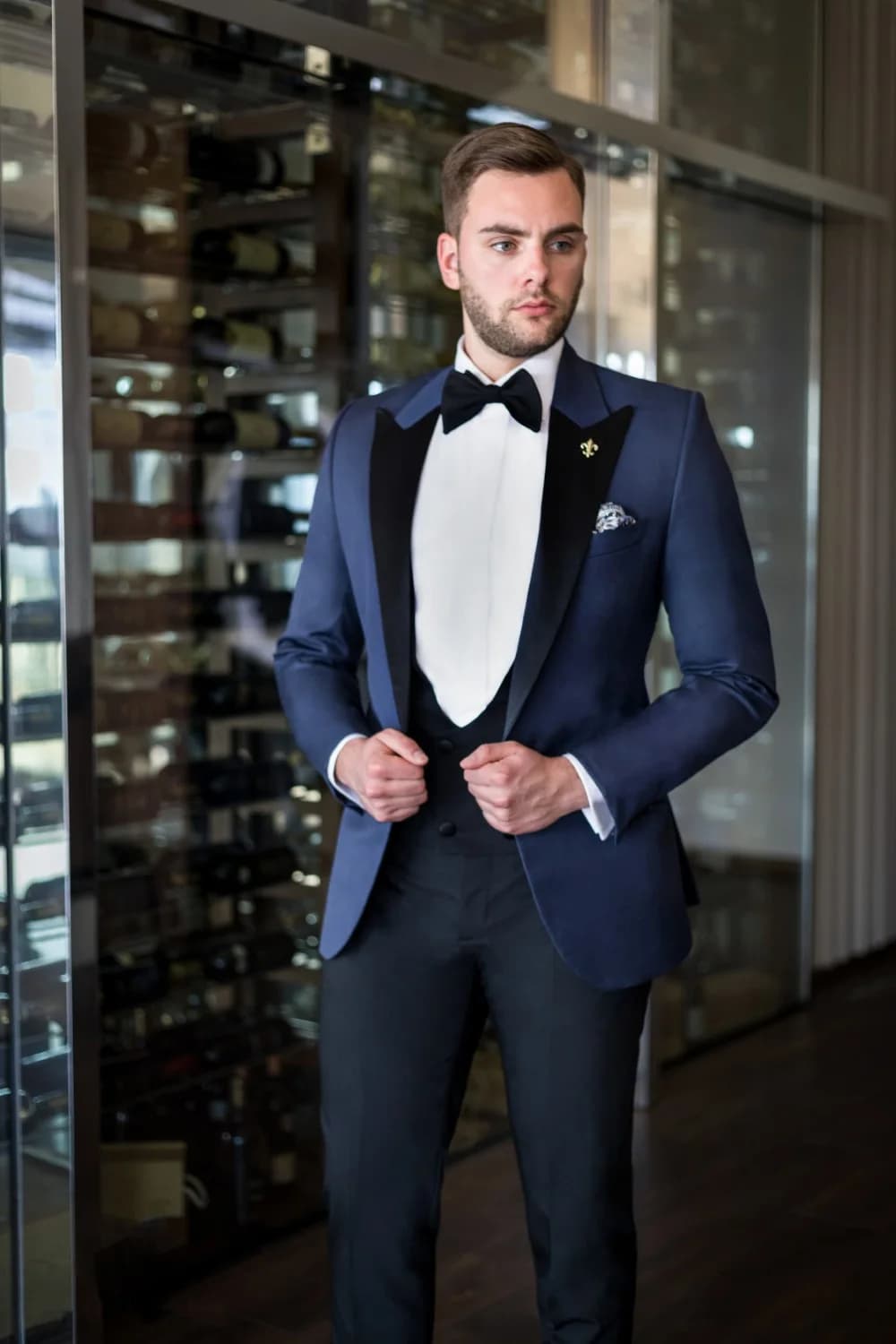
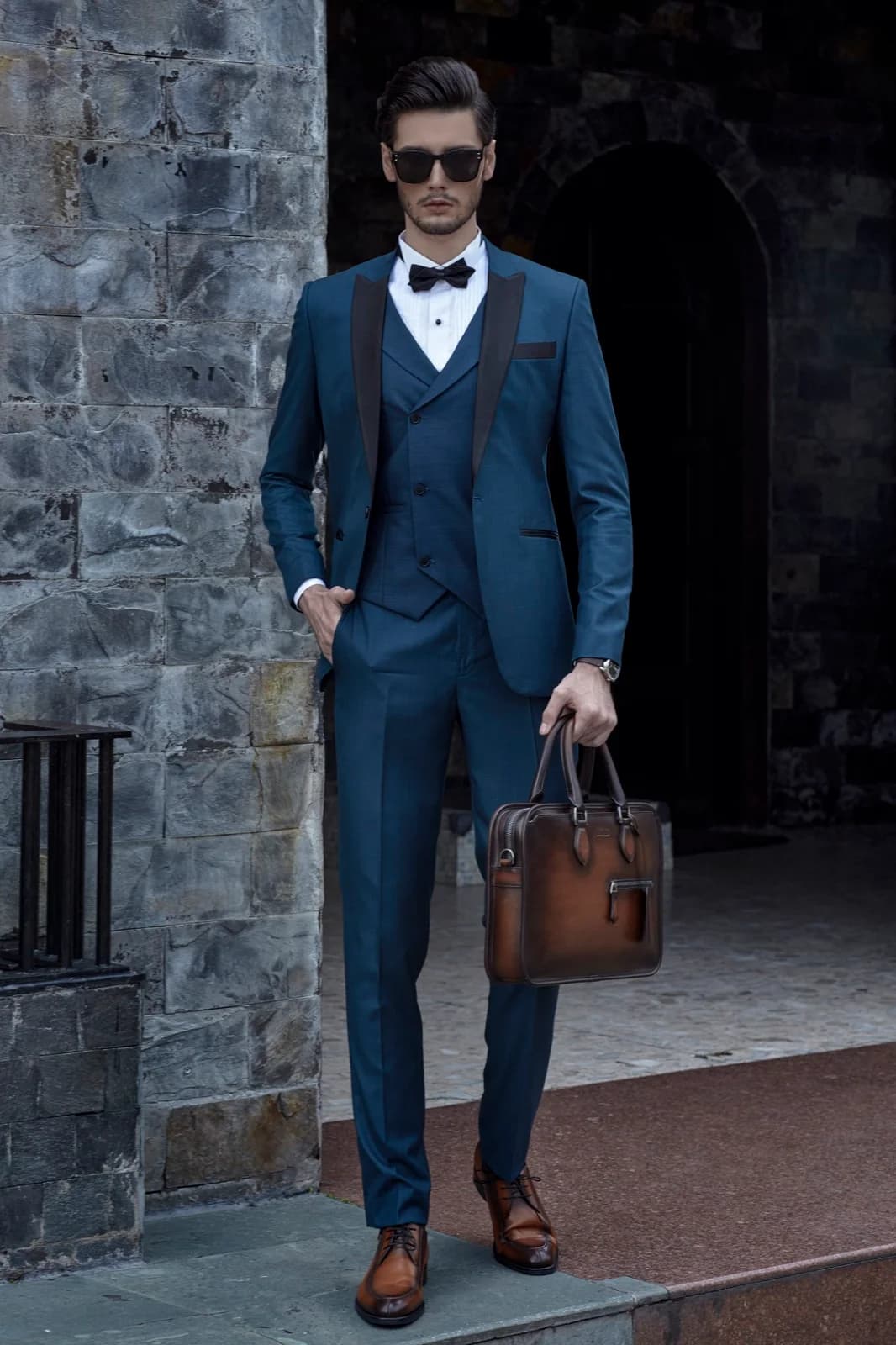
TUX-094 is a bright glossy navy tuxedo in the Midnight Blue and Navy collection. The cloth has an attractive gloss that gives off a gentle sheen as you move, making familiar navy deeper than an ordinary black suit. The black satin peak lapels are crisply edged, the waistcoat has a U neckline, the black bow tie follows black tie rules, and a patterned blue pocket square and a gold lily pin add personality.
Two details are worth learning from. The black satin lapel is still the shiniest part of the outfit, so even a bright body cloth does not steal its role. And all the accessories follow convention, leaving the cloth's sheen as the single accent.
Moderate gloss
Stand a few steps back and look at the cloth. Three signs show the sheen is right.
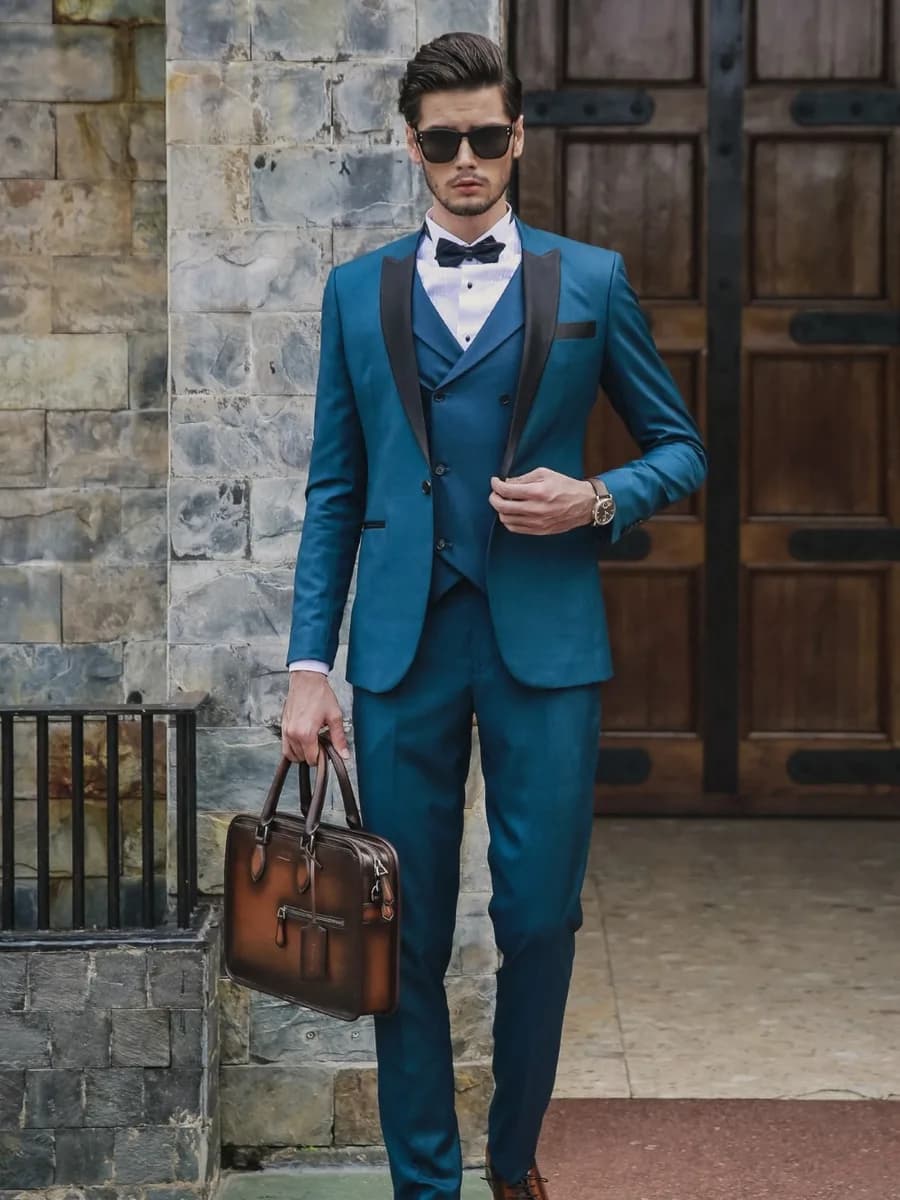
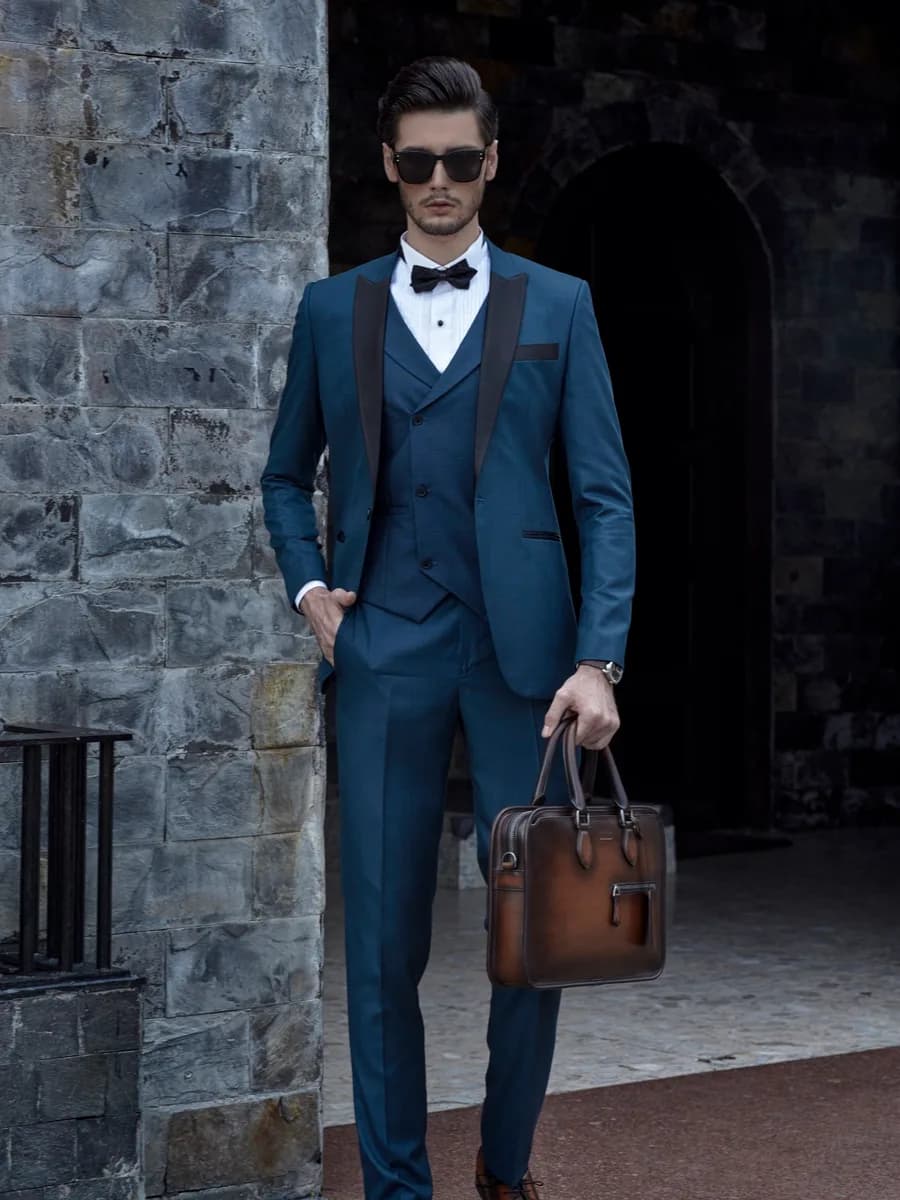
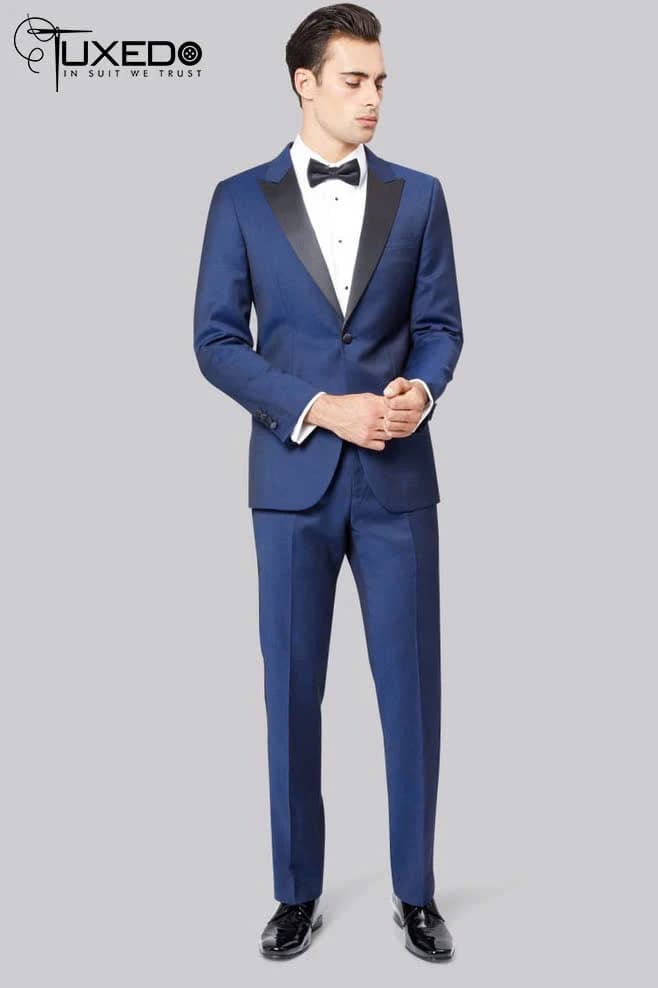
- The light appears on natural curves such as shoulders, elbows and chest, and shifts when you move.
- The colour still reads as navy or black, not covered by a white glare.
- The satin lapel is still clearly different from the body, in both gloss and tone.
If the body and the lapel are equally glossy, the tuxedo loses the hierarchy between ground and facing. If the cloth flares like a mirror under camera flash, it is too glossy.
One more tip: shiny cloth highlights every crease and every fitting flaw. The pattern has to be cut and fitted carefully, because a glossy surface exposes errors that matte cloth hides.
Occasions that suit, and those that do not
Suits:
- Evening weddings, corporate galas, anniversaries.
- Upscale restaurants, wine cellars, hotel lobbies where warm light flatters the sheen.
- Events that allow creative black tie or formal cocktail.
Does not suit:
- A strict black tie dinner where the host expects a traditional matte black or midnight tuxedo.
- Outdoor daytime events, since strong sun turns glossy cloth reflective.
- Everyday work settings. A glossy tuxedo is not office wear.
- Stages with hard spotlights if you do not want to glare. See tuxedo colours under stage light.
Refined or showy: ask three questions
- Does the gloss change as you move, or is it a flat single shine?
- Is the lapel still the most prominent shiny part?
- Is everything else, shirt, bow tie, shoes, still in line with etiquette?
If all three hold, the outfit is refined. If one fails, it leans showy.
A note from the Mon Amie workroom
Sheen is hard to judge from photographs, so the safe way is to touch the cloth and see it under light. An adviser will show you several cloths at different levels of gloss, side by side, so you can choose the one that suits the occasion. You can book a fitting at a showroom and tell us whether the event is by day or by night.
Published 26/11/2026 · 20:30 · Editor: Mon Amie