Matching Bow Tie, Lapels and Cummerbund: Same or Contrast
The bow tie matches the lapel facing, and the cummerbund matches the bow tie. When contrast works, with examples by jacket colour, so you can choose correctly.
Editor: Mon Amie · Published · about 4 min read
In this article
The core rule is short: the bow tie is made of the same material as the lapel facing, and the cummerbund matches the bow tie in colour and cloth. Only when the event allows some play should you change colour, and when you do, change the bow tie and cummerbund as a pair, never one on its own.
A bow tie in the same material as the lapels
Tuxedo lapels are normally faced in satin or grosgrain, a finely ribbed silk. The covered buttons and the braid down the trouser leg use the same material. The bow tie sits just below the chin, the closest piece to the lapels in the whole outfit, so the eye compares those two first.
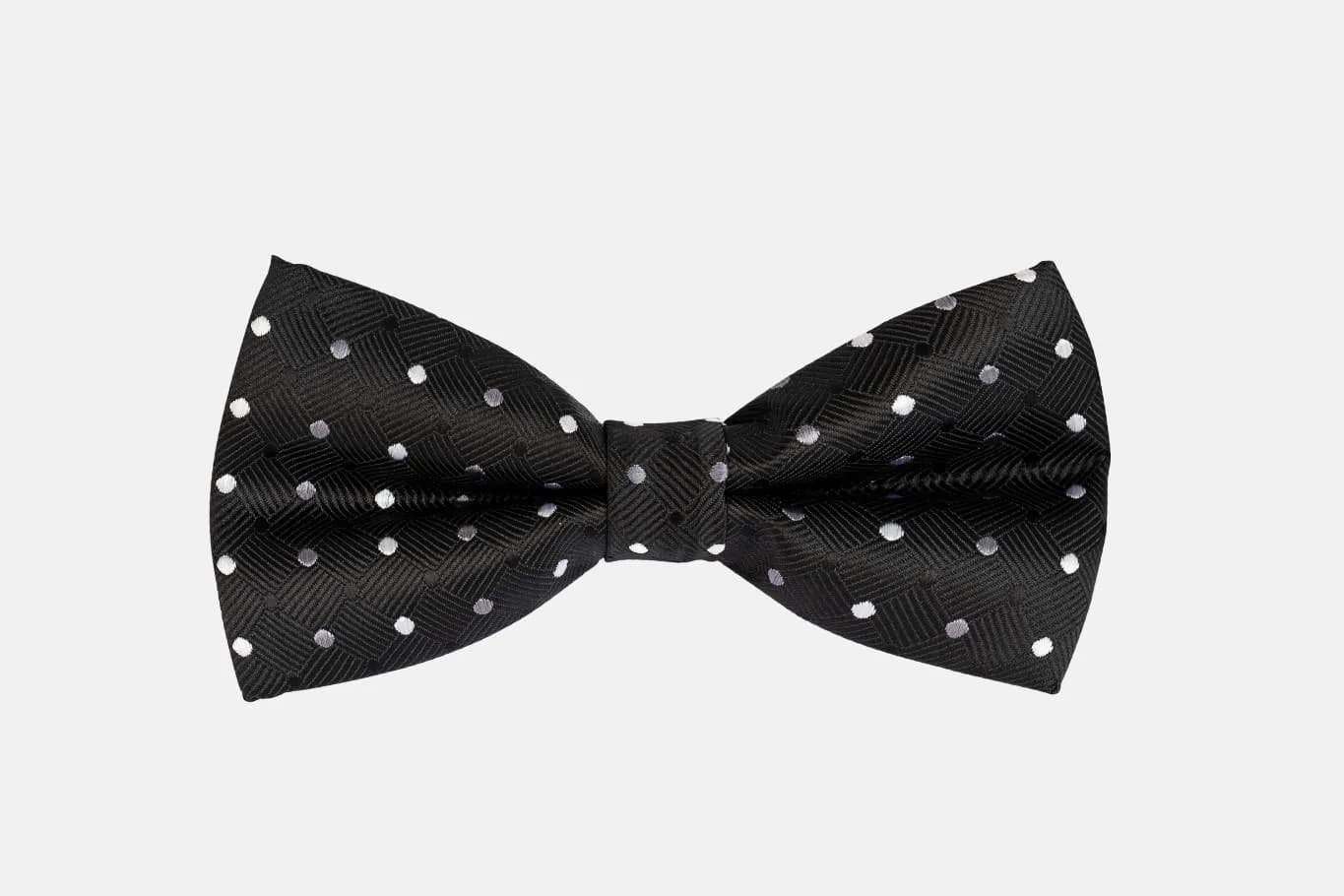
A shiny satin lapel wants a satin bow tie. A ribbed grosgrain lapel wants grosgrain. Put a mirror-bright surface next to a matte, ribbed one and the two read as odd parts from different suits, even when both are black.
If you want a closer look at the three common bow tie cloths, our guide to satin, grosgrain and velvet bow ties goes further. Here, remember the principle: read the lapel first, then choose the bow tie to follow it.
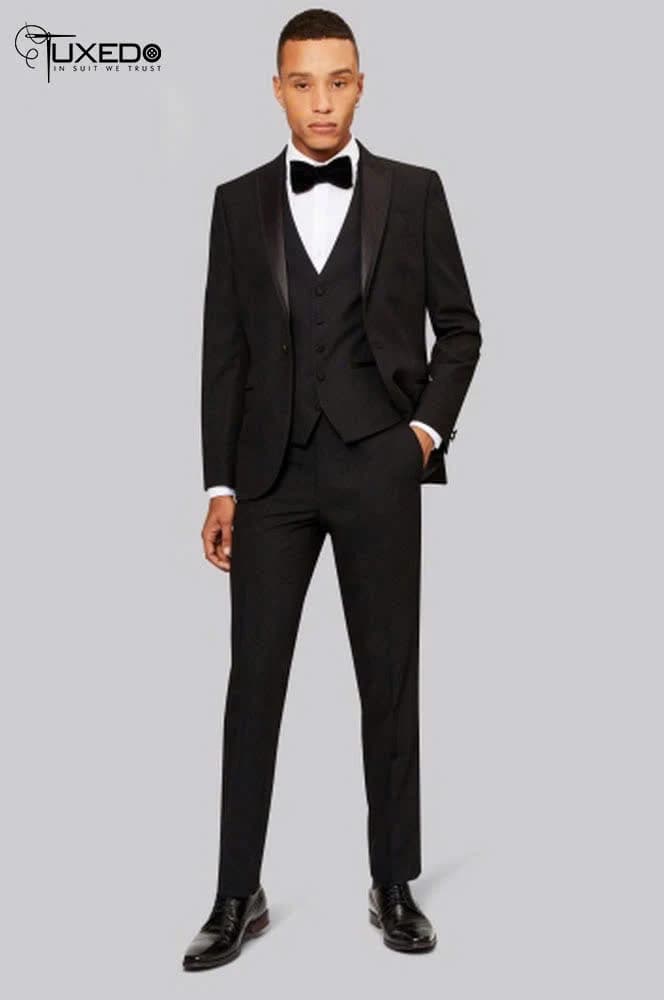
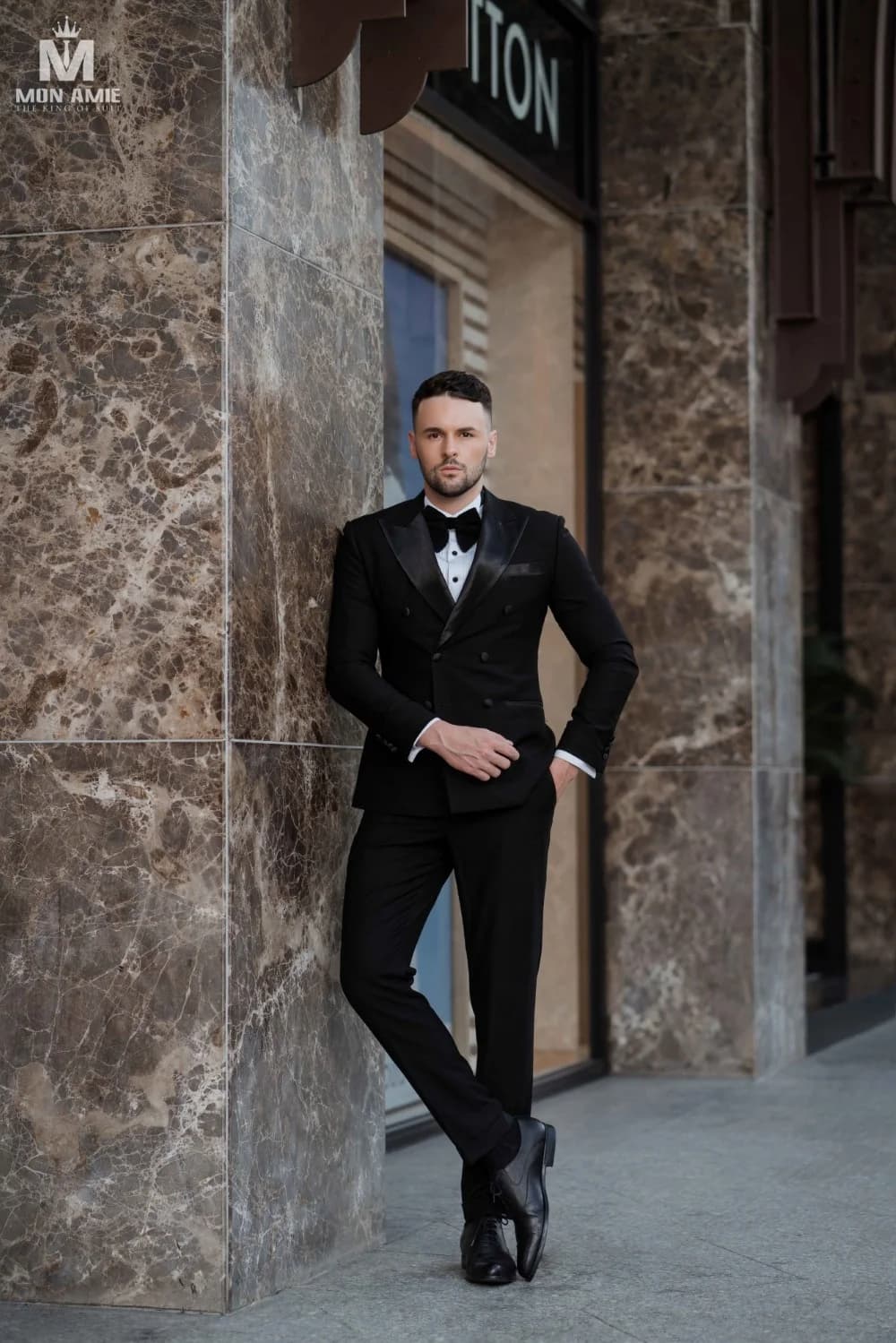
One exception is widely accepted: a black velvet bow tie with a black satin or grosgrain lapel. Velvet absorbs light, so it stays in the same dark family and adds depth without breaking formality. TUX-117, a black jacket with satin peak lapels worn with a velvet bow tie, follows exactly that idea.
Bow tie and cummerbund in the same colour and cloth
The cummerbund was traditionally sold as a set with the bow tie, cut from the same bolt. The reason is plain: these are the only two accents sitting outside the black-and-white palette, so they should speak with one voice.
- Same colour. Black with black is the default. If you choose a burgundy cummerbund, the bow tie is burgundy too.
- Same cloth. Satin cummerbund, satin bow tie. Velvet with velvet.
- No lighter or darker drift between them. Two pieces that sit close on the same vertical axis show even a slight difference in tone very clearly.
A waistcoat follows similar logic: it is cut from the same cloth as the jacket or the lapel facing, and it is never worn together with a cummerbund. You will find the correct way to wear one in how to wear a cummerbund correctly.
When contrast works
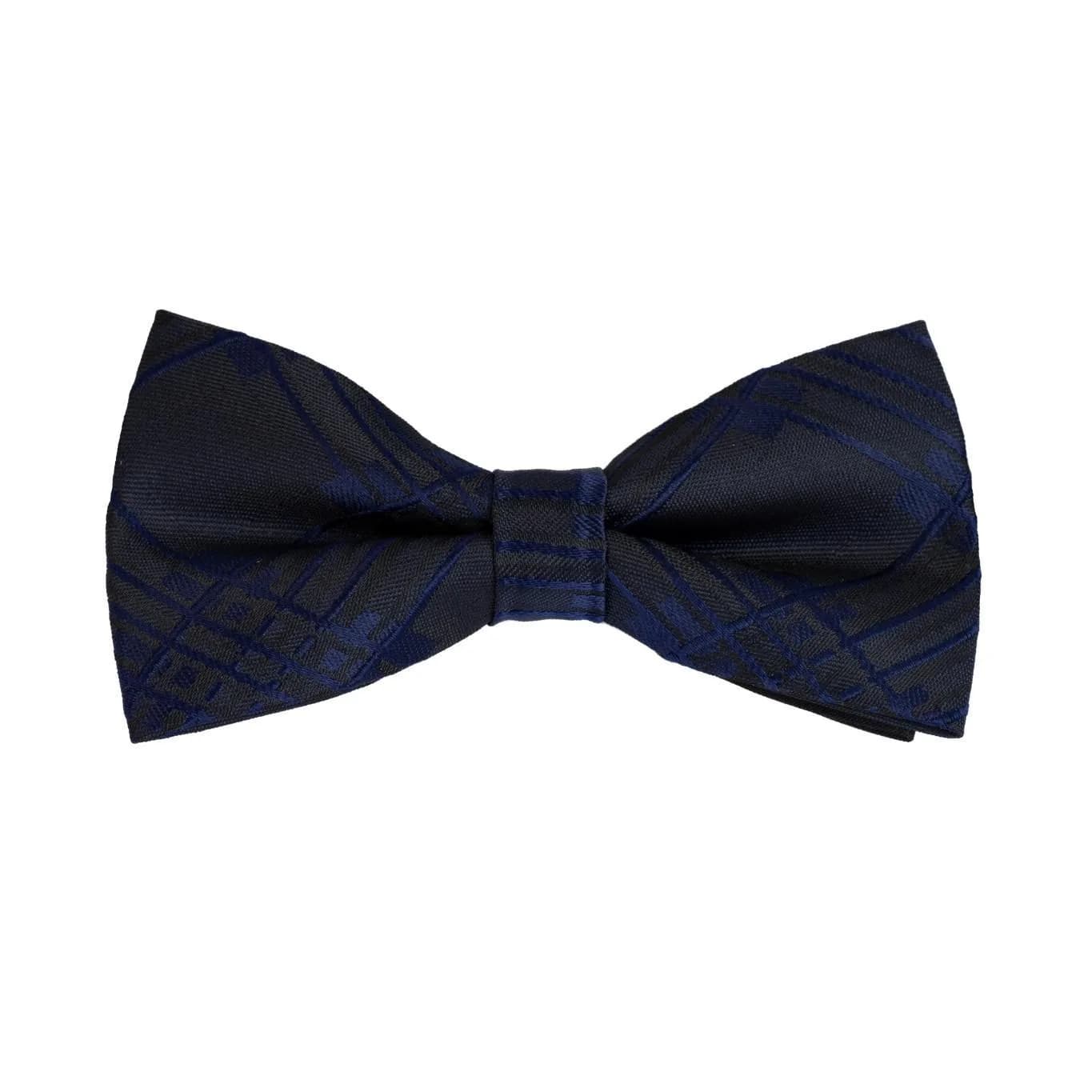
Contrast belongs to creative black tie or a relaxed wedding, and it needs a clear logic:
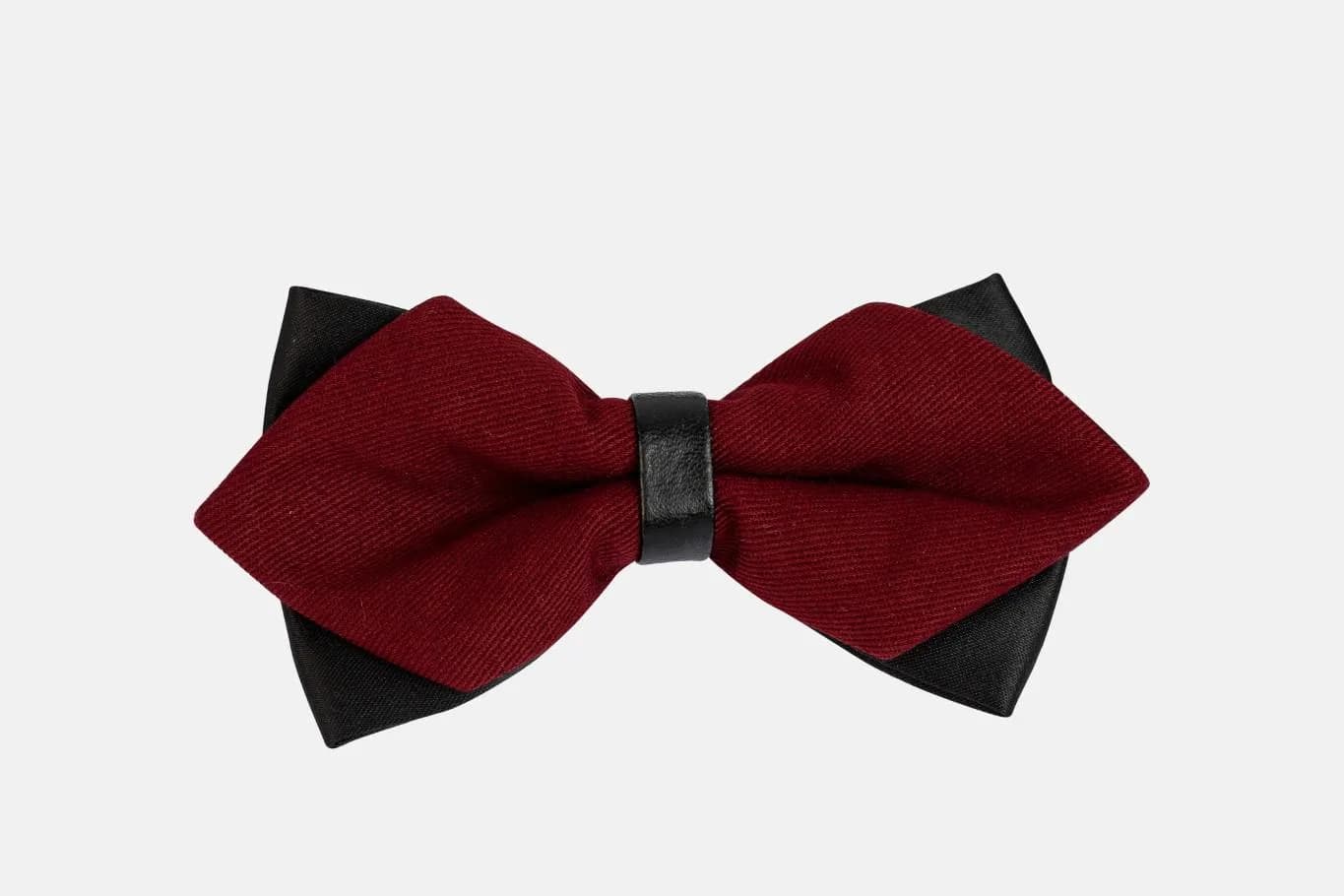
- Bow tie and cummerbund change together, jacket stays black. A burgundy or deep green pair on a black jacket is the easiest contrast to get right, because the pair forms a single rhythm of colour.
- The bow tie picks up the pocket square or boutonniere. When the bow tie and pocket square share a palette (not an exact match), the whole look feels intentional.
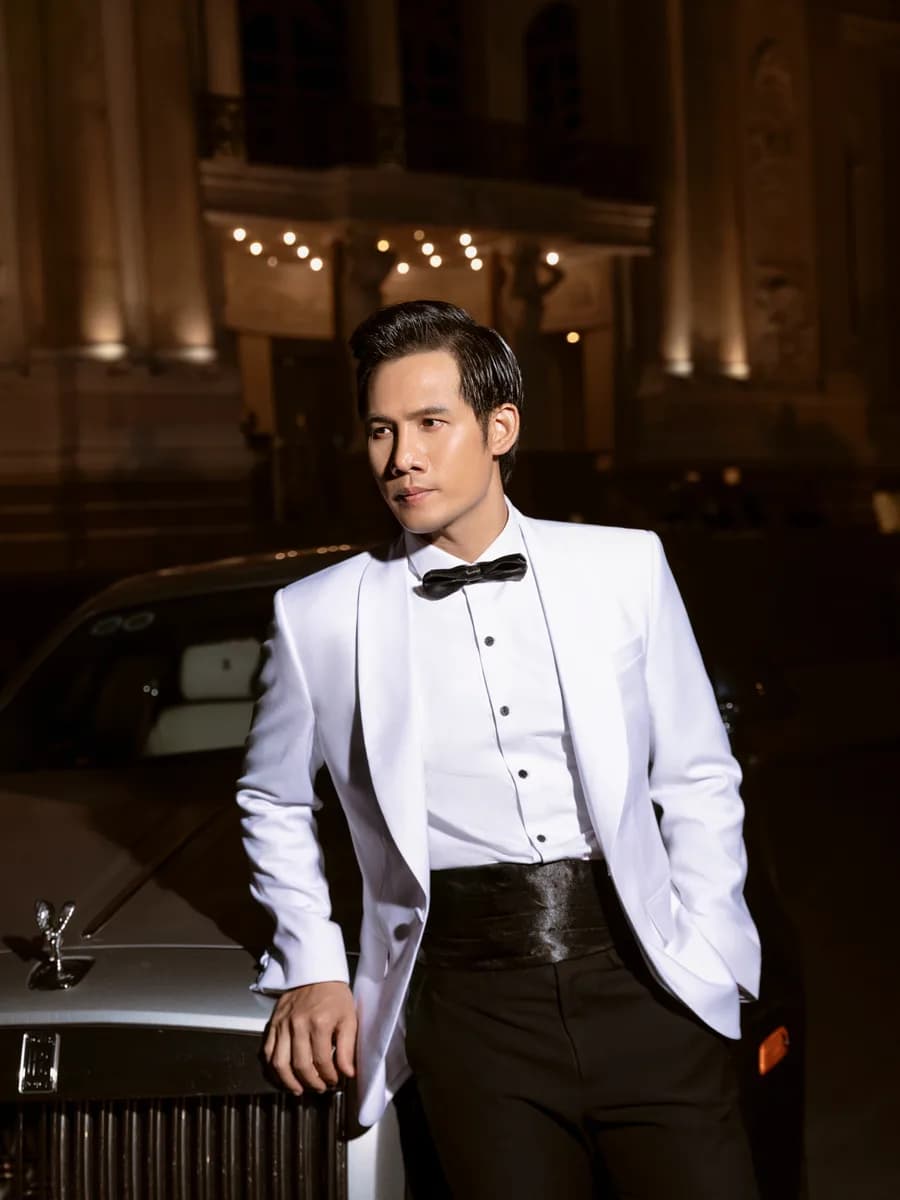
- A darker bow tie on a light jacket. On a white dinner jacket, a black bow tie and cummerbund are the classic answer, as on TUX-111, which pairs a shawl lapel with a black cummerbund and a glossy bow tie.
There is one mistake to avoid: a bow tie in one colour, a cummerbund in another, and a pocket square in a third. Each colour accent needs a reason. Beyond three accents, you are wearing an accessory drawer rather than an outfit.
Examples by jacket colour
| Jacket | Bow tie and cummerbund | Note |
|---|---|---|
| Black, black satin lapel | Black satin, same cloth as the lapel | Standard black tie |
| Midnight blue, black satin lapel | Black | A black bow tie makes the blue look deeper under evening light |
| Ivory, black lapel | Black satin | Strong contrast, lovely for outdoor evenings |
| Burgundy velvet, black lapel | Black, or burgundy for a looser party | Black is the safer choice |
| Grey or patterned, black satin lapel | Black, or a deeper tone than the jacket | Keep the bow tie simple so the jacket is the statement |
On a coloured jacket, a black bow tie is never wrong. A bow tie in the jacket colour needs the tailor to match the depth of the cloth exactly, because any drift in tone shows at once.
A tip from the Mon Amie workroom
During a bespoke fitting, your adviser will lay bow tie, cummerbund and lapel facing samples side by side under the showroom lights, so you see the true tone rather than guessing from a photograph. Bring the pocket square or tie you plan to use so the colours can be compared directly. For a broader palette to start from, read the safe colour chart for tuxedo pairings. You can book a fitting at a showroom and see the bow tie and cummerbund on your own jacket.
Published 11/11/2026 · 10:00 · Editor: Mon Amie