A history of tuxedo lapels: shawl, peak and notch
The shawl lapel comes from the smoking jacket, the peak from the tailcoat, the notch from the lounge suit: history explains why notch suits black tie less.
Editor: Mon Amie · Published · about 3 min read
In this article
The three lapels on a tuxedo are not equal aesthetic choices. Each carries the memory of the garment it came from: the shawl from the smoking jacket worn in the smoking room, the peak from the tailcoat and the formal coats, the notch from the daytime lounge suit. Once you know that lineage, it is clear why tailors place the shawl and peak above the notch when black tie is the subject. This article tells the history; for advice on choosing by build, see how to choose a tuxedo lapel.
The shawl lapel: from the smoking jacket
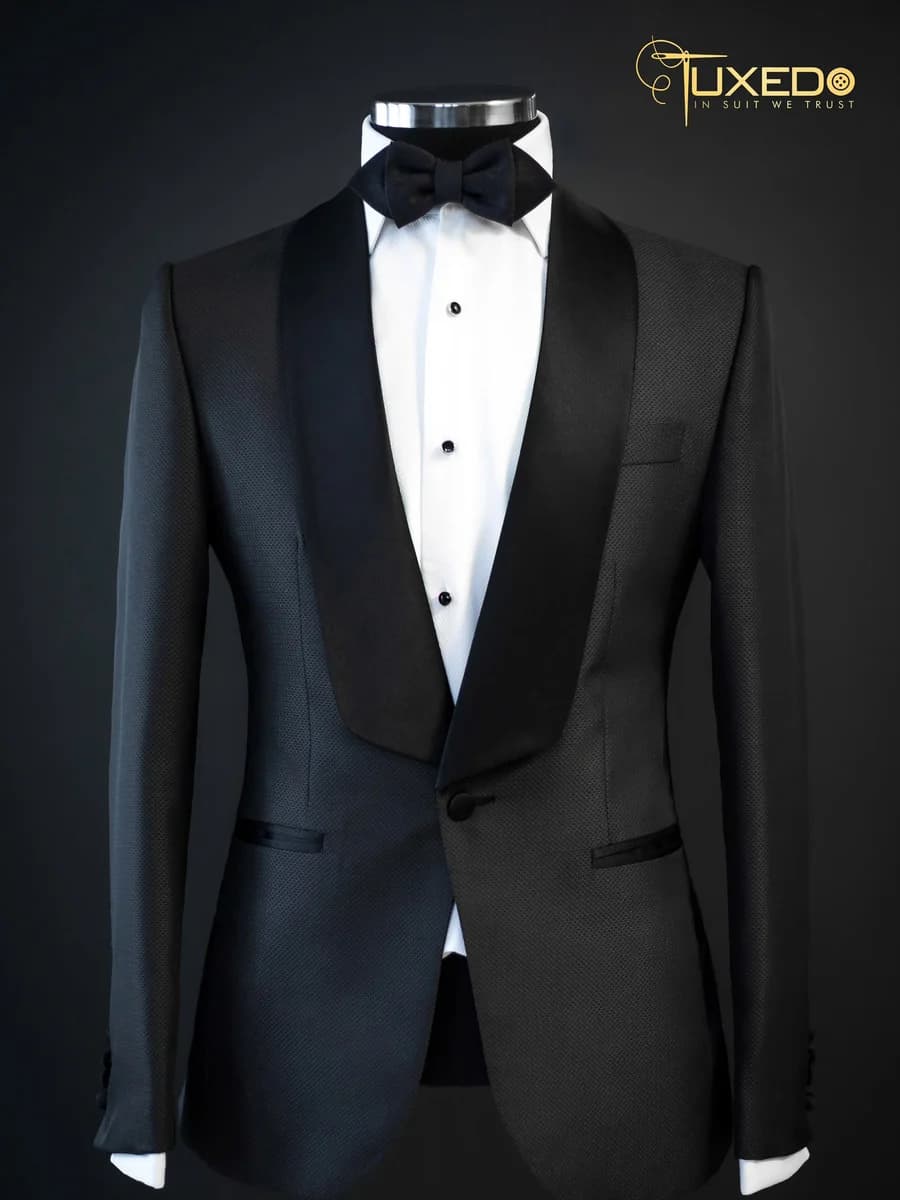
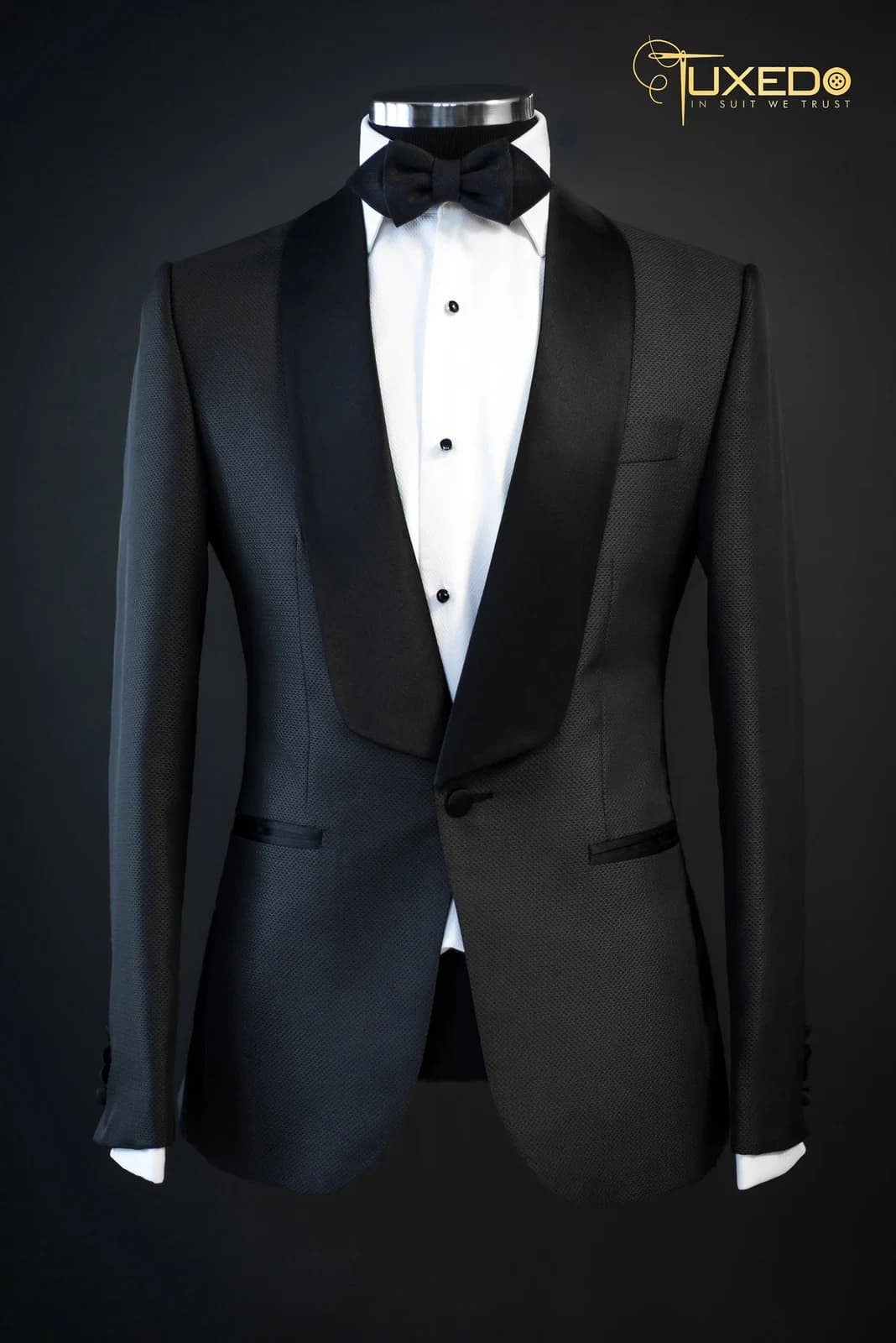
In the nineteenth century, English gentlemen made a habit of retiring after dinner to a private room to smoke, and changed from the tailcoat into a softer short coat called the smoking jacket. It was often velvet or silk, with a collar that ran as one continuous curve from the nape to the chest, with no notch, like a scarf laid over the shoulders. That is the shawl lapel.
When the dinner jacket appeared around the 1860s as a less ceremonial alternative to the tailcoat for informal dinners, the shawl lapel came across from the smoking jacket with it. It is the most classic lapel of the tuxedo, usually faced in satin or grosgrain, with a soft and unbroken line. In our collection, TUX-001, a black tuxedo with a woven-texture shawl lapel, is one example.
The peak lapel: from the tailcoat and formal coats
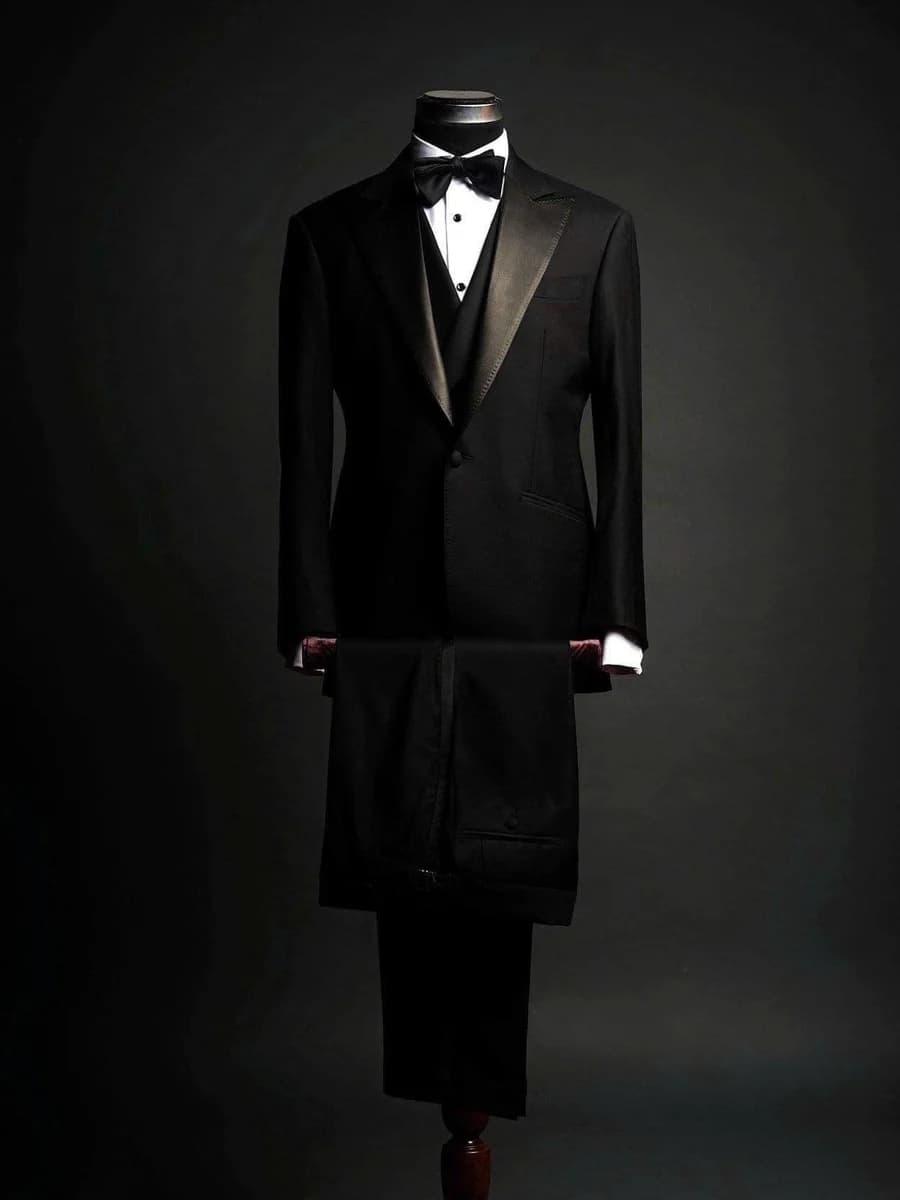
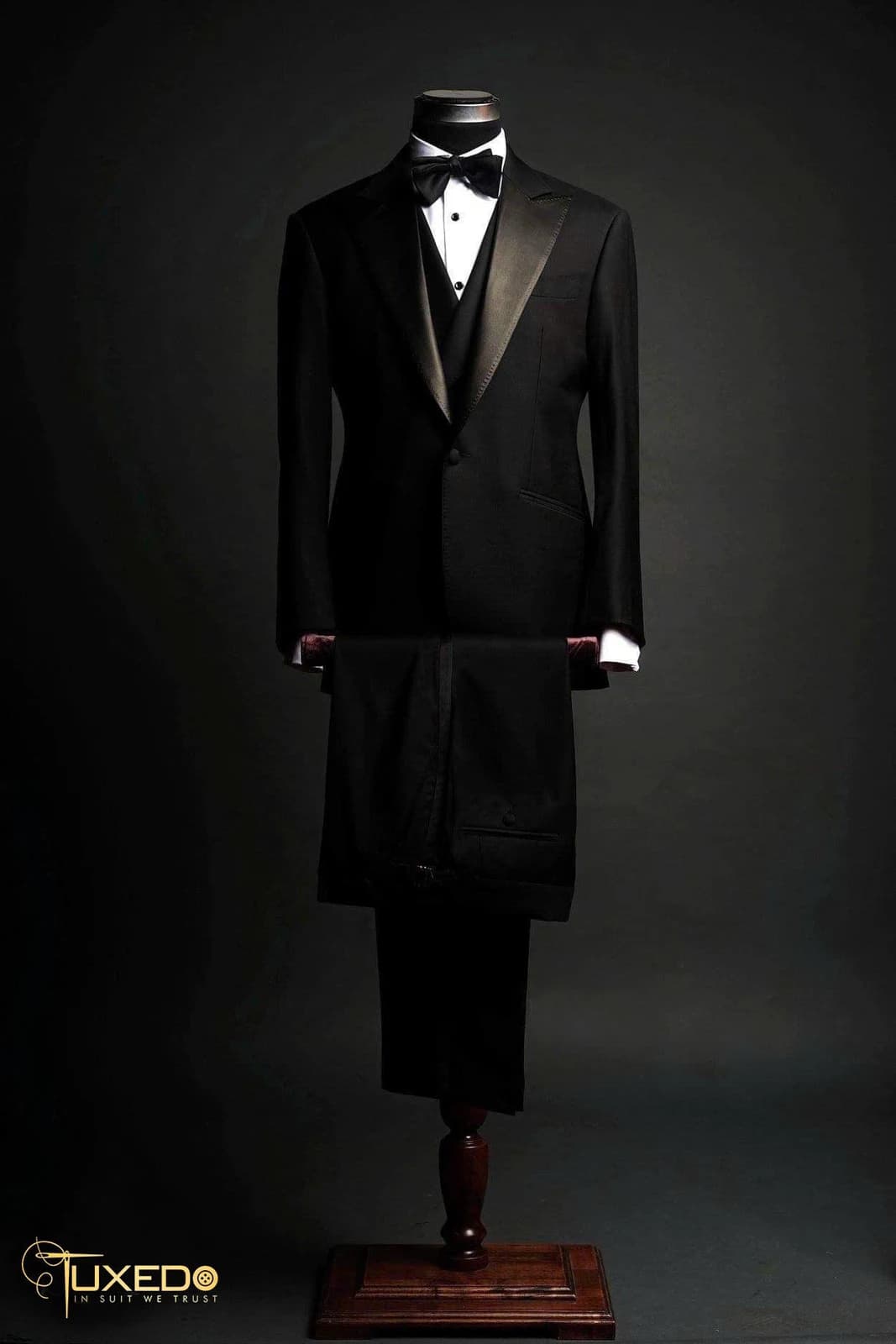
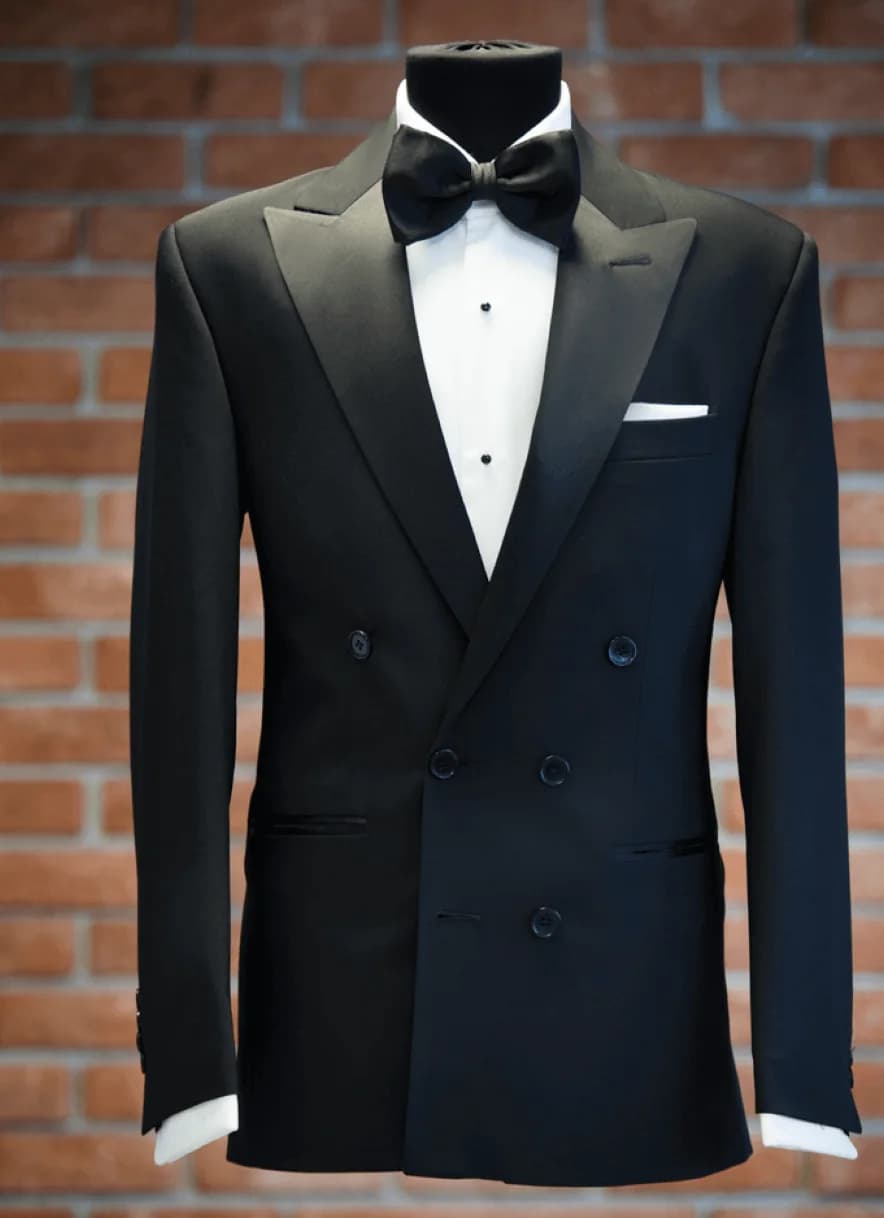
The peak lapel points upward towards the shoulder. It appeared on the tailcoat and on formal daywear such as the frock coat and morning coat, meaning on the most ceremonial coats a gentleman owned. As the dinner jacket became accepted evening dress, the peak was carried across, especially on the double-breasted model that was popular in the 1920s and 1930s.
The upward point leads the eye to the shoulder, making it look broader and the torso longer, so the peak lapel reads as strong and authoritative. TUX-004, a full black tuxedo with peak lapels, stands for this tradition. On a peak lapel the satin facing normally covers the whole surface, giving a mirror finish under light.
The notch lapel: from the lounge suit
The notch lapel has a step cut between lapel and collar. It is the lapel of the lounge suit, the daytime and business suit that emerged in the second half of the nineteenth century and gradually became the office uniform. From then on, people associated the notch with ordinary days.
That explains why the notch is seen as less formal in evening wear. Black tie is a chance to step away from the working routine; wearing the same lapel as your office suit takes away the distinction. There is a technical point too: the notch interrupts the satin facing, so satin on a notch lapel looks pieced together, not as natural as on a shawl or peak. History also shows that some early dinner jackets did use the notch, and people still wear it today, especially on inexpensive rental suits. It is simply not the preferred choice under traditional black tie. A separate discussion is in notch lapels on a tuxedo.
The three lapels through history
| Lapel | Origin | Original occasion | Feeling |
|---|---|---|---|
| Shawl | Smoking jacket | Informal evening after dinner | Soft, classic, suave |
| Peak | Tailcoat, frock coat, morning coat | Ceremonial dress | Strong, authoritative |
| Notch | Lounge suit | Daytime, business | Everyday |
What a tailor sees today
In the workroom we meet all three. The shawl suits most men, especially those with average shoulders and chest, because the continuous curve keeps the torso neat. The peak suits men who want broader shoulders, or tall men, and is popular in wedding photographs because the point throws a clear shadow. The notch still has clients who want one suit for both parties and the office, and we tell them plainly that it is a compromise.
You can compare lapels in our classic black tuxedo collection.
Try them at Mon Amie
If you are torn between shawl and peak, the quickest answer is to try both on. An adviser in the showroom will let you compare them in the mirror and choose by build, not by history alone. Book a visit.
Published 20/11/2026 · 07:00 · Editor: Mon Amie