Weddings & grooms
Church Weddings: Tuxedo or Suit for the Groom
Tuxedo or suit for a church wedding: morning versus evening ceremonies, muted colours for a solemn space, changing before the reception, kneeling and standing.
Mon Amie · 16/10/2026
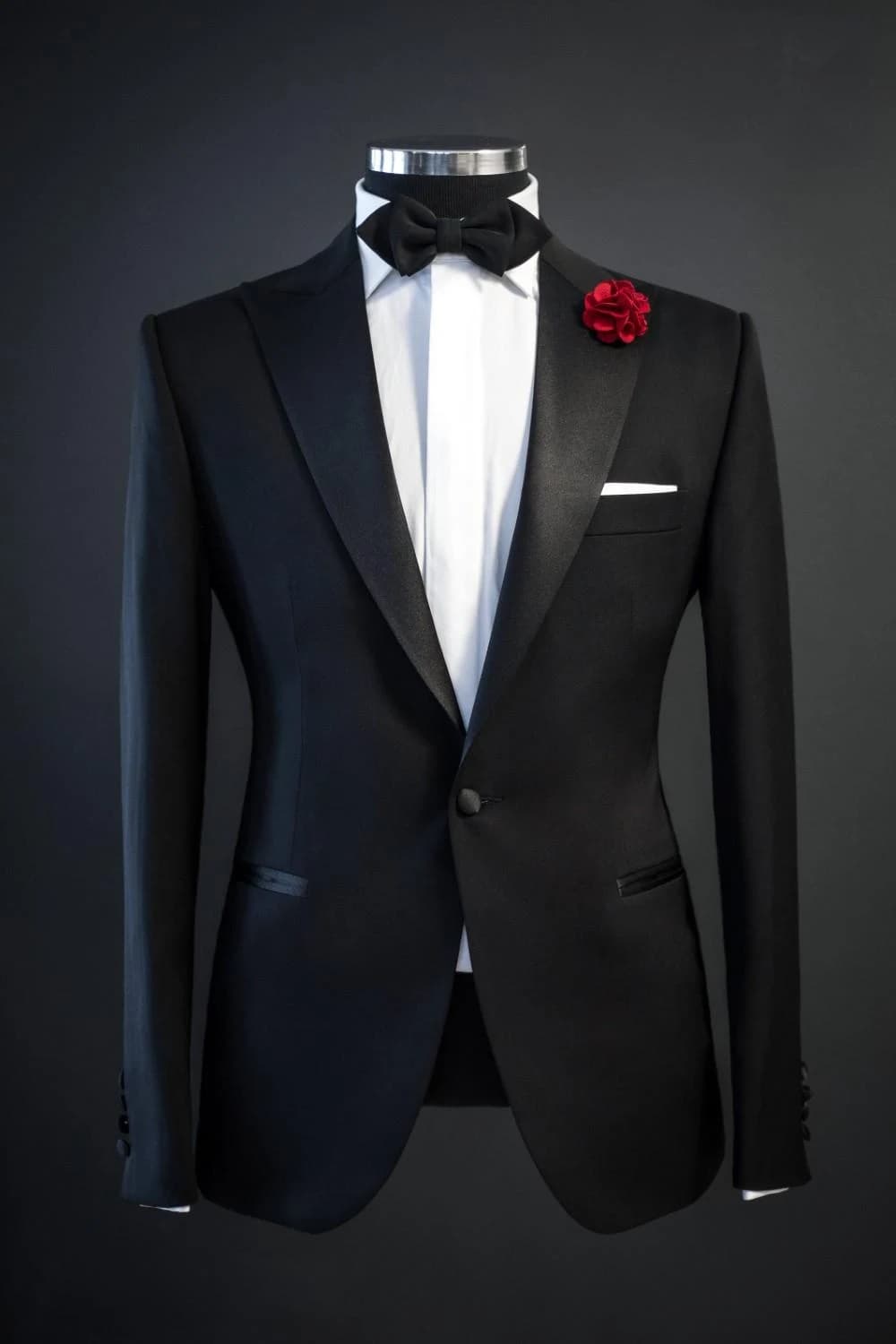
In a church the hour of the ceremony settles most of it: a morning or early-afternoon ceremony suits a well-kept dark suit, while an evening ceremony suits a tuxedo. A solemn space calls for subdued colour and quiet lines, so even in a tuxedo you should choose the serious version rather than the showy one. The sure approach is to confirm the ceremony time first, then choose the suit.
Morning or evening ceremony
Western dress convention is organised by the clock. The tuxedo is evening wear, usually counted from about 6 pm; earlier than that, formal dress means a morning coat for a very grand occasion or a dark suit for most weddings.
| Ceremony time | Suggestion for the groom |
|---|---|
| Morning to early afternoon | A dark suit (charcoal, navy), or a morning coat if the family follows British convention |
| Late afternoon into evening | A black or midnight blue tuxedo, if the invitation says black tie |
| Afternoon ceremony, evening reception | A dark suit for the ceremony, then a tuxedo for the reception if you wish |
In Vietnam many church ceremonies take place in the morning or early afternoon, with a banquet in a restaurant in the evening. See the tuxedo and the morning coat for the difference between the two formal garments.
A solemn space and quiet colour
A church is a place of ritual, so avoid details that draw the eye:
- Colour: black, midnight blue, charcoal or deep navy. Avoid metallic cloth, large patterns and bright shades.
- Lapels: matt satin or grosgrain rather than strongly glossy satin.
- Accessories: a black bow tie or a plain tie, and a white pocket square folded flat.
- Boutonniere: small, in the same palette as the bride's bouquet.
If you choose a tuxedo, something like TUX-060, a classic black peak lapel or TUX-078, a classic one-button black keeps the dignity. Afterwards, if the reception calls for more colour, you can change the pocket square and bow tie rather than the whole suit.
Changing between ceremony and reception
Many grooms change between the two parts, from a ceremony suit to a reception tuxedo or into traditional dress. Some practical points:
- You need a private place to change: a restaurant's holding room, the car or a nearby hotel room.
- Bring a hanging bag, hangers and a pressed spare shirt.
- Assign someone to look after the clothes so you do not worry right after the service.
- If changing is impossible, choose one suit that serves both parts: a midnight blue, with a waistcoat added or the bow tie changed at the reception.
The article on changing outfits between ceremony and reception goes into how to organise it.
Kneeling, long standing and sitting
A service can be long, with many moments of standing, sitting and kneeling. The suit must cope:
- Trousers need room across the thigh and knee so kneeling does not strain them; side adjusters at the waistband add comfort.
- The jacket should not be too short, with shoulders that do not bind; button when standing, unbutton when seated.
- Lining should be moderate so you do not overheat standing in a crowded space.
- Shoes should be leather you have already broken in, with soles that are not slick on stone floors and are comfortable for a long stand.
- The shirt in breathable cotton, with a collar that is not tight.
Rehearse the whole sequence at your fitting, from standing to sitting to kneeling.
Book a fitting at Mon Amie
Once you know the ceremony time and how you will change, a consultant can help choose between a suit, a tuxedo or a piece that moves between the two. Order early before the wedding; making time depends on the style and fitting schedule, and your consultant will confirm it at measurement. See our wedding tuxedo page and book at a Mon Amie showroom.