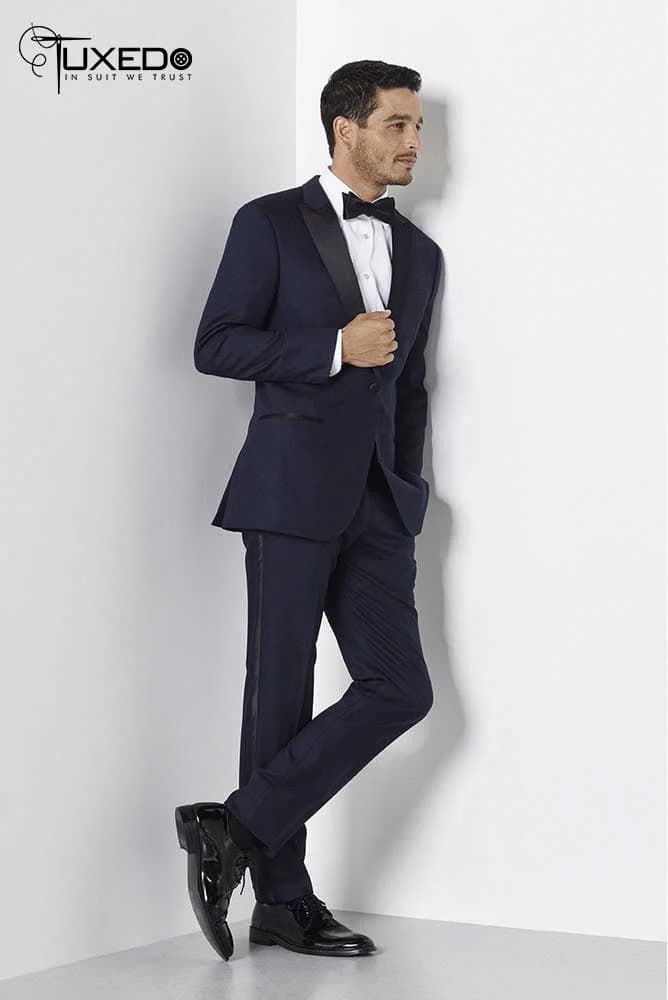
Covered, horn or metal buttons on a tuxedo
Covered satin buttons are the standard, black horn is subtle, metal suits the stage. How to choose tuxedo buttons by occasion, with the real model TUX-070.
Editor: Mon Amie · Published · about 3 min read
In this article
On a tuxedo, covered satin buttons are the standard: they match the lapel facing, so no stray glint is added to the outfit. Black horn buttons are the subtle choice, matte and grained. Metal buttons bring a stage presence and character, but sit outside the classic rules. Each gives a very different impression for something so small.
Covered satin: the standard
A covered button has a firm core wrapped completely in satin (or grosgrain) of the same kind as the lapel facing. That way lapel, buttons and pocket trim all speak the same material language, the unity that black tie aims for. From a distance the sheen of the buttons merges into the sheen of the lapel instead of standing out as a separate point.
There is one small drawback: the outer fabric can scuff or discolour with heavy contact, though on a tuxedo worn only occasionally this is rare. If the covering is damaged, a tailor can recover the buttons without replacing the jacket. Our piece on the single covered satin button goes deeper into button count and placement.
Black horn: refined and discreet
Horn (usually buffalo horn dyed black, or a look-alike material) has a matte, warm surface with a faint irregular grain, so every button is a little different. Its deep black does not reflect lamps the way metal does, and has none of the silky gloss of satin.
It is the choice of the man who wants a plain tuxedo, low in show and easy to wear again. Black horn is also more durable than covered buttons since there is no outer fabric to wear through. What it gives up is complete uniformity with a satin lapel, a detail that someone who knows eveningwear may notice. For strict black tie, covered buttons still lead; for semi-formal evenings, horn is perfectly fine.
Metal: a stage look
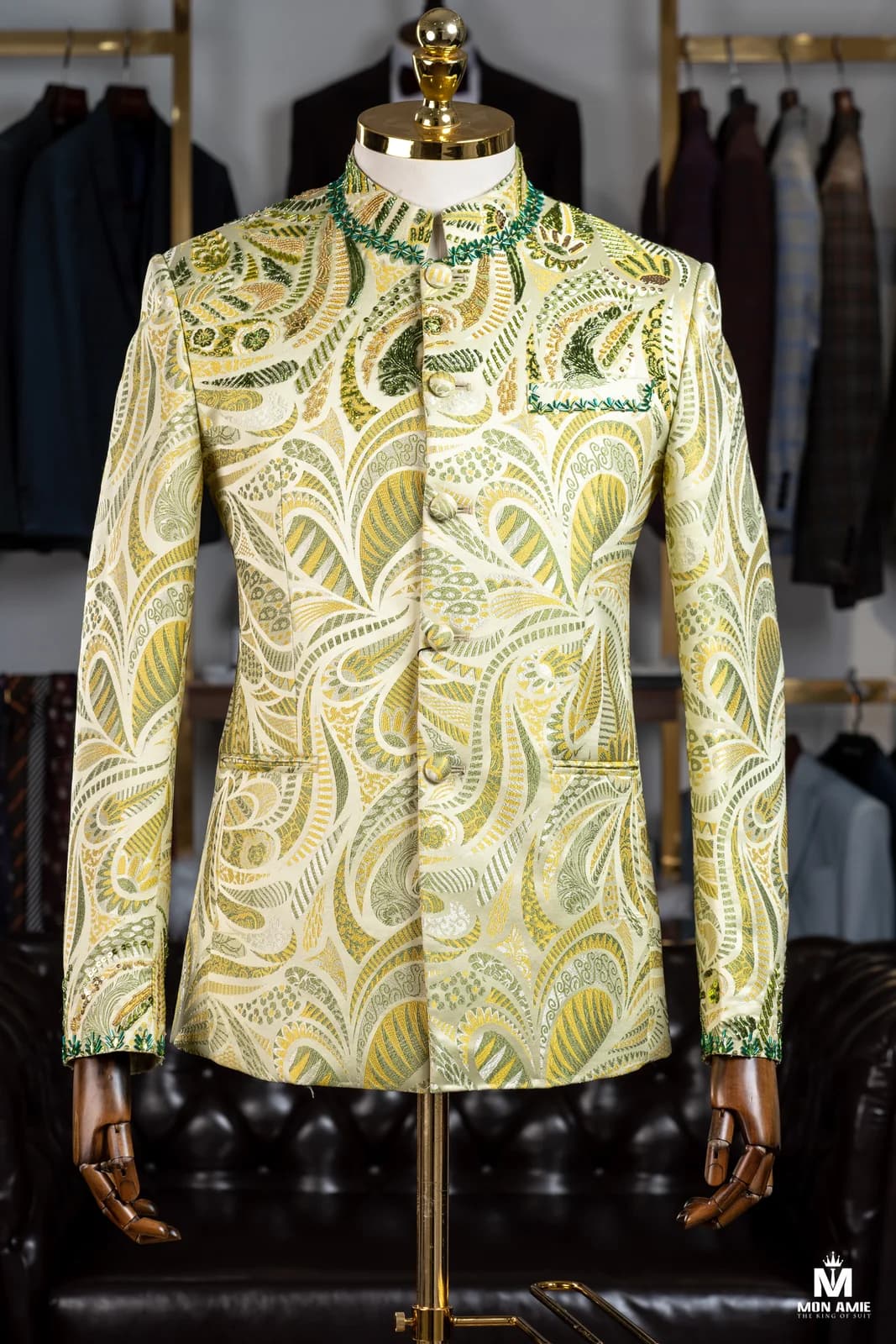
Metal buttons, in silver, gold, brass or gunmetal, make a strong statement. One bright silver button at the waist pulls the eye to the centre of the body, just the way performers and hosts use it.
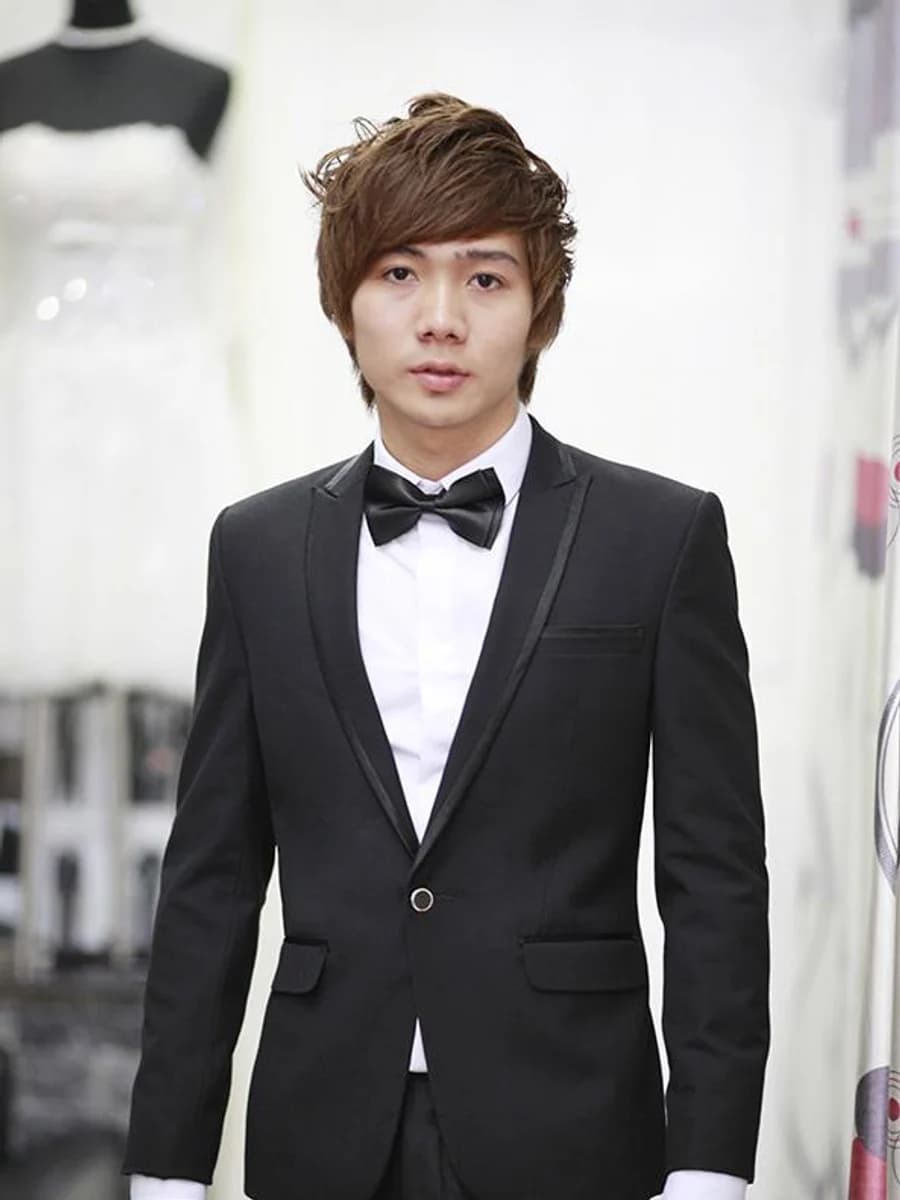
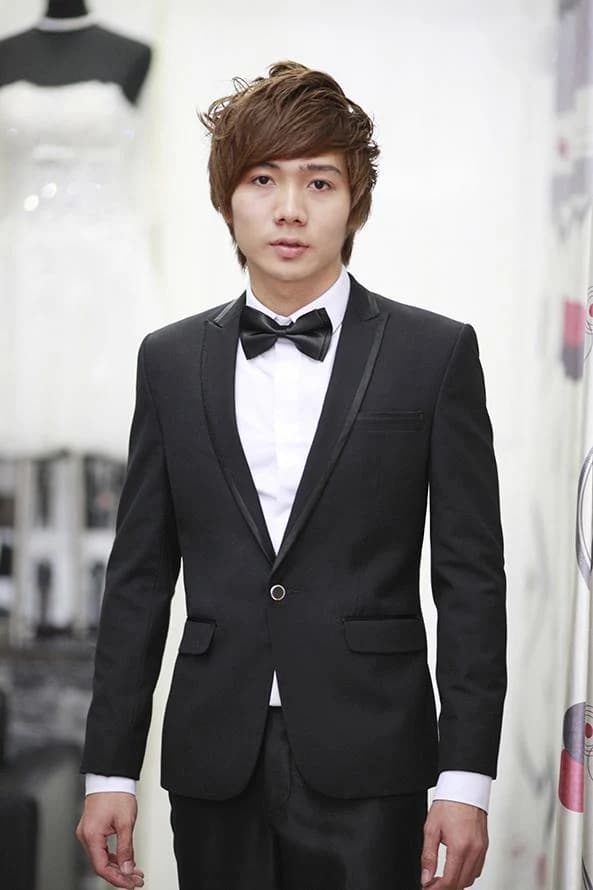
TUX-070 shows it clearly: a black tuxedo with a peak lapel piped in matching satin, a single bright silver button and two flapped hip pockets. The silver button is the only highlight in the whole outfit, which is why it works: one button, one accent, nothing more.
On the rules, shiny metal buttons are not part of tuxedo tradition; they suit the stage, fashion parties and performance-led events. At strict black tie occasions they can read as off-code.
A quick comparison
| Covered satin | Black horn | Metal | |
|---|---|---|---|
| Surface | Silky sheen | Matte, grained | Metallic shine |
| Feel | Standard, ceremonial | Plain, refined | Personal, theatrical |
| Strict black tie | Yes | Acceptable | Not advised |
| Durability | Covering can scuff | Durable | Durable, may scratch |
| With a satin lapel | Fully matched | Slight contrast | A separate accent |
Choosing by occasion
- Black tie gala, evening hotel wedding, the opera: covered satin.
- Semi-formal evenings, company events, a tuxedo you want to wear often: black horn.
- Stage, fashion party, performance, a personality-led night: metal, with restraint in number.
A practical note: the buttons on the jacket body, the cuff buttons and the studs on the shirt front are three different groups. Shirt studs are usually metal or stone and follow their own rules, so do not confuse them with the jacket buttons. All the metals should match, silver with silver for instance.
A suggestion from the Mon Amie workroom
Buttons are what our tailors choose last, once cloth and lapel are settled, because only then can the match be judged. At the showroom you can lay each button type on the real cloth and compare. See the made-to-measure page and book a fitting to choose buttons for the occasion you have in mind.
Published 18/11/2026 · 14:30 · Editor: Mon Amie