Film Premieres: What Male Guests Should Wear
What to wear to a film premiere: black tie or bolder by genre, colours that read well against the photo backdrop, and small details that photograph.
Editor: Mon Amie · Published · about 3 min read
In this article
For a premiere, the safe route is to dress to the invitation: if it says black tie, wear a tuxedo; if it says "creative" or "cinematic", you may add a little personality. Unlike an ordinary party, your outfit will pass along a red carpet, in front of a photo backdrop and through a few quick interviews, which means it has to look right in pictures, not only in the room. That shapes every decision below.
Red carpet, photo wall, quick interviews
A carpet moment usually has three stops: standing at the step-and-repeat backdrop for photographers, walking along the carpet for long lenses, and a brief pause to answer a reporter. All of it happens under flash and strong stage light.
The practical consequences:
- You will stand and turn a lot, so the jacket must fit the shoulders closely, the collar must hug the neck and the lapels must lie flat.
- Backdrops are usually dark or printed with repeating logos, so your colour decides whether you stand out or sink in.
- A quick interview means buttoning the jacket when standing, keeping hands relaxed and not pushing them into trouser pockets, which distorts the line.
Black tie or bolder: let the film lead
There is no single premiere dress code. The invitation and the nature of the film are your two clues:
| Genre | Suggested dress |
|---|---|
| Drama, art-house, biopic | Classic black tie, muted colours, little pattern |
| Action, spy | Black or midnight tuxedo, peak lapel, clean lines |
| Romance, period piece | Warmer tones: wine, burgundy; or an ivory dinner jacket |
| Comedy, animation, family | Looser: a colourful tuxedo, patterned bow tie |
| Horror, fantasy | Room to try a metallic cloth or an unusual dark tone |
The general rule is to respect the film and its makers. If in doubt, go back to black tie; it is the safe choice and still photographs well.
Colours that stand out on the backdrop
Flash changes colour, so a few rules help:
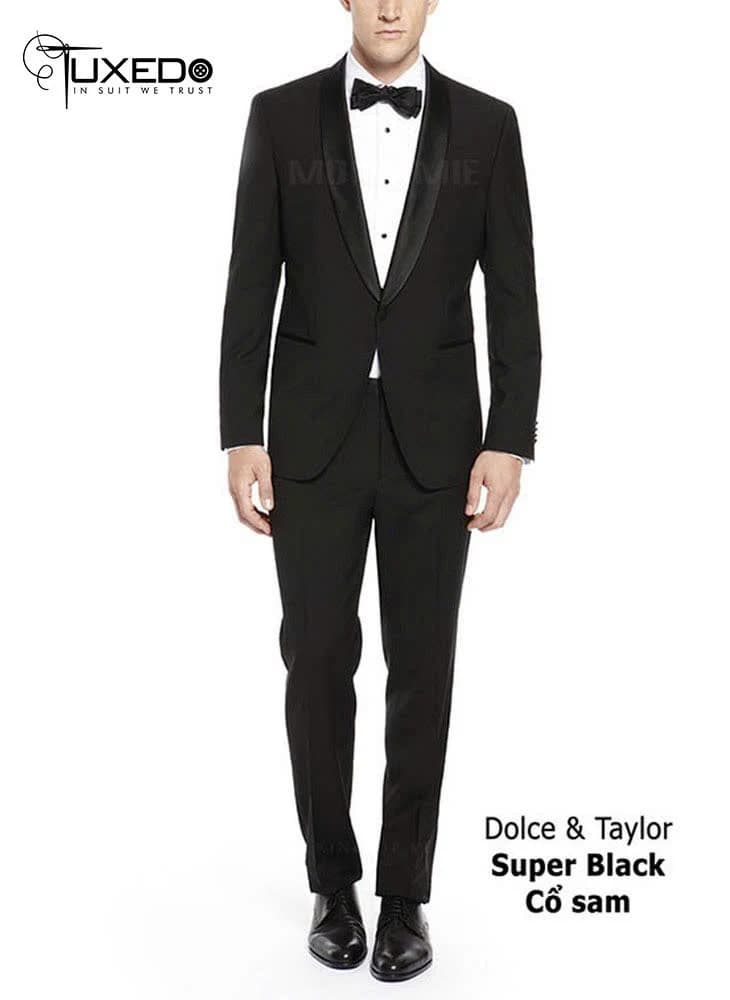
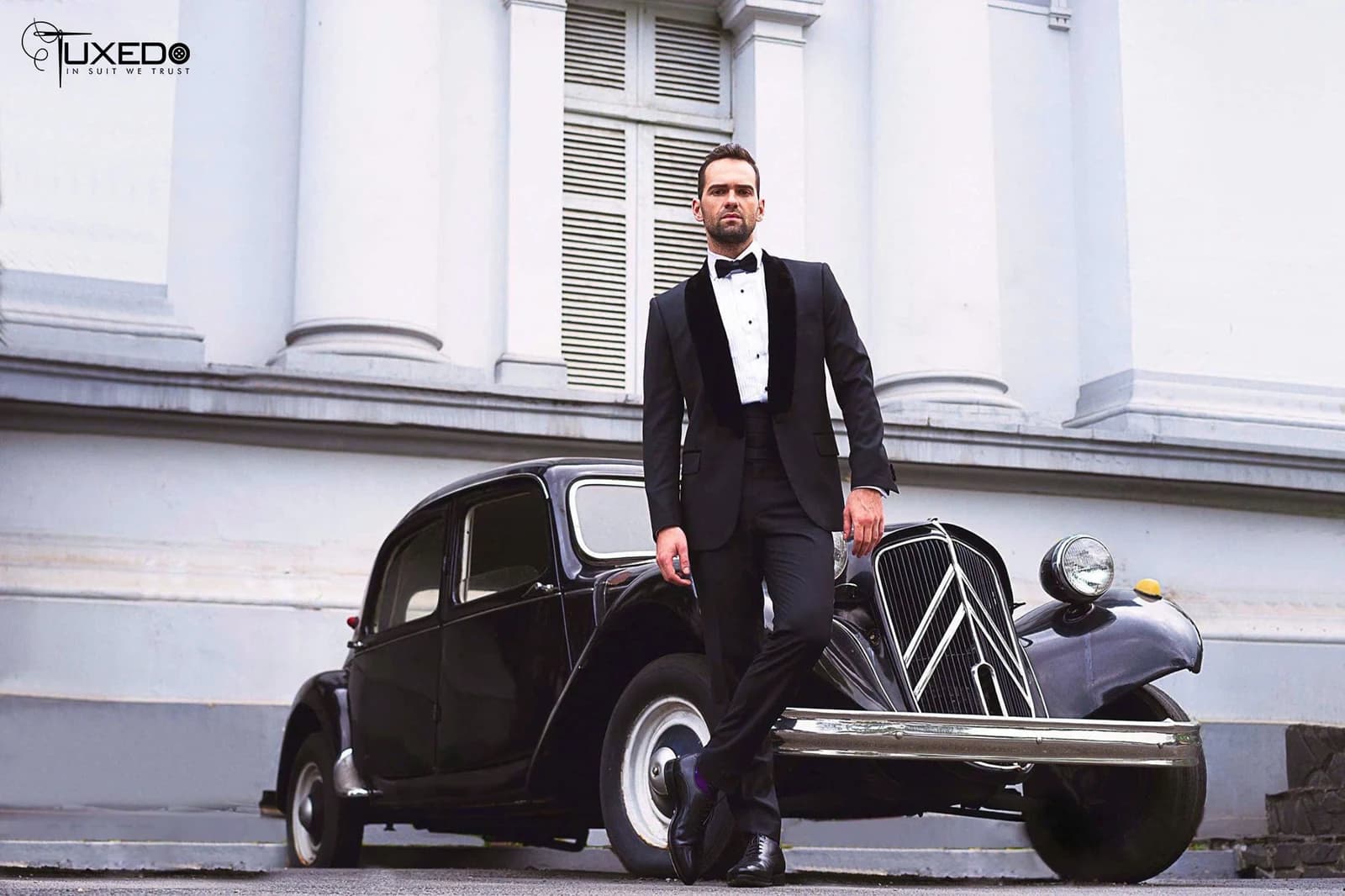
- Pure black looks elegant but can lose detail in the folds; a satin lapel and a white pocket square help separate the layers.
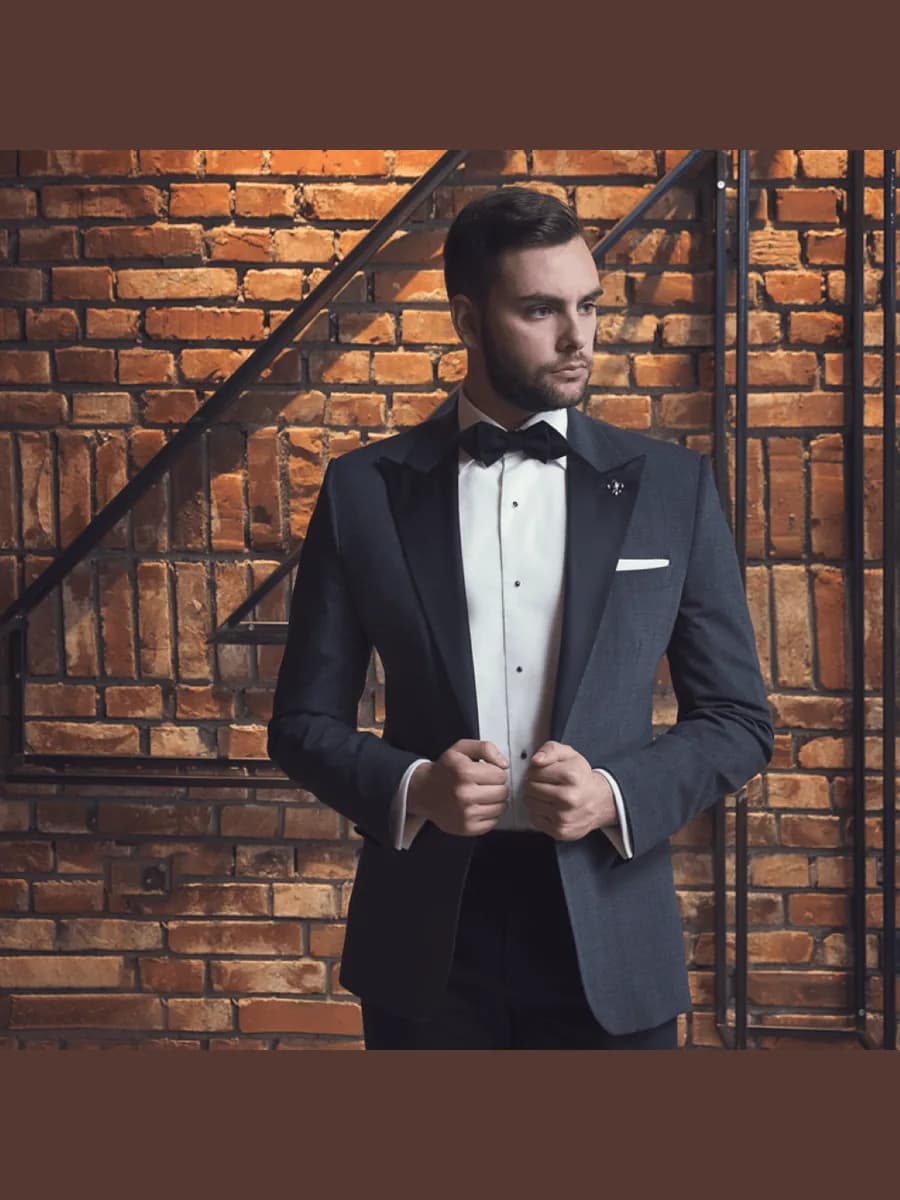
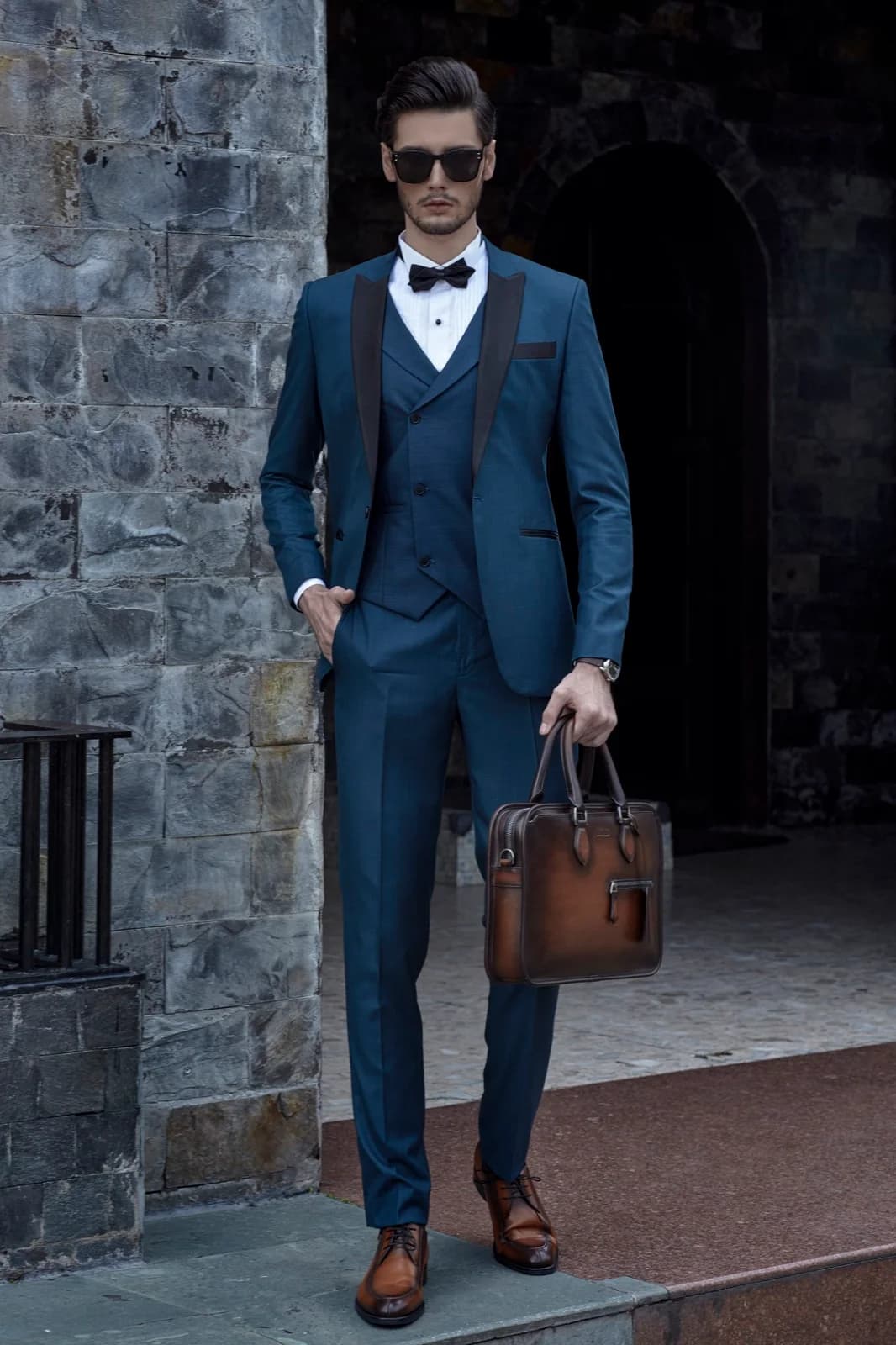
- Midnight blue often photographs deeper and with more dimension than black. Against a dark backdrop it lifts gently without glare. See tuxedo colours under dark lighting.
- Ivory stands out strongly on dark walls, but flash can burn it out; choose a warmer ivory over bright white.
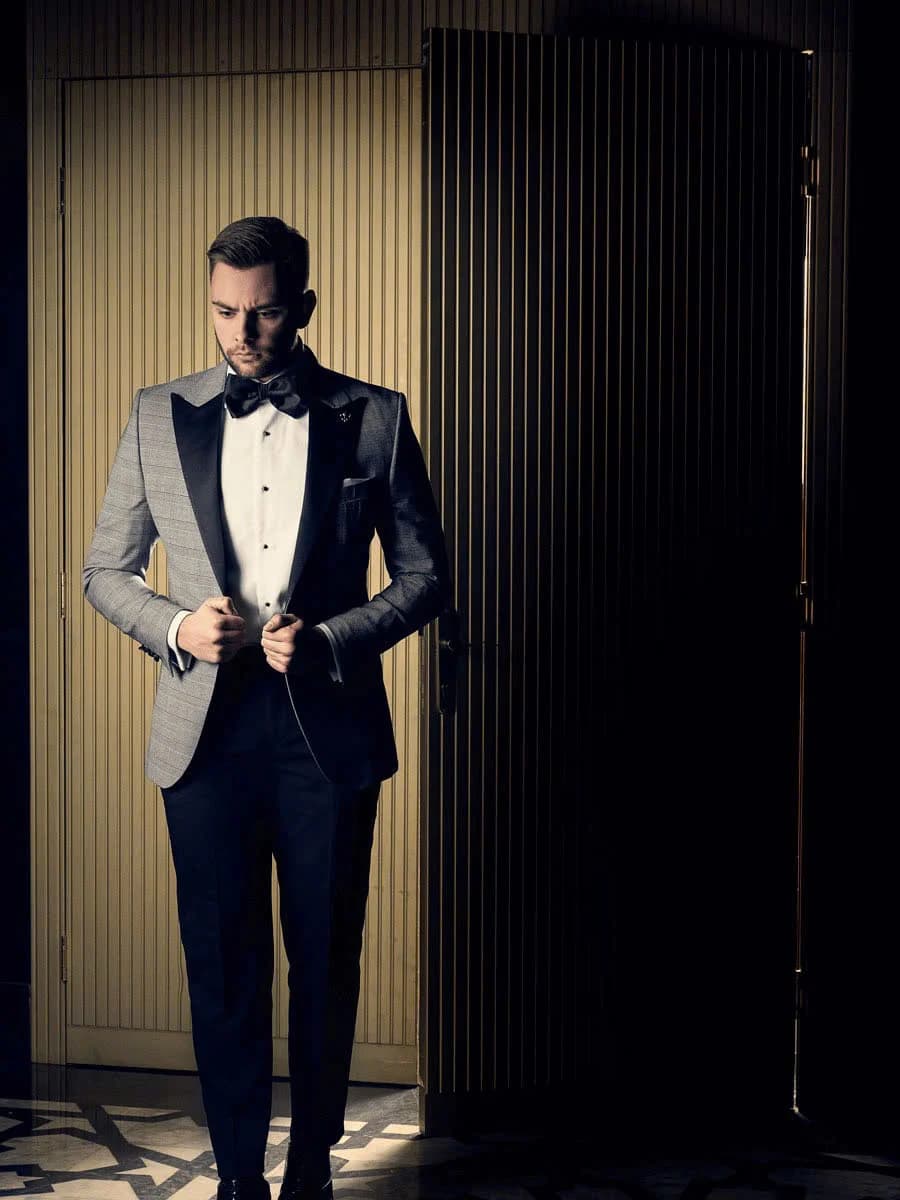
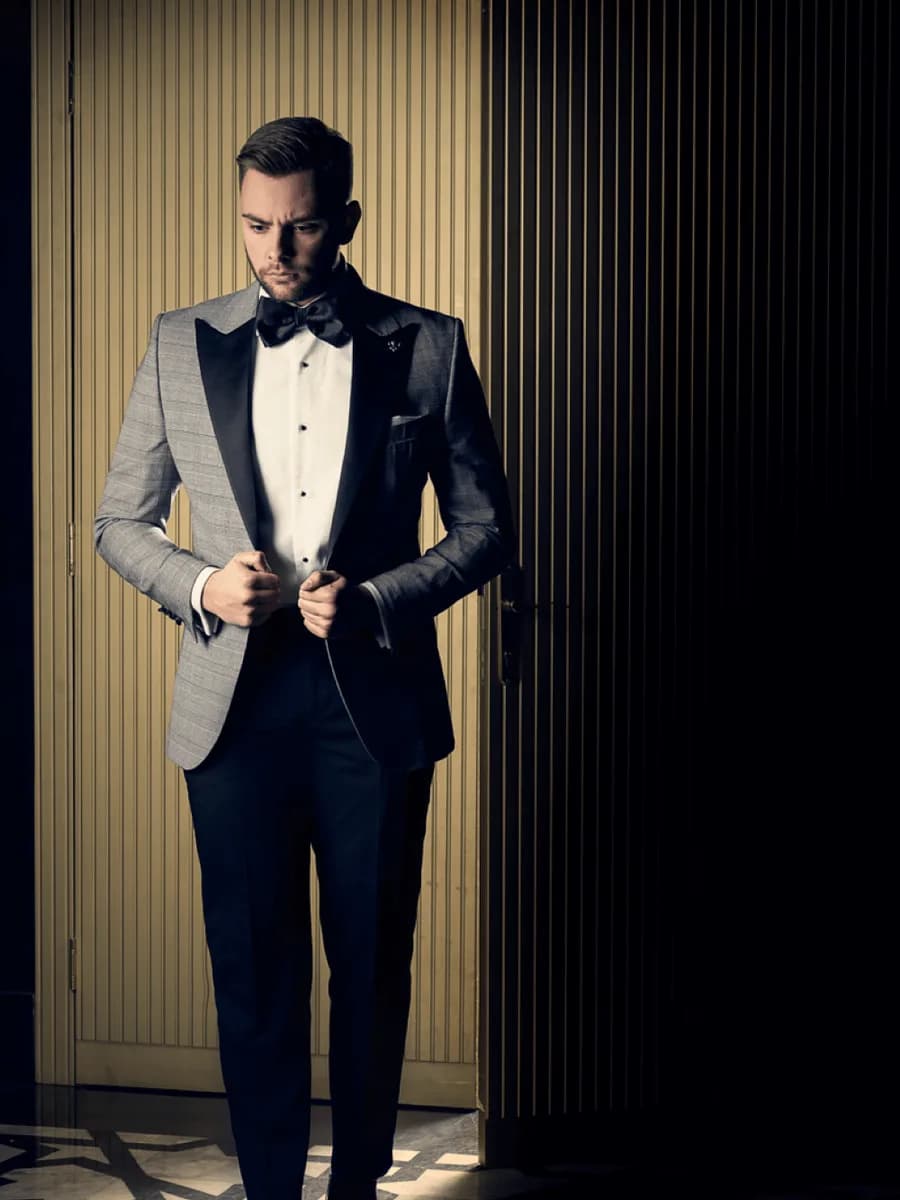
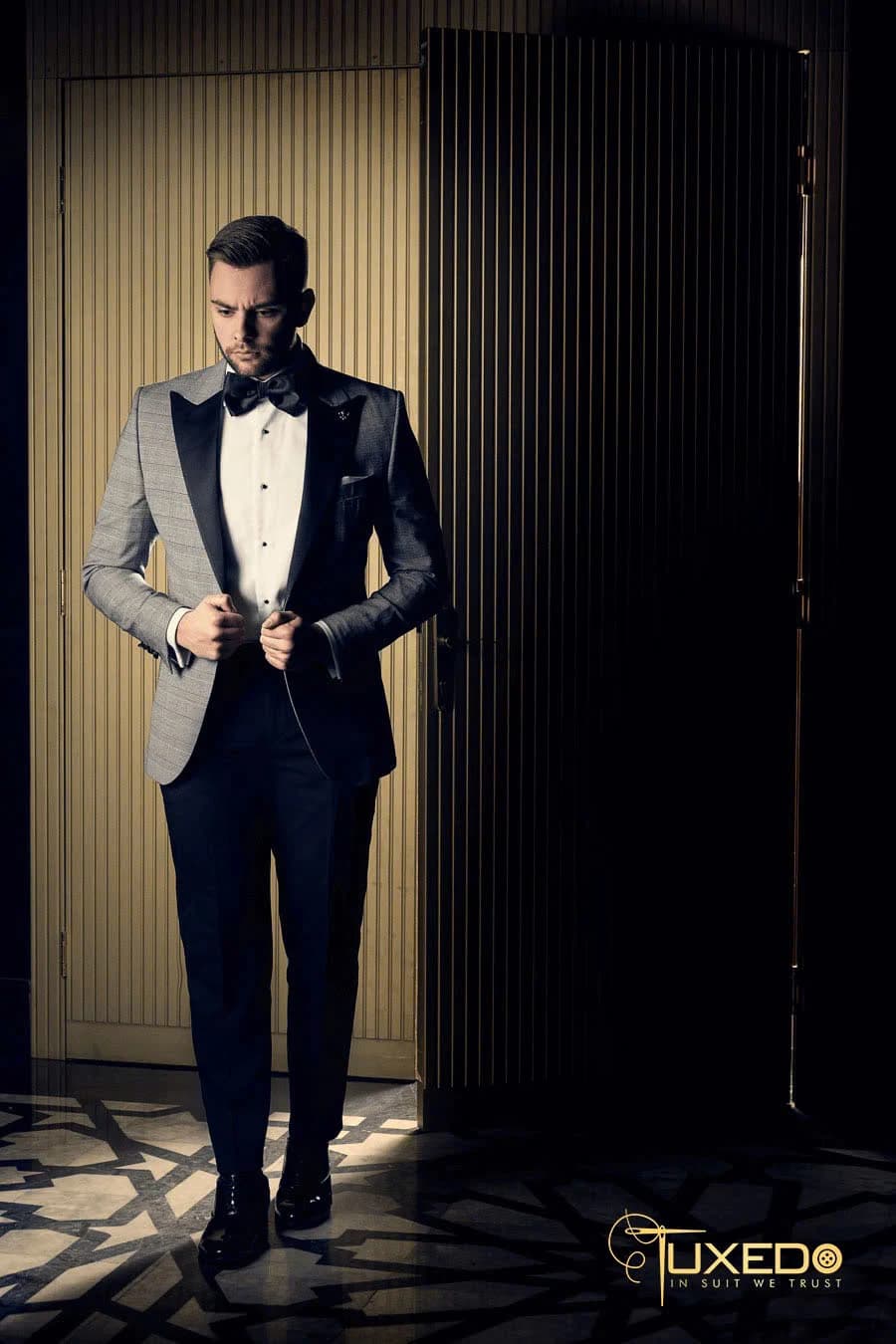
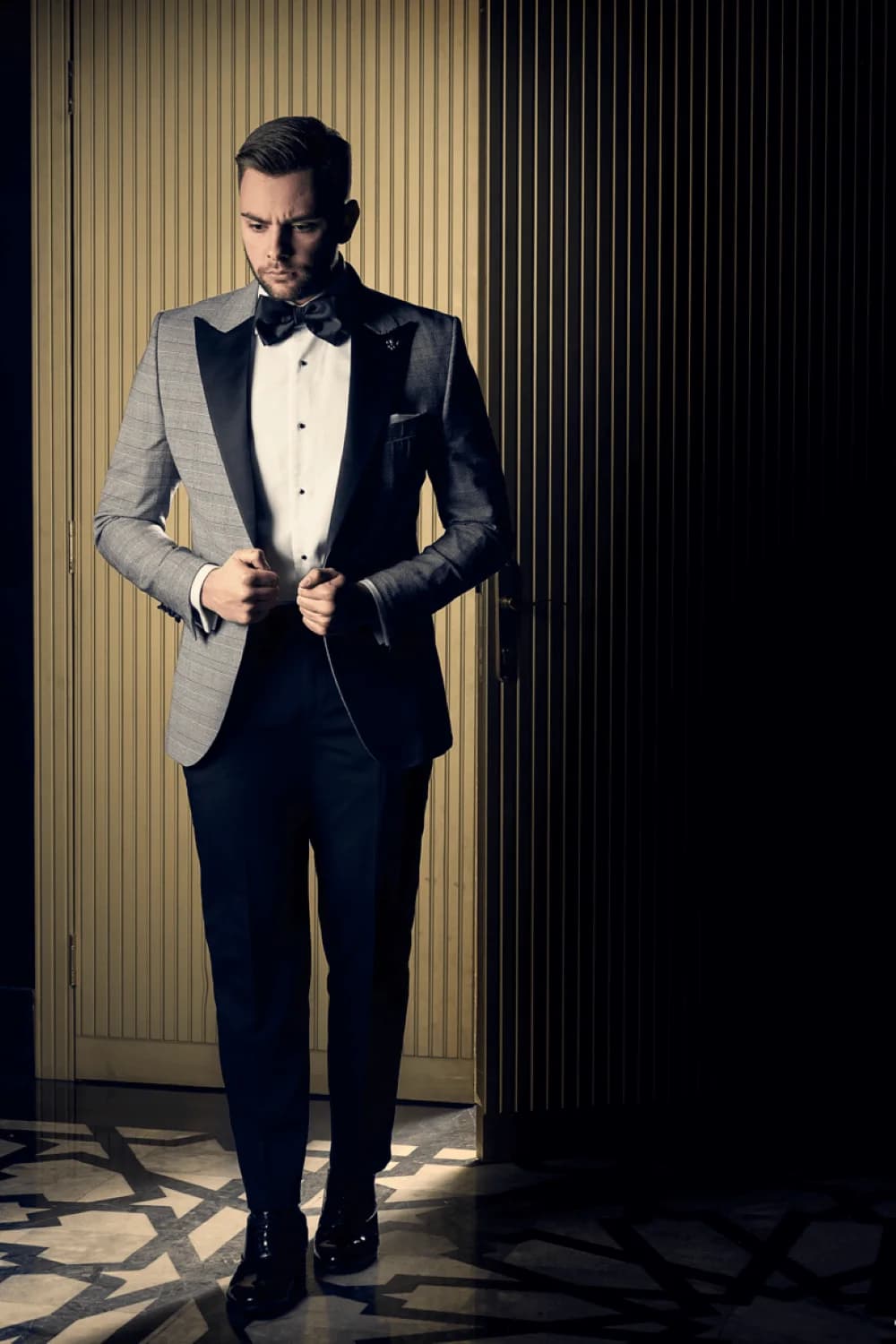
- Stronger colours such as burgundy or silver grey are worth trying when the film calls for impact, for example TUX-008, a silver-grey peak-lapel with satin.
If the backdrop is red or covered in multicoloured logos, a deep, quiet tone stops you blending into the background.
Small details that photograph well
Carpet photographs are usually cropped from the chest up or taken full-length from a distance, so whatever falls in frame should earn its place:
- A satin or grosgrain lapel catches the light and gives the chest a clear outline.
- A pocket square folded straight or in a four-point style, in gentle contrast with the jacket.
- A hand-tied bow tie that sits slightly natural often photographs better than a perfectly flat one.
- Cufflinks that show about a finger's width when you raise an arm, enough for a quiet glint.
- Patent shoes well polished, since a full-length camera always finds the feet.
For posing and dressing in front of a lens, see portrait photography in a tuxedo and the tuxedo on the red carpet.
How Mon Amie can help
If you need a suit just for the premiere, browse the statement collection for greys, patterns and metallic cloths. Order well before the event so there is time for fittings and alterations; making time depends on the style and fitting schedule, and your consultant will confirm it at measurement. Book at a Mon Amie showroom.
Published 28/11/2026 · 16:00 · Editor: Mon Amie