Overcoats for black tie: the Chesterfield and the opera cape
Choosing an overcoat for a tuxedo: the black velvet-collar Chesterfield, the opera cape, the length that covers the jacket hem, and whether the south needs one.
Editor: Mon Amie · Published · about 4 min read
In this article
The correct overcoat for a tuxedo is a black or midnight Chesterfield with a velvet collar, long enough to cover the jacket hem, or an opera cape if you want to go fully classical. For those living in southern Vietnam the practical question is whether you need one at all. Owning one is always useful, but you will not always need it.
The black Chesterfield with a velvet collar
The Chesterfield is a straight-cut tailored overcoat, single or double breasted, reaching about the knee, and usually with a velvet collar. The name is said to derive from a nineteenth-century Earl of Chesterfield, and the coat has since become the standard formal overcoat for men. Its features:
- Black or deep midnight navy, to agree with both black and midnight-blue tuxedos. Charcoal grey also works, though it is a notch less formal.
- A velvet collar in the coat's own shade or black. The velvet collar is the Chesterfield's signature, handsome and warm, and it does not crush when you wear a scarf.
- A smooth wool cloth (wool or wool-cashmere): moderately heavy, with a natural drape.
- A single-breasted front with concealed buttons for a clean look, or a double-breasted front for a more formal line.
- Jetted or minimal flap pockets, with few details.
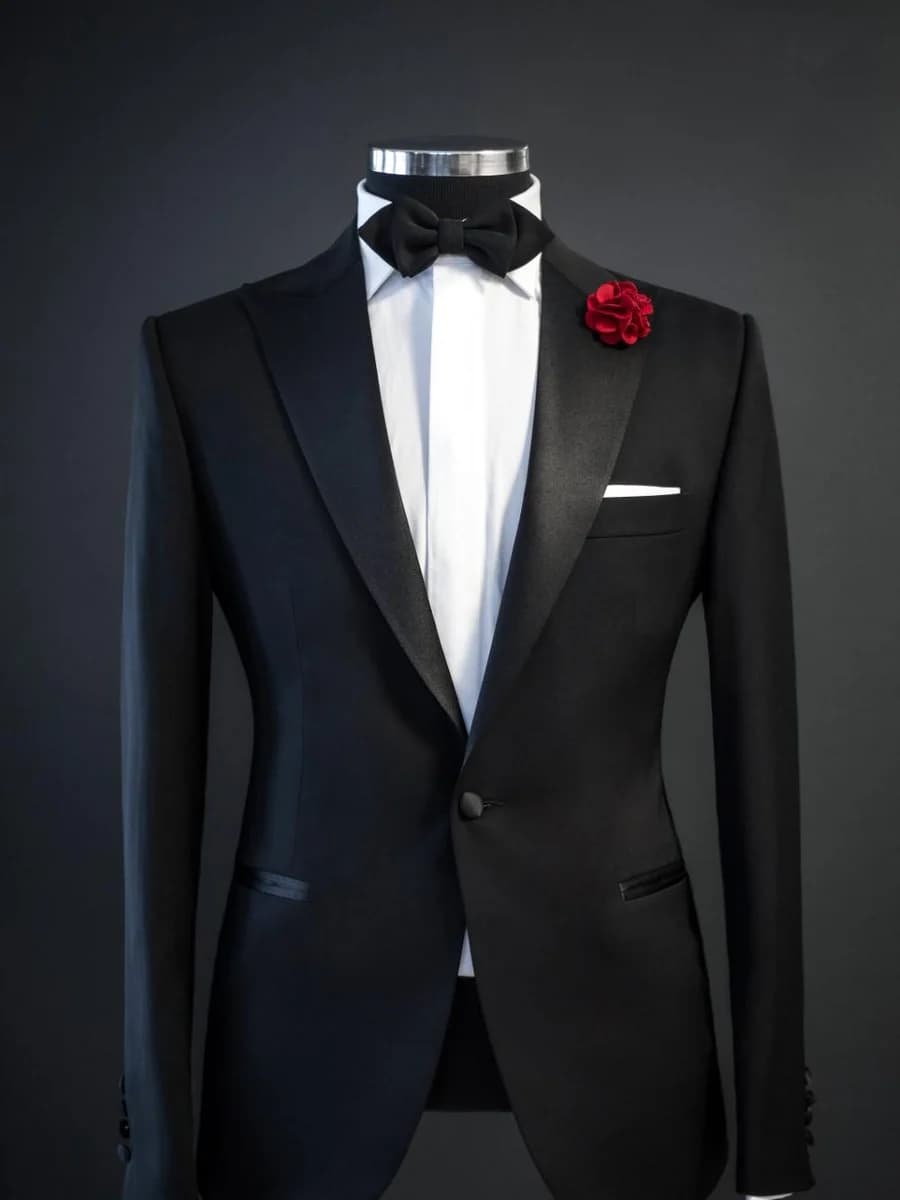
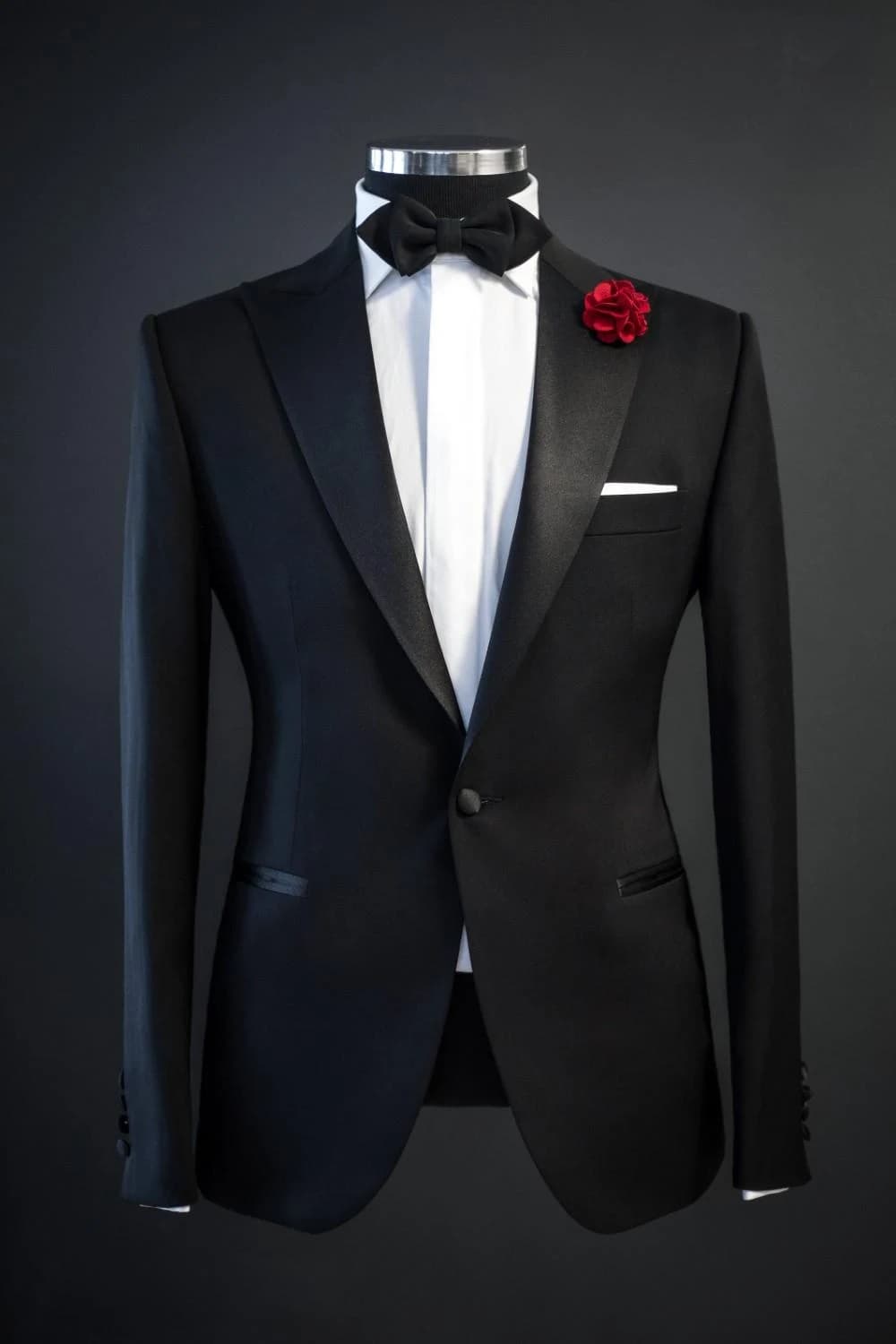
A black Chesterfield over TUX-060, a pure black tuxedo with black satin lapels, gives a tidy picture that is right for formal wear. If you use a silk scarf, read the white silk scarf with a tuxedo.
The opera cape
The opera cape is a sleeveless garment worn over the shoulders as a long mantle, sometimes with a high collar and a clasp at the neck, occasionally lined in silk. It is the most traditional of evening coats, tied to white tie and to opera and balls of the past. It is rare now and will draw attention. You might choose one if:
- You like a dramatic look and the idea of historical evening dress.
- The occasion is truly formal and the space large, such as an opera house or a ball.
- You are comfortable being the only man in one.
A cape is less convenient than a coat with sleeves for sitting down, getting into a car or driving. It also asks for a certain carriage when walking, so if you are not used to it, the Chesterfield is the more practical choice.
Length that covers the tuxedo
The key rule: the overcoat must be longer than the tuxedo jacket's hem so that no jacket skirt shows beneath. In practice:
- A length to about the knee, or just past it, is ideal. Too short and the jacket shows; too long and it drags and looks heavy.
- Sleeves: the overcoat sleeve must be roomy and long enough to hold the jacket sleeve and shirt cuff inside, but not baggy.
- Shoulders: the shoulder needs enough room for the jacket's shoulder without pulling. When trying an overcoat, wear the tuxedo or a jacket of the same thickness.
- Collar: when turned up, it should cover the neck and scarf without limiting head movement.
Because the overcoat goes over a tailored jacket, if you are having one made, fit it over the tuxedo, not a shirt. Our piece on wearing a tuxedo in cold weather says more about what to layer underneath.
Do you need one in the south
Honestly, in Ho Chi Minh City and the south, where it is warm all year, a heavy wool Chesterfield is rarely needed. But it is not pointless. It has a place when:
- You travel or attend events where there is a real winter: Hanoi, Da Lat, Sa Pa or overseas.
- A banquet hall is very cold from air conditioning, or an outdoor gala has a night breeze.
- You want to complete the picture at a formal event, where a tailored overcoat adds presence on arrival and departure.
- You are outside in rain, if you choose a cloth with some water resistance.
For these uses you could choose a lighter overcoat: a lightweight wool, a cashmere blend or a minimal black trench. If you only need to appear on arrival and leaving, do not invest in a heavy one.
Choosing the coat by tuxedo
| Tuxedo | Suggested overcoat |
|---|---|
| Black | Black or midnight Chesterfield |
| Midnight blue | Deep navy or black Chesterfield |
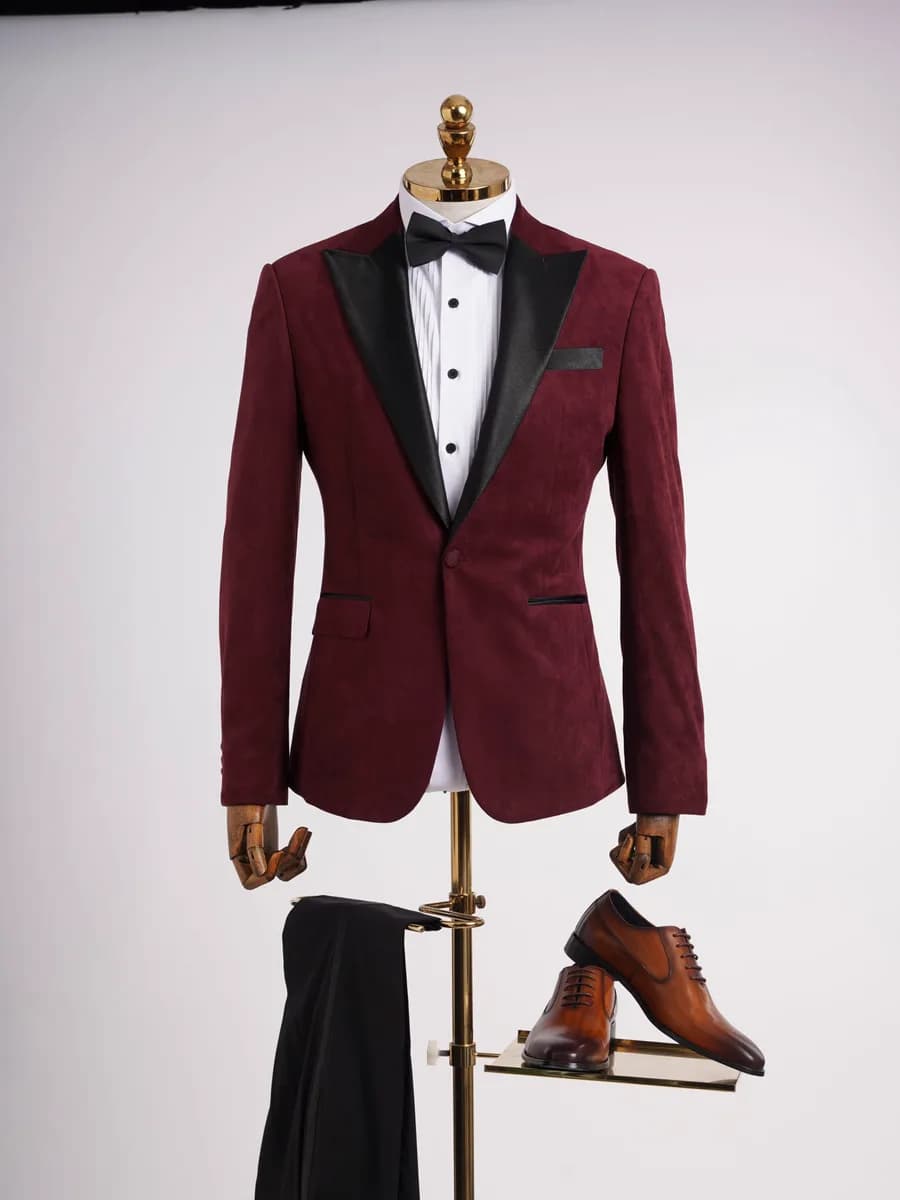
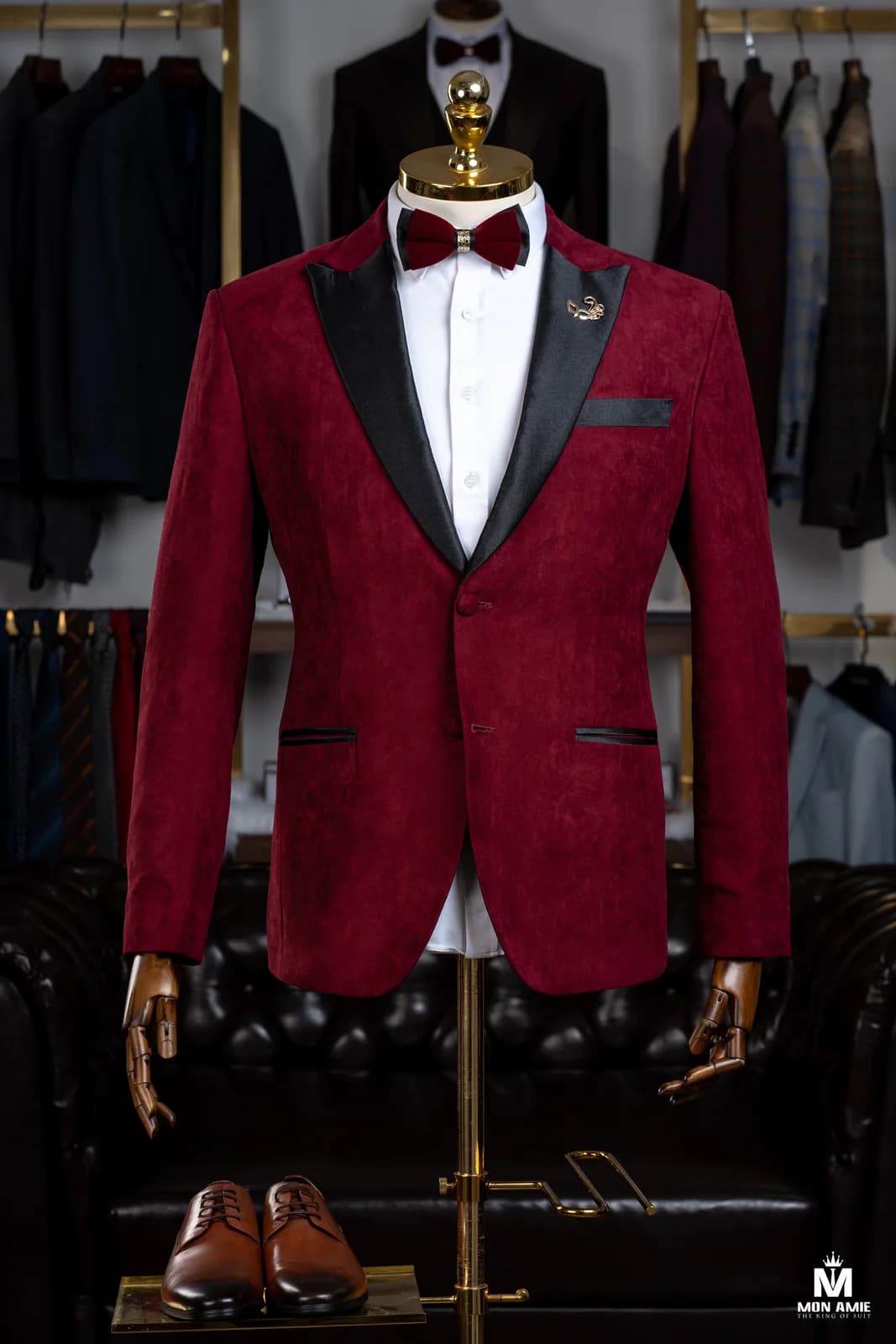
| Velvet or wine-coloured | Black Chesterfield with velvet collar |
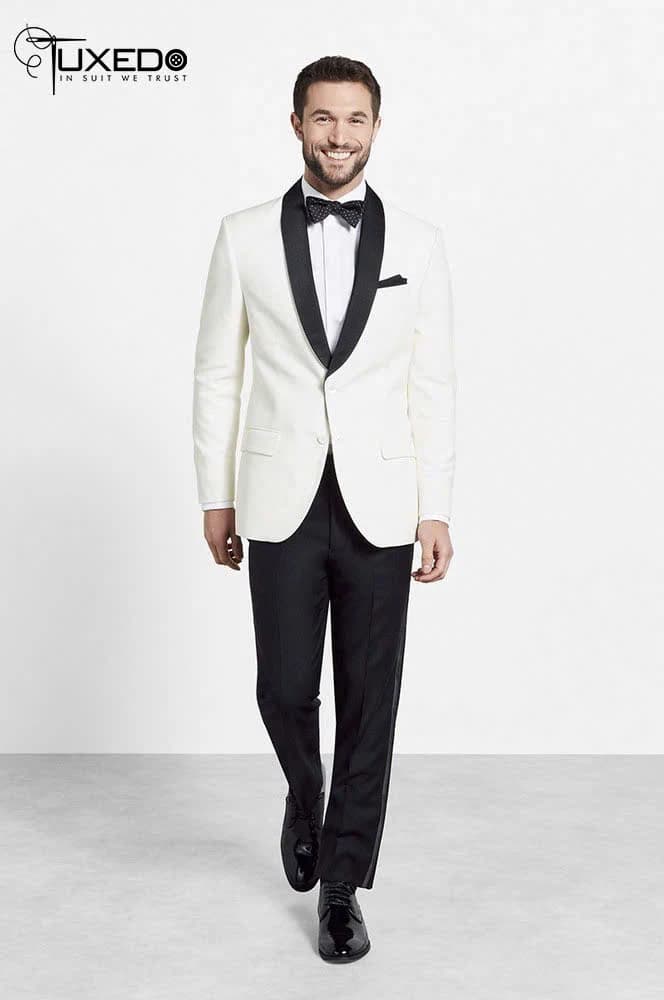
| Ivory (dinner jacket) | Black or charcoal coat |
From the Mon Amie workroom
An overcoat should be made or chosen after the tuxedo is finished so length and shoulders agree. Tell your consultant at the fitting if you plan to wear one. Book a fitting at a showroom or see our bespoke tuxedo page.
Published 10/11/2026 · 17:30 · Editor: Mon Amie