Tuxedos Tailored for Wheelchair Users
A tuxedo for a wheelchair user should be cut for the seated body: shorter front, higher back rise, sleeves clear of the wheels and easy to put on and fasten.
Editor: Mon Amie · Published · about 4 min read
In this article
A tuxedo for a wheelchair user should be designed for the seated position, because that is the posture you hold for most of the evening. A jacket cut for a standing man bunches at the stomach when you sit, the skirt rides up, and the trouser back slips down to expose the waistband. A made-to-measure suit solves this with small pattern changes that leave the black tie look intact.
Measured while seated
The session should take place with you in the chair you will actually use, because seat height, back angle and cushion all change the measurements. The tailor can take figures rarely needed for a standing client: length of the torso from collar to seat, belly circumference when seated, thigh circumference with the hip flexed, and the distance from waist to knee.
If you can stand for a moment, the tailor may take standing measurements for comparison, but the suit is cut for the seated body.
A shorter front
On a standing man the jacket skirt covers the seat. On a seated one, the front skirt meets the thighs and is pushed up, forming a thick fold across the stomach. The usual remedies:
- A slightly shorter, more rounded front so the jacket does not pile onto the thighs when you sit.
- A longer back so the seat is still covered when you lean, and the jacket keeps its line when you move forward.
- A vent or no vent, chosen by length. The tailor tries both and picks whichever wrinkles least while you sit.
- A close fit through collar and shoulder. That is the part that holds the jacket up; a collar that stands away slides backwards against the chair.
A one-button jacket often lies flatter when seated, though it depends on the person. The tailor should have you fasten it and sit during the fitting.
A higher back rise
Trousers for a seated man need a higher back rise and a slightly lower front. When you sit, the back waistband slides down and the front is pushed up against the stomach; a low back leaves skin exposed when you bend or lean.
- A raised back rise, with the trouser sitting snugly on the hip but not tight on the thigh.
- Hidden elastic or an adjustable waistband for long hours of sitting, without changing the outward line.
- A plain hem, not a heavy cuff, long enough to cover the ankle when seated and never dragging toward the wheels.
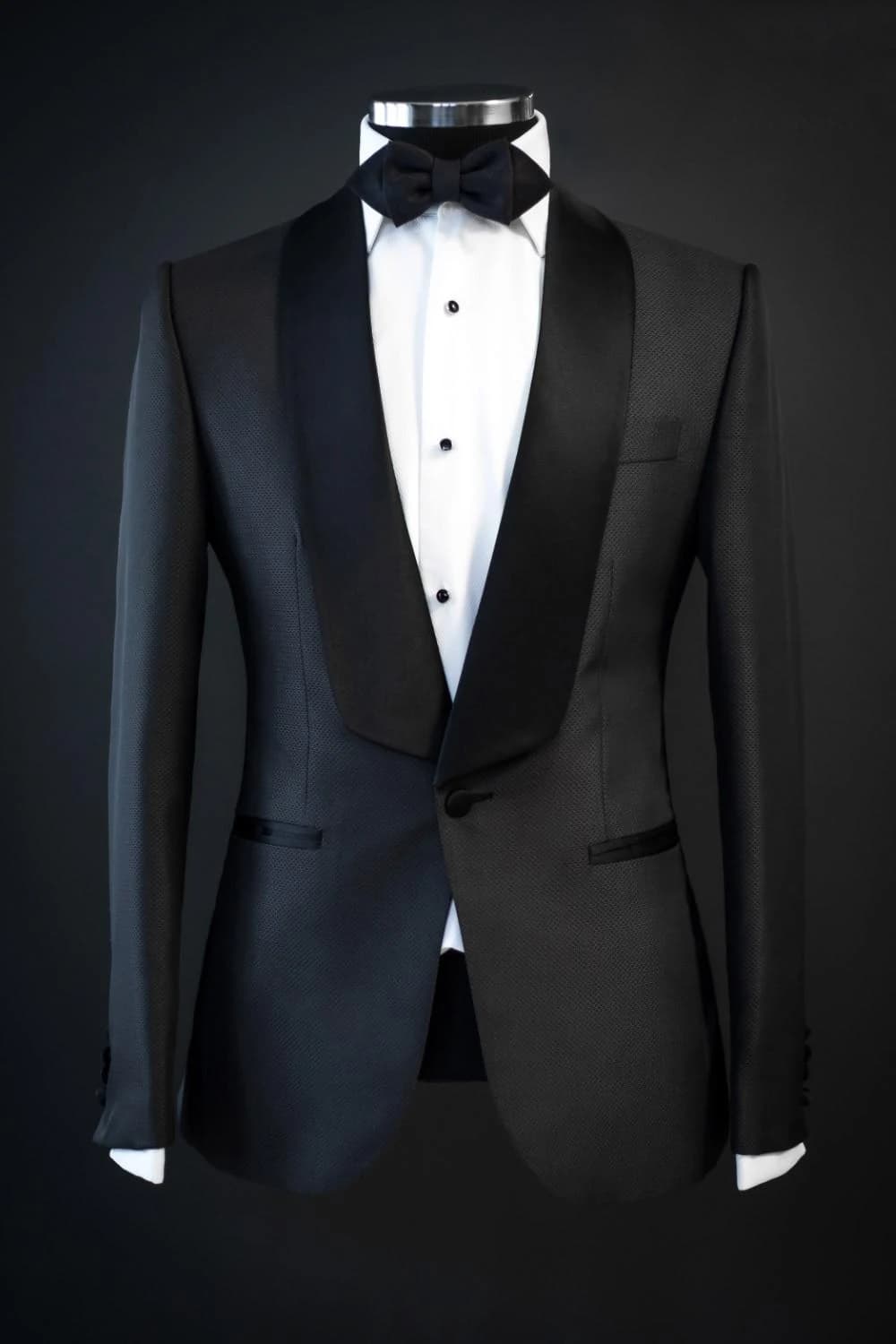
- The satin braid down the side can stay, since it keeps the black tie character.
Choose a cloth with a little give but good drape, and a smooth lining so the trousers slide when you shift position.
Sleeves that clear the wheels
Many manual wheelchair users touch the wheel rims, so the sleeve should be neat and not too wide:
- A sleeve that is not too long. It should show a little shirt cuff but not hang over the wheel, where it can pick up dirt or catch in the spokes.
- A moderate sleeve opening, so the fabric does not ride up the arm when you reach forward.
- A well-cut armhole, not too high and with room for the arm to rotate when pushing.
If you use the chair mostly for sitting through a reception, the main check is sleeve length with the hands resting on the lap.
Easy to put on and fasten
A beautiful suit that is hard to wear is a failed suit. Ask your tailor to consider:
- Compact buttons and generous buttonholes, or concealed fasteners at positions that are hard to reach.
- A wide trouser zip and an easy waist closure, plus suspenders if you prefer them. Braces also keep the waistband stable while seated.
- A pre-tied or hand-tied bow tie, whichever suits your dexterity. Both belong to black tie in their own way.
- A smooth jacket lining that lets the jacket slide as you change position.
Tell the tailor how you normally dress. Each person has habits, and the garment can be cut around them.
Booking a fitting at Mon Amie
Our consultants can prepare in advance if you describe your needs: bring your chair, ask about the most convenient showroom entrance, and allow plenty of time for the measuring. Our guide to preparing for a tuxedo fitting lists what to bring. See made-to-measure tuxedos and book a fitting at a showroom. Making time depends on the model and the fitting schedule, and your consultant will confirm it when you are measured.
Published 09/11/2026 · 19:00 · Editor: Mon Amie