A Fuller Chest: Lapels and Shirts That Flatter
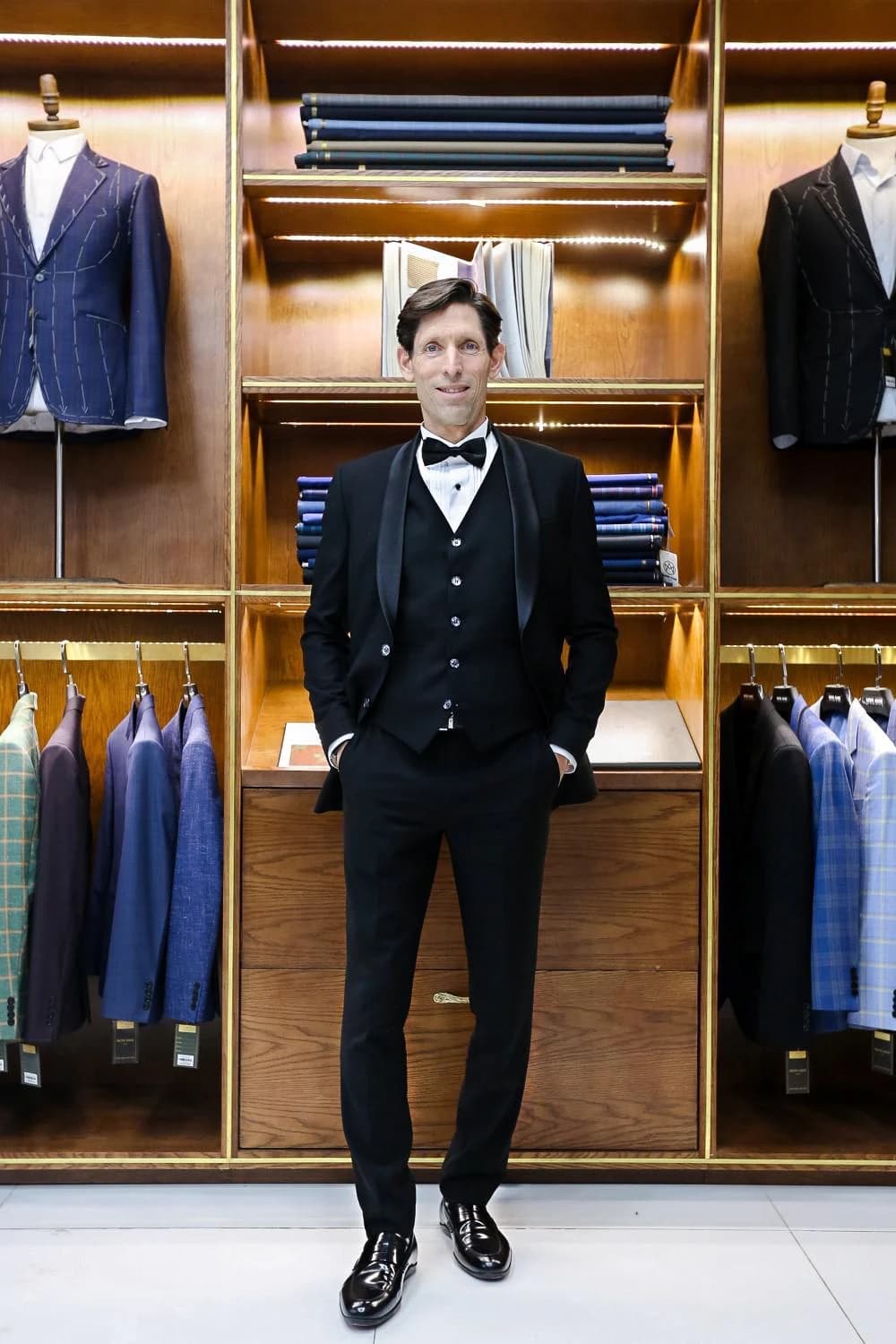
With a full or athletic chest, choose a softly rolling shawl lapel, a flat piqué shirt front, an easy fit across the chest and a waistcoat that holds the shape.
Editor: Mon Amie · Published · about 3 min read
In this article
A fuller chest, whether from training or build, brings familiar problems in a tuxedo: the button pulls into a diagonal crease, the lapel springs away from the chest and a pleated shirt bulges. Four choices solve most of it: a softly rolling shawl lapel, a flat piqué shirt front, a fit that is not tight across the chest and a waistcoat that holds the shape. The rest is for the tailor to adjust in the pattern.
A softly rolling shawl lapel
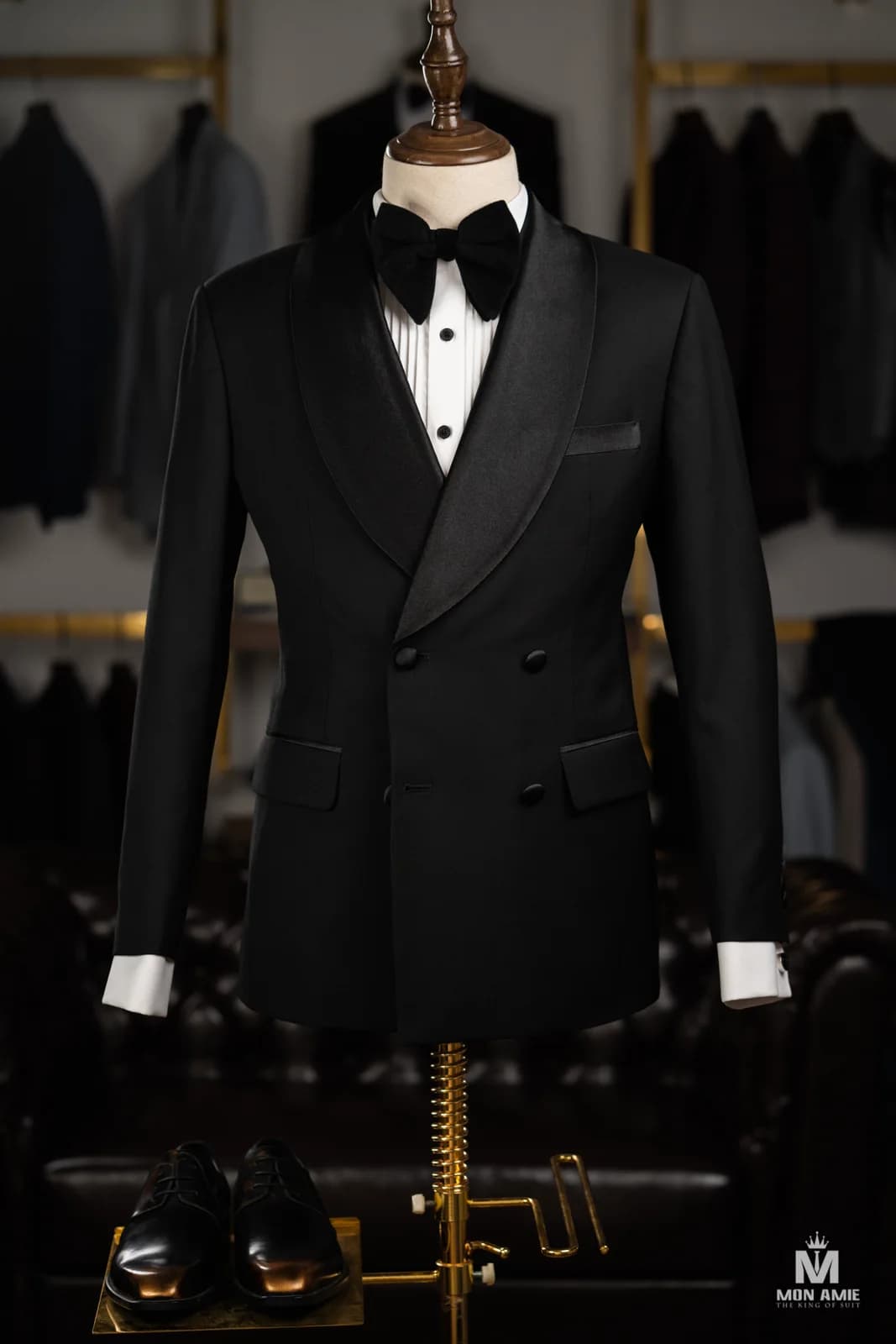
The shawl lapel has no notch, only a continuous curve from the collar to the button. That curve has two advantages for a fuller chest:
- A soft rolling line that the eye follows down in one curve, instead of being broken by the horizontal point of a peak lapel at chest level.
- No extra horizontal line across the chest, so the upper body reads as one piece.
The lapel needs a moderate width. A very wide one covers more of the chest and makes it look broader; a very narrow one shows too much shirt on either side. Its width should relate to your shoulders and chest, and the tailor can adjust it by a few millimetres to find the balance. See black tuxedos with a shawl lapel for more on this lapel.
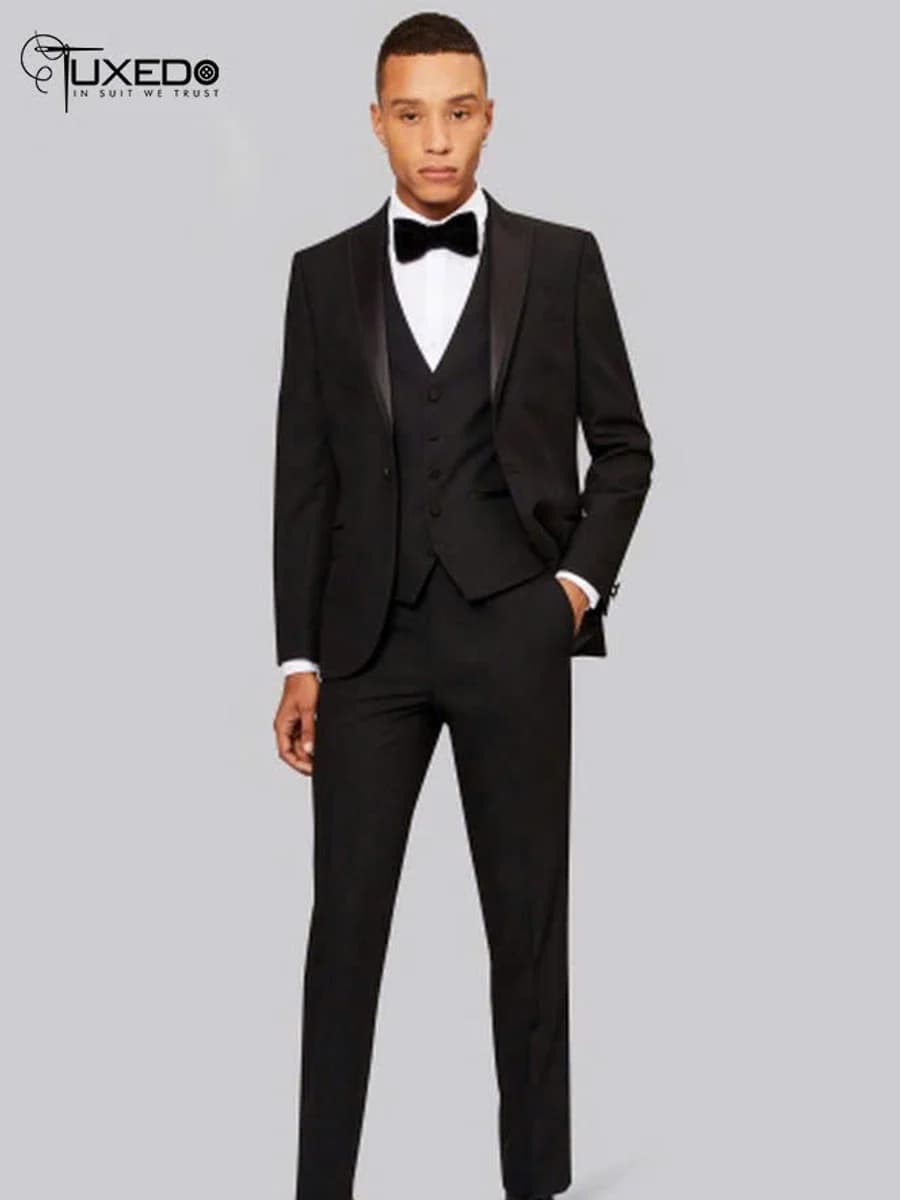
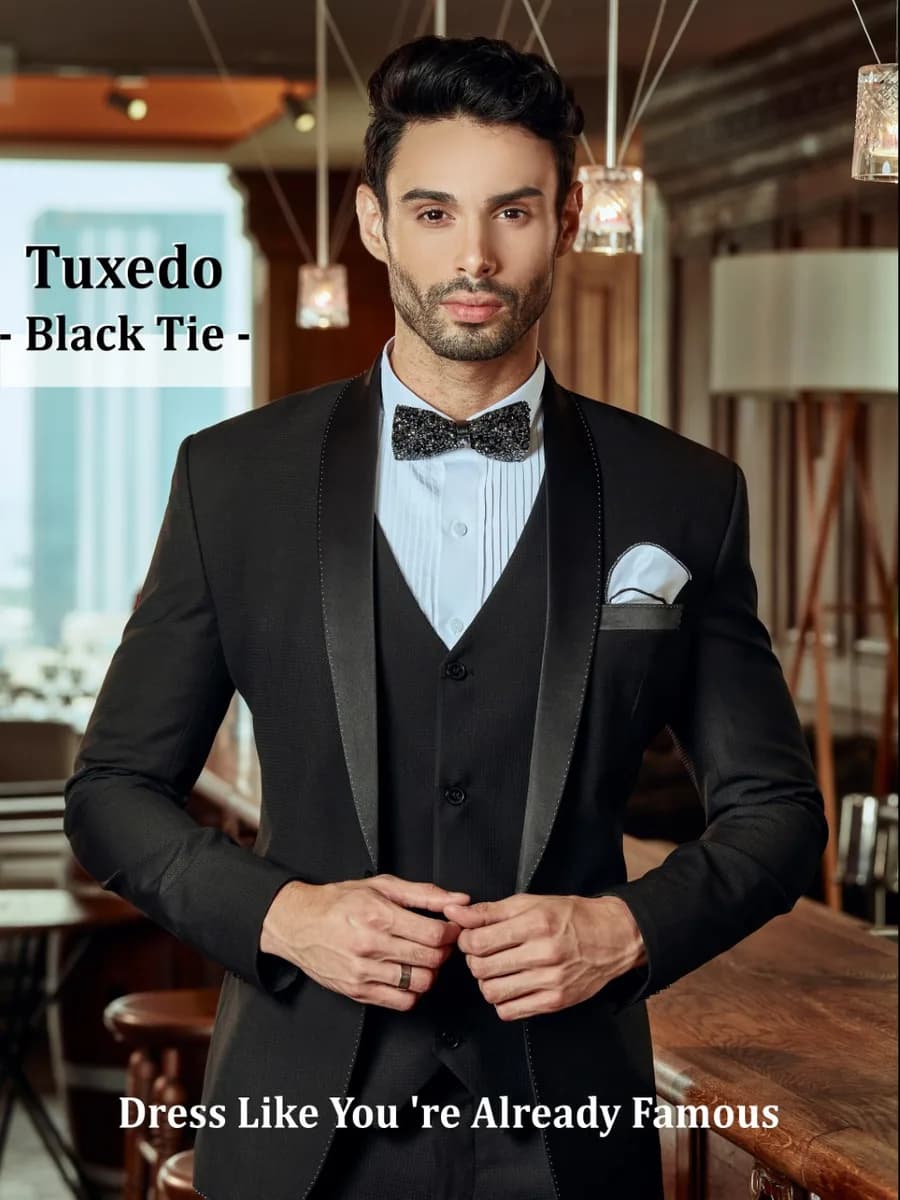
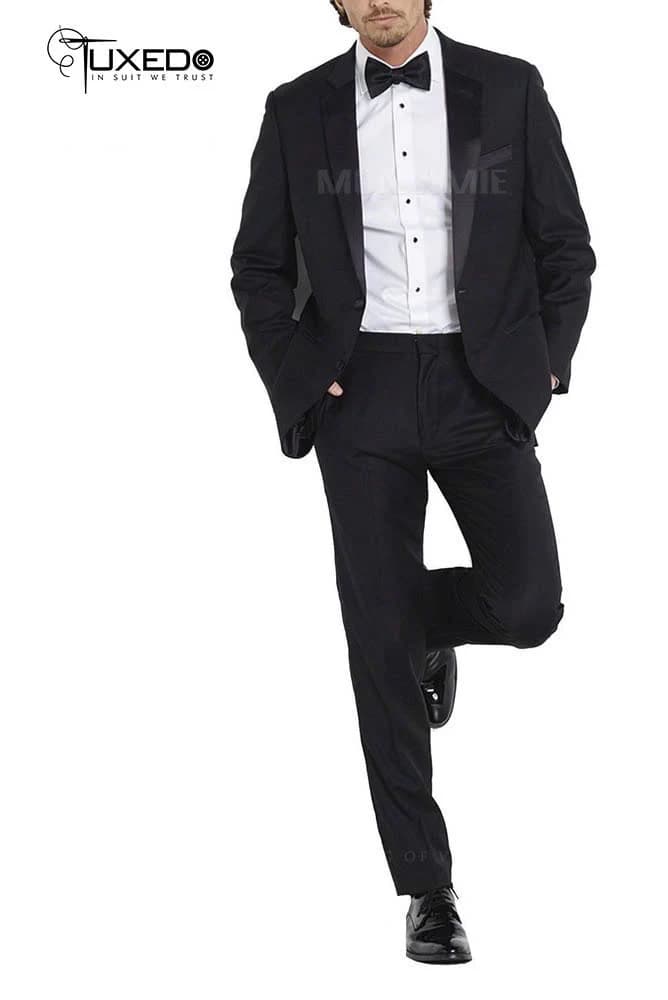
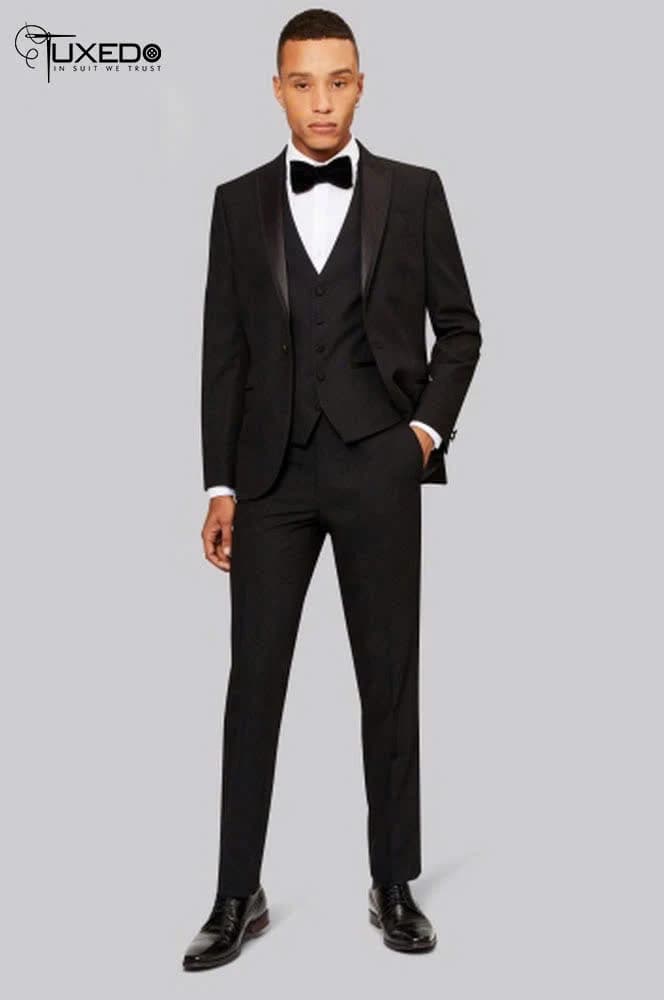
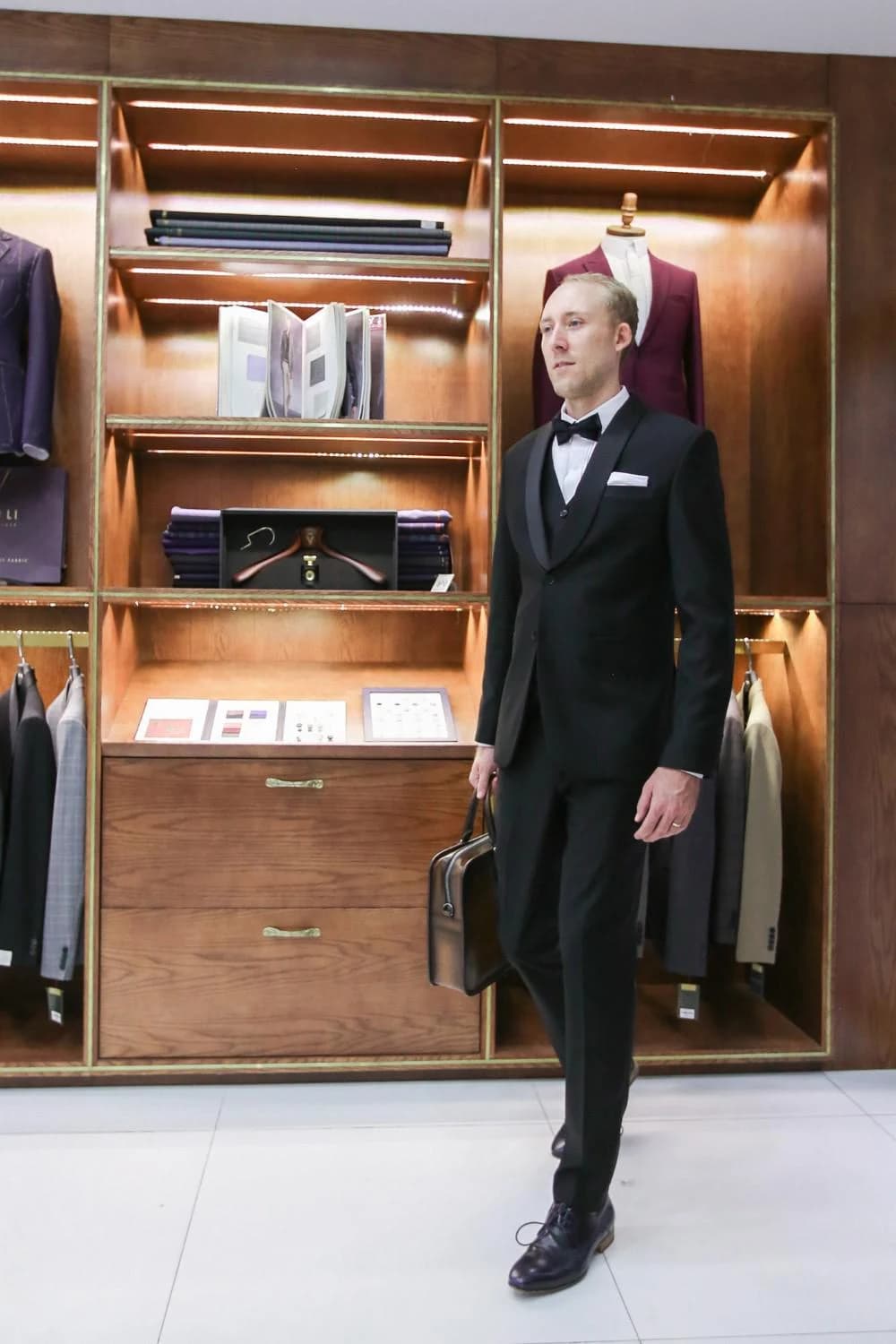
TUX-078 is a black single-button tuxedo with a satin shawl lapel, a matching waistcoat and a straight-folded white pocket square, a good example for a fuller chest, and TUX-032 is a black three-piece with a satin shawl collar and a buttoned waistcoat.
A flat piqué shirt front
Tuxedo shirt fronts come in two main kinds: pleated and piqué. For a fuller chest, piqué is usually the easier choice.
- Piqué is a woven cloth with a fine raised texture, flat and without vertical pleats.
- Pleated fronts add layers of cloth at the chest and can bulge, particularly on a full chest. Narrow pleats are better than wide ones, but piqué stays flatter.
- Look for a well-fitted collar, discreet studs and a cloth thick enough not to show skin.
Our piece on the piqué-front shirt explains how to judge the cloth and weight.
Not too tight across the chest
A tuxedo that grips the chest pulls the button into an X-shaped crease and makes the lapel spring open. You need the right amount of ease:
- Enough chest measurement beyond your real chest to breathe, raise your arms and sit without straining the button.
- A sufficiently deep armhole so the arm can rotate, especially when the pectorals and shoulders are developed.
- The button in the right position, around the natural waist. A button set too high makes the chest look fuller.
- If you train a lot, tell the tailor and be measured in your usual condition.
A jacket that follows the body is always neater than a tight one, and neater than a loose one.
A waistcoat that holds the shape
A waistcoat builds an inner layer beneath the jacket, which helps the upper body keep its shape and covers the front of the shirt.
- A waistcoat in the colour of the suit, with a moderate neckline and fastened close to the waist, keeps the front flat.
- A thin, well-fitted waistcoat, not a tight one. A tight waistcoat lifts the chest and pushes the jacket outward.
- If you skip the waistcoat, a cummerbund works well at the waist but does nothing for the chest.
It is worth trying both at the fitting to see which suits you.
At the fitting
- Fasten the button, then stand, sit, raise your arms and cross them in front of you. If the button pulls an X-crease, the jacket needs letting out at the chest.
- Check that the lapel lies flat against the chest and does not spring open.
- Try the actual shirt and waistcoat you will wear, because layer thickness changes how the fit feels.
How Mon Amie can help
A full chest is a strong build, and when the jacket is cut correctly it gives a shapely chest and firm shoulders. The tailor sets the chest girth, armhole and lapel roll to your real measurements. See made-to-measure tuxedos and book a fitting at a showroom. Making time depends on the model and the fitting schedule, and your consultant will confirm it when you are measured.
Published 14/11/2026 · 19:00 · Editor: Mon Amie