Evening Waistcoat Fit: No Waistband, No Shirt Gap
A well-fitted evening waistcoat covers the waistband, has a neckline in balance with the lapel, an adjustable back, and stays neat when the jacket comes off.
Editor: Mon Amie · Published · about 4 min read
In this article
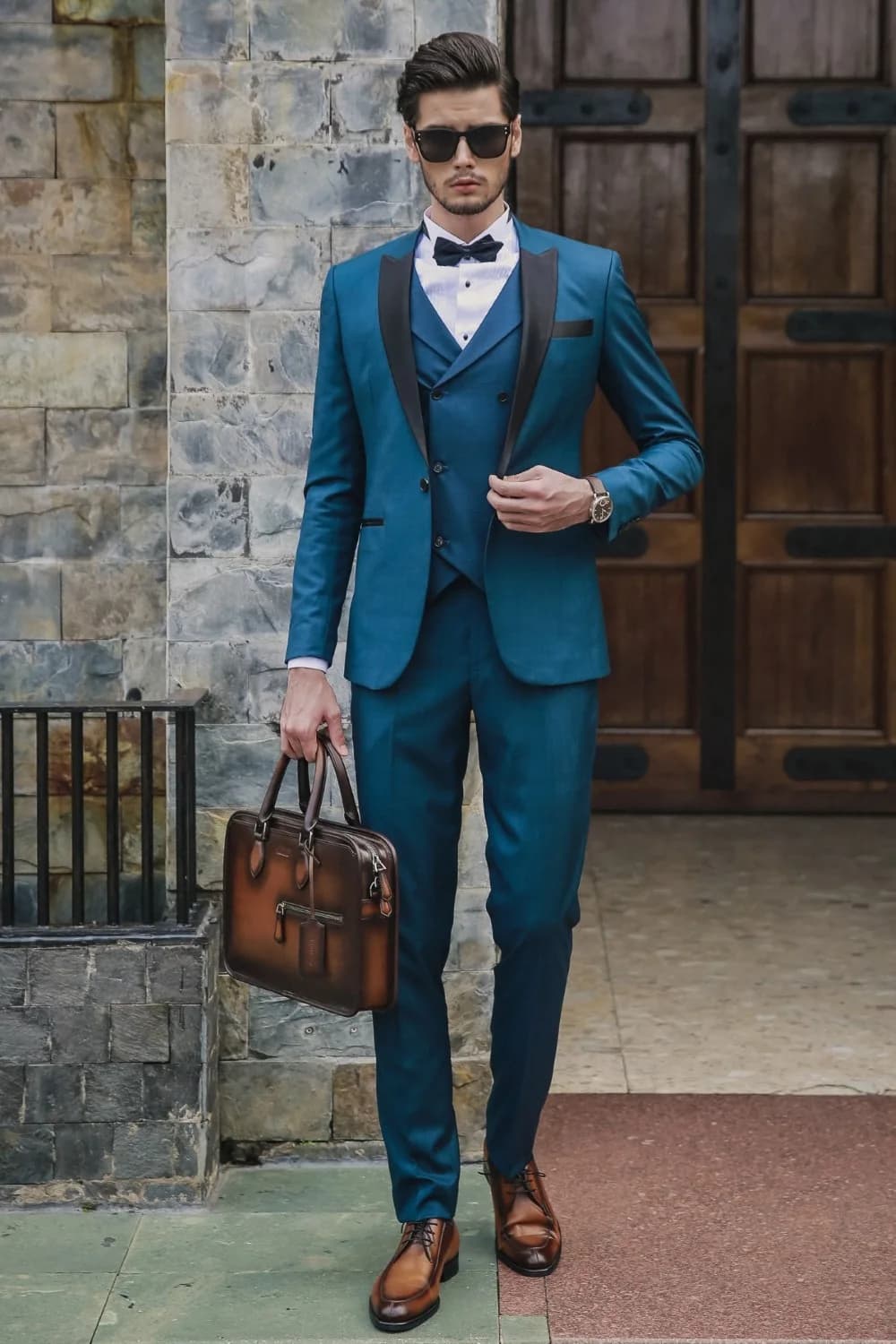
A well-fitted evening waistcoat shows four things: the hem covers the trouser waistband even when you sit or lift your arms; the neckline sits in balance with the jacket lapel; the back holds the waist and can be adjusted; and when the jacket comes off, the waistcoat still looks like a finished layer. Miss any one of them and you will either show a strip of white shirt between waistcoat and trousers, feel it pulling, or find yourself tugging at it all night.
A hem long enough to cover the waistband
An evening waistcoat is cut low at the chest to show the shirt front and bow tie, so its body is shorter than a day-suit waistcoat. Short does not mean exposed at the waist, though. Tuxedo trousers are traditionally high-rise, resting at the natural waist, and the waistcoat only needs to overlap the waistband by a modest margin, a couple of centimetres.
At the fitting, try these in front of the mirror:
- Stand straight, then raise both arms to shoulder height. The hem must not ride up over the waistband.
- Sit and lean back. No shirt should balloon into a white gap between waistcoat and trouser.
- Lean forward slightly, as you would to raise a glass or shake hands.
If the waistband sits too low for the hem, the fault is not in the waistcoat alone. Rise and waistcoat length must be measured together, a point developed in High or low rise for tuxedo trousers. A tailor should measure the waistcoat at the waist where you will really wear the trousers, not at a relaxed standing waist.
A neckline in step with the lapel
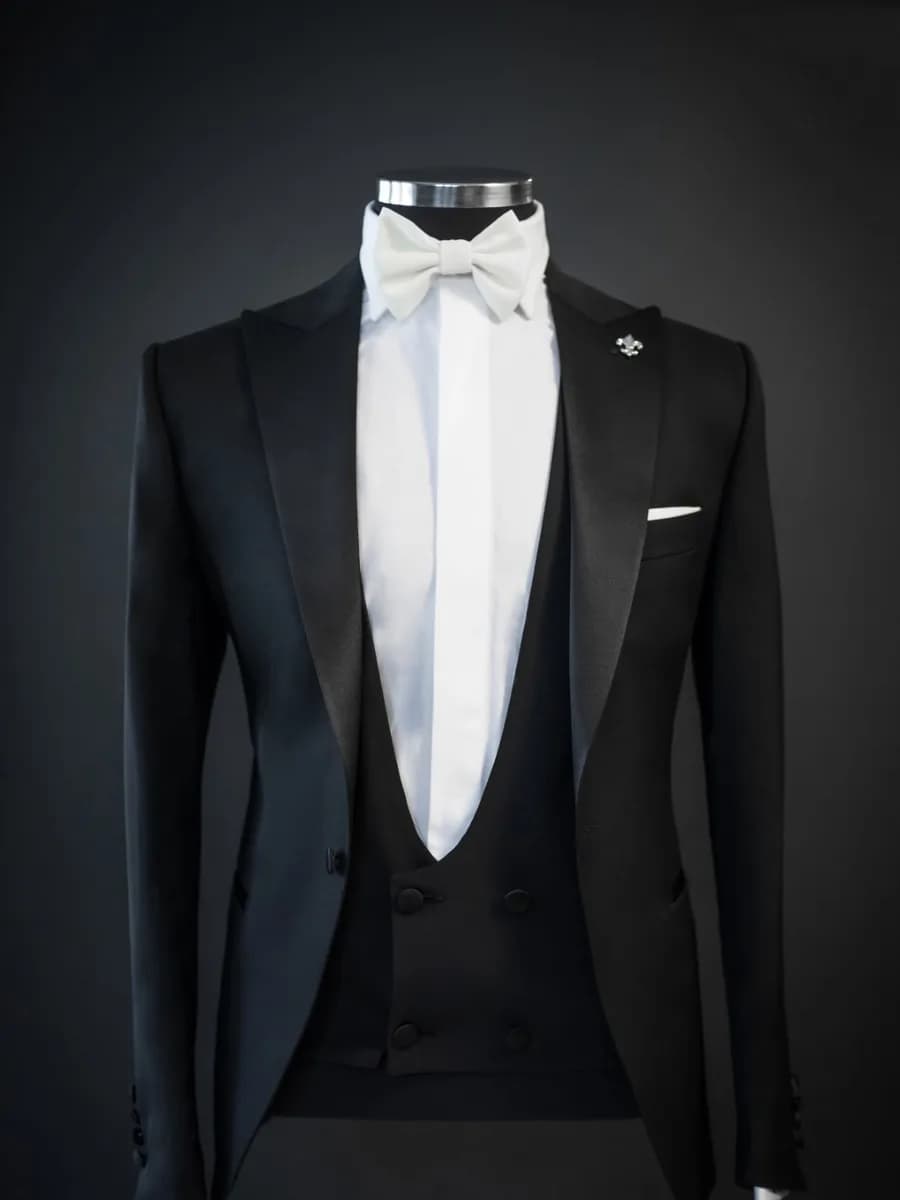
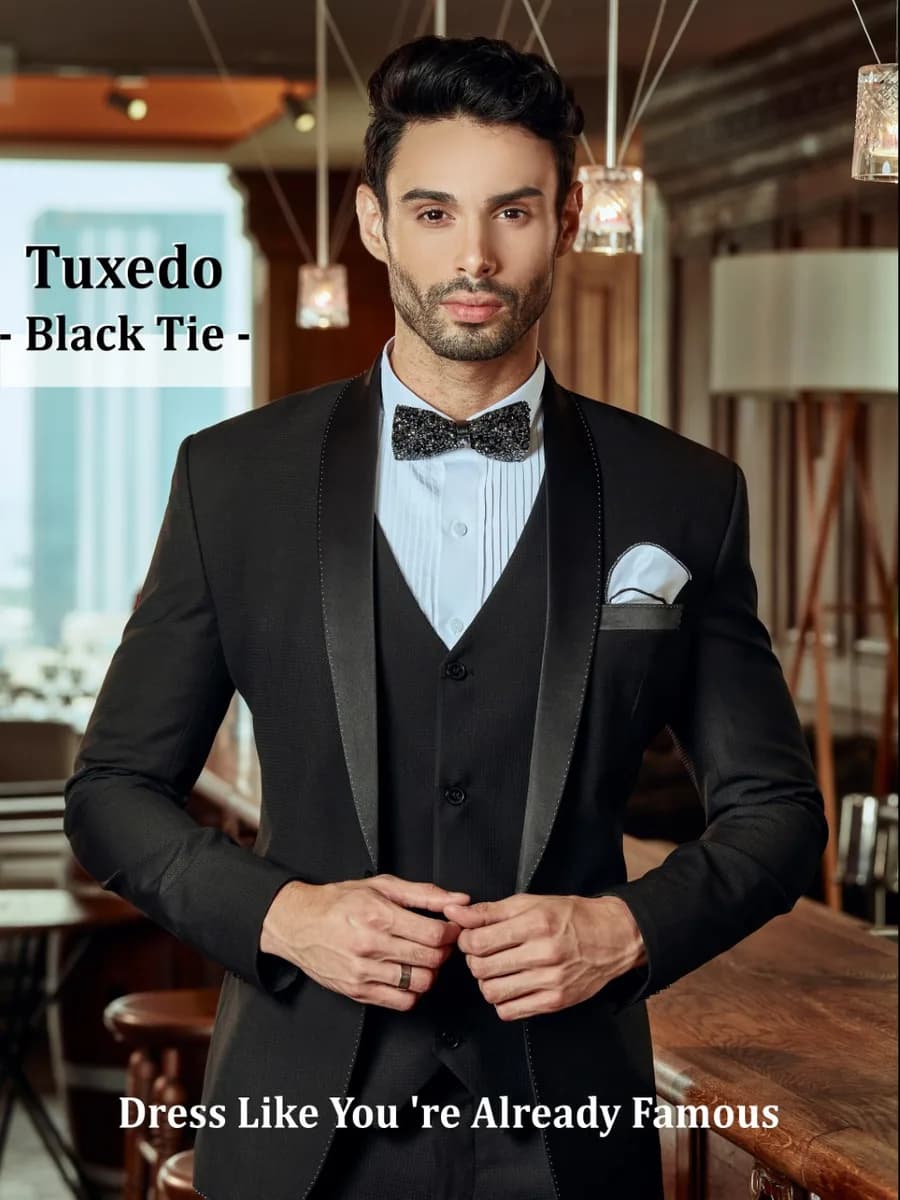
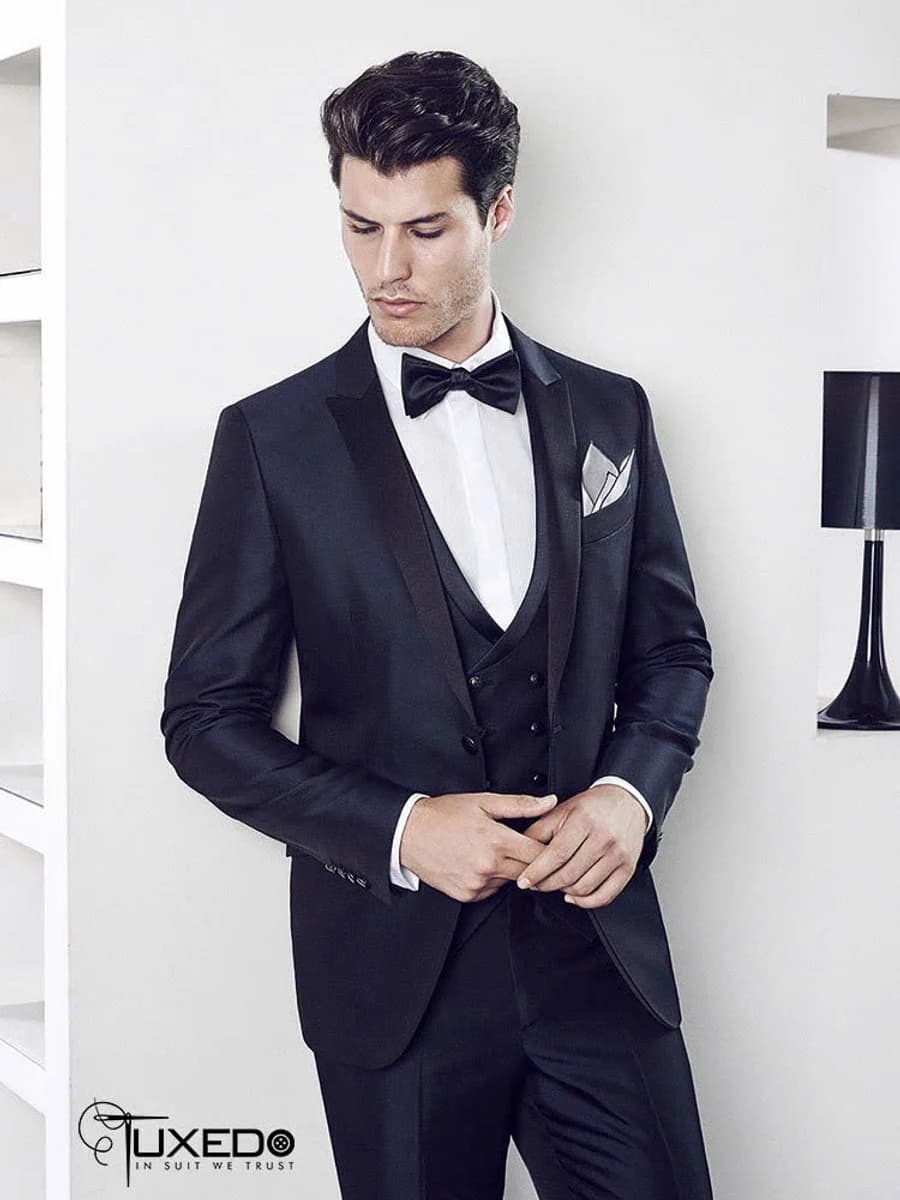
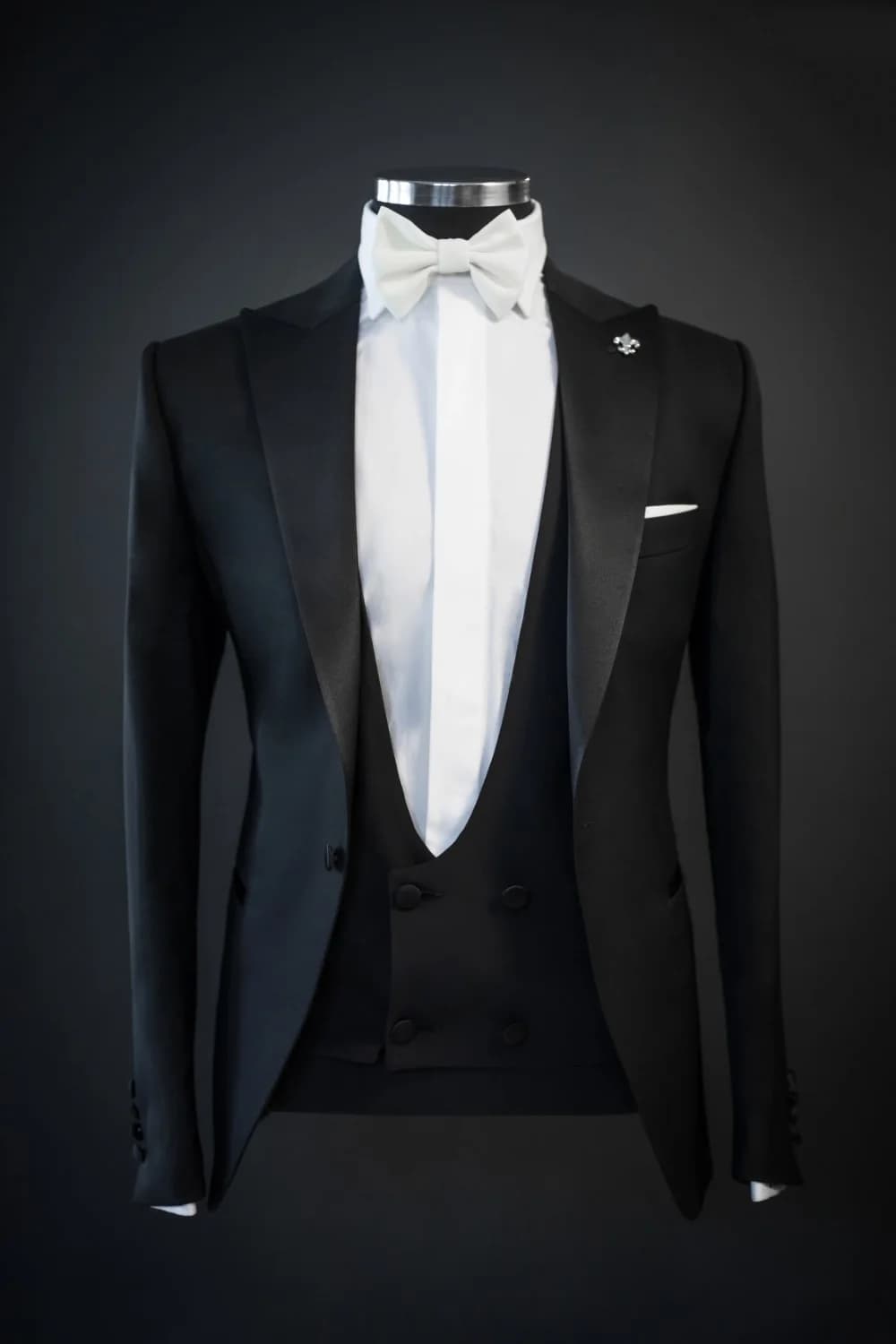
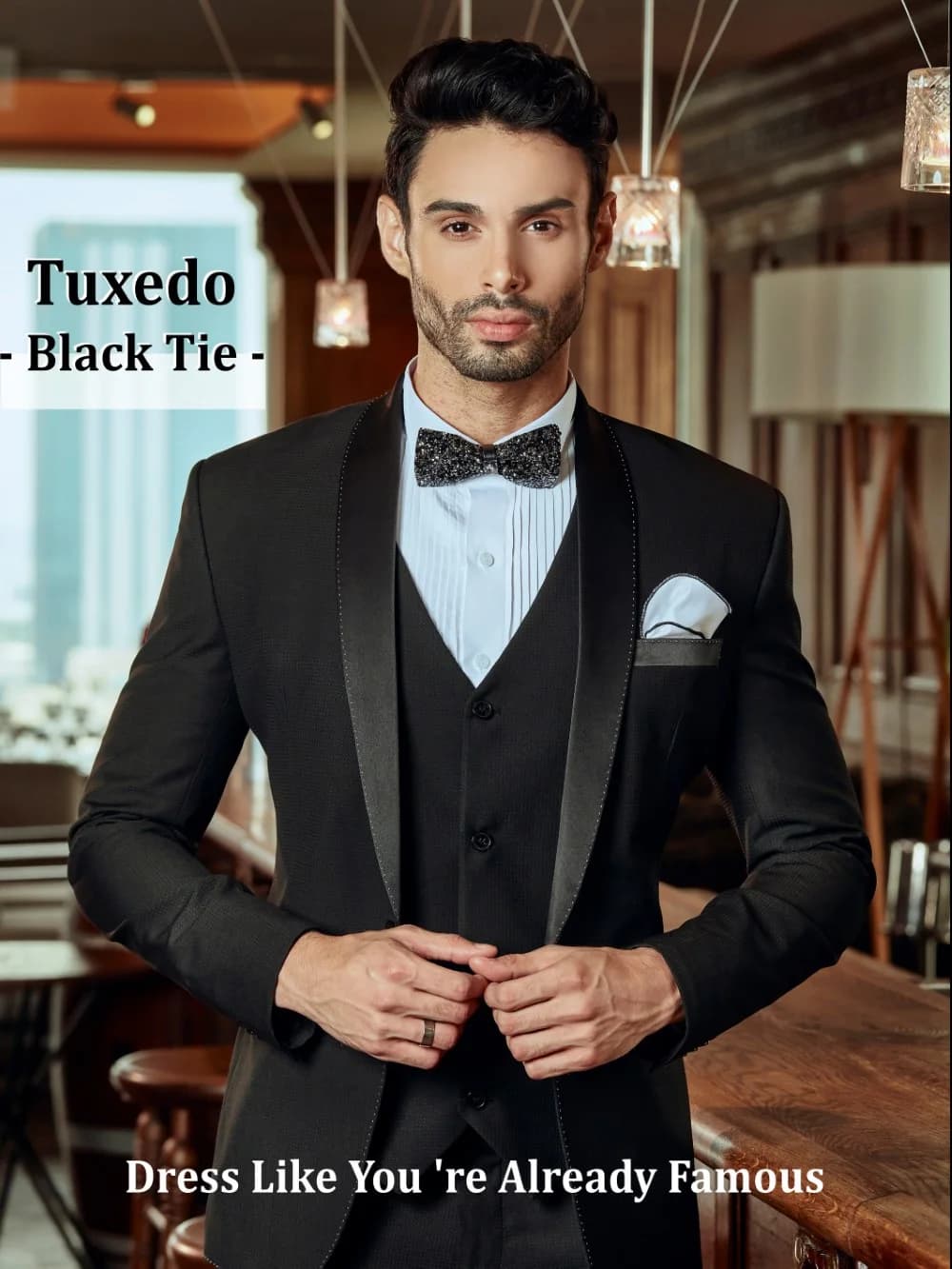
Evening waistcoats usually have a deep U or V opening, and it should agree with the jacket over it. Two models in the Mon Amie collection show different approaches: TUX-093 is a black tuxedo with satin peak lapels, a U-neck double-breasted waistcoat faced in satin, and a white bow tie; TUX-123 is a black textured tuxedo with a shawl lapel and a V-neck waistcoat.
A few principles:
- A wide peak or shawl lapel pairs with a moderately wide opening, so the two outlines do not compete.
- Cut too deep and the waistcoat exposes almost the whole shirt front and the studs, which looks short of cloth. Too shallow and it hides the bow tie and makes the outfit heavy.
- The point or edge of the waistcoat neckline should sit behind the jacket front when it is buttoned, not peek out past the lapel.
- A double-breasted waistcoat in the classic manner usually has a higher neckline than a single-breasted one, because it must leave room for the buttons.
The back and its adjuster
The back of a waistcoat is usually made from soft lining, with a small strap and buckle for adjustment. It is one of the details that marks careful tailoring:
- The strap lets the waistcoat follow your waist on the night, when you will feel different after dinner than you did at the fitting. It also keeps the garment useful if your weight changes a little.
- The buckle must lie flat and not print through the jacket. A good tailor offsets it to one side and tucks the strap end under the lining.
- The back should not be heavy or thick. It lies under the jacket against the shirt and quickly feels warm.
Try it with the jacket on, turn, sit upright, then slump slightly. If the strap pulls at the hip or leaves a ridge in the jacket, it needs adjusting or re-measuring.
When the jacket comes off
This is when the waistcoat is scrutinised most. By black-tie etiquette, you remove the jacket only once the host allows it or others already have. At that point the waistcoat is the outer layer and must be neat:
- All buttons fastened, with no X-shaped creases around the chest button.
- Armholes cut high enough not to rub the arm or push the shirt out.
- Bow tie, shirt studs and pocket square, if any, still in place.
- The back, even if only lining, flat and clean.
If you expect to take the jacket off often, choose a waistcoat with a back cut from the same cloth or a closed silk, rather than an open-backed style. The reasons are discussed in Backless evening waistcoats.
Evening waistcoat versus day waistcoat
A day waistcoat has a high neck, pockets, a longer body and more buttons. An evening waistcoat is cut low, often with no pockets or false ones, and is faced in satin or the same cloth as the lapel so that it does not compete with the white shirt and bow tie. Evening waistcoat and suit waistcoat goes further, and Three-piece tuxedo waistcoat styles compares U-neck, V-neck and double-breasted versions.
Advice from the Mon Amie workroom
A waistcoat needs its own measurement, so do not let an off-the-peg piece do the tailor's work. When you order a made-to-measure tuxedo at Mon Amie, the consultant measures waistcoat and trousers together, fits it over the shirt and jacket you will wear, then adjusts hem, neckline and back strap until it sits right. Book a fitting at the showroom and see how it behaves when you sit and raise your arms.
Published 22/11/2026 · 07:00 · Editor: Mon Amie