Cross-cultural weddings: the groom's attire
A foreign groom marrying a Vietnamese bride can wear an ao dai for the ancestral rite and a tuxedo for the reception; explaining customs and planning sizing.
Editor: Mon Amie · Published · about 4 min read
In this article
For a foreign groom marrying a Vietnamese bride, a complete answer is an ao dai and khan dong turban for the ancestral rite and a tuxedo for the reception. The two outfits say different things: the ao dai is your greeting to the bride's family and customs, and the tuxedo is the evening dress your international guests will recognise. The hard part is usually not choosing a model but explaining the day to both families and getting the sizing done in the short time you spend in Vietnam.
The ao dai for the ancestral rite
The ancestral rite is the traditional part of the day, held before the family altar with tea, wine, betel and areca, and words addressed to the ancestors. Vietnamese men wear a brocade ao dai, the khan dong turban and white trousers. When a foreign groom wears this, the bride's family is often moved, since it signals respect for the ceremony.
A few practical notes:
- Fit. The men's ao dai is cut straight with side slits and suits tall and broad men too. The neck, shoulder and sleeve length must be measured carefully, since the garment has little room to let out, unlike a suit.
- The turban. Wearing the khan dong takes practice. Try it once before the day and ask a relative on the bride's side to adjust it. If you have a large head, ask about the size beforehand.
- Colour. Traditional colours are red, deep blue, gold or brown, depending on the family. Ask the bride's mother or grandparents what to choose, and let your ao dai and the bride's harmonise.
- Footwear. Black leather shoes or sandals as each household prefers. Ask whether shoes are removed in front of the altar.
The article on ao dai for the ancestral rite, tuxedo for the reception describes how to arrange the two outfits in one day and where to plan the change of clothes.
The tuxedo for the reception
After the rite, the reception is the part international guests know well. For many foreign grooms, a tuxedo is evening dress that needs no explanation. You might choose:
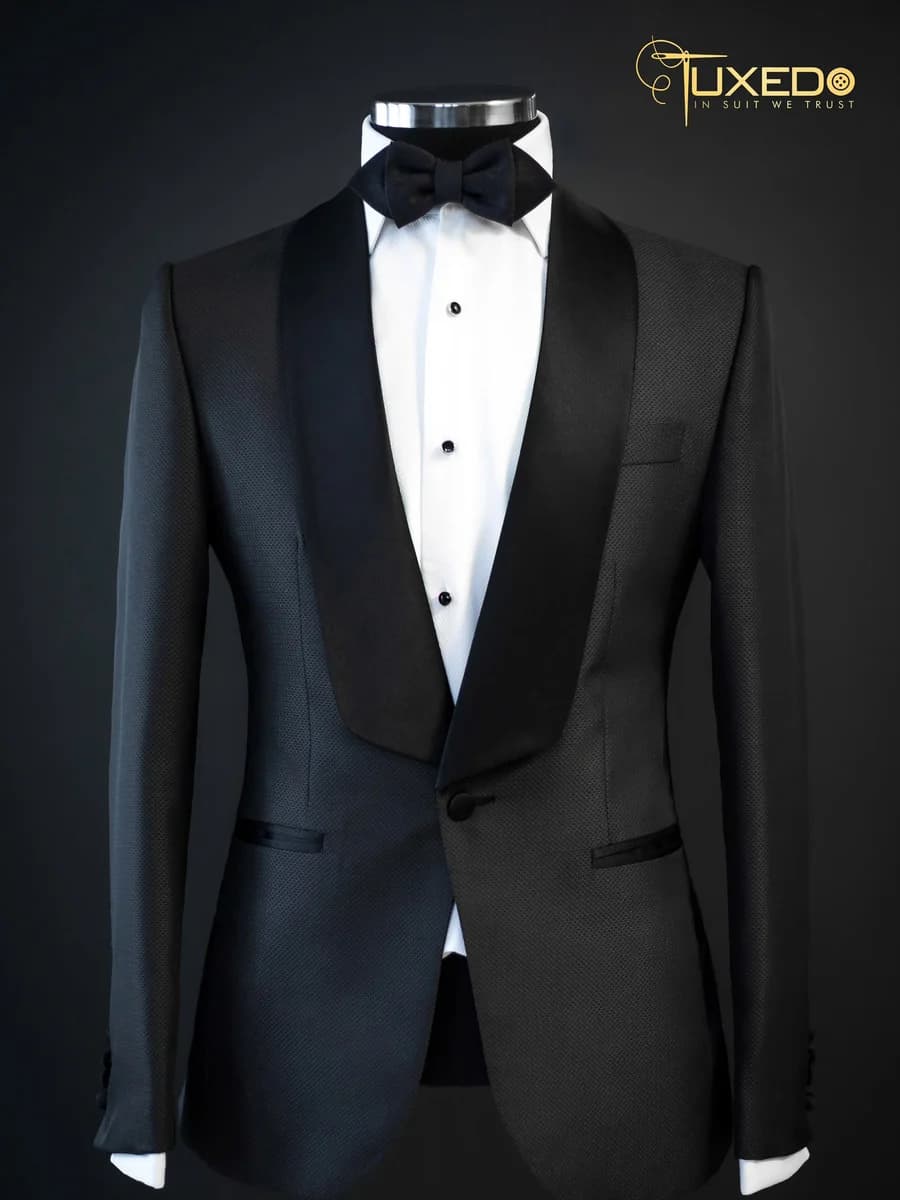
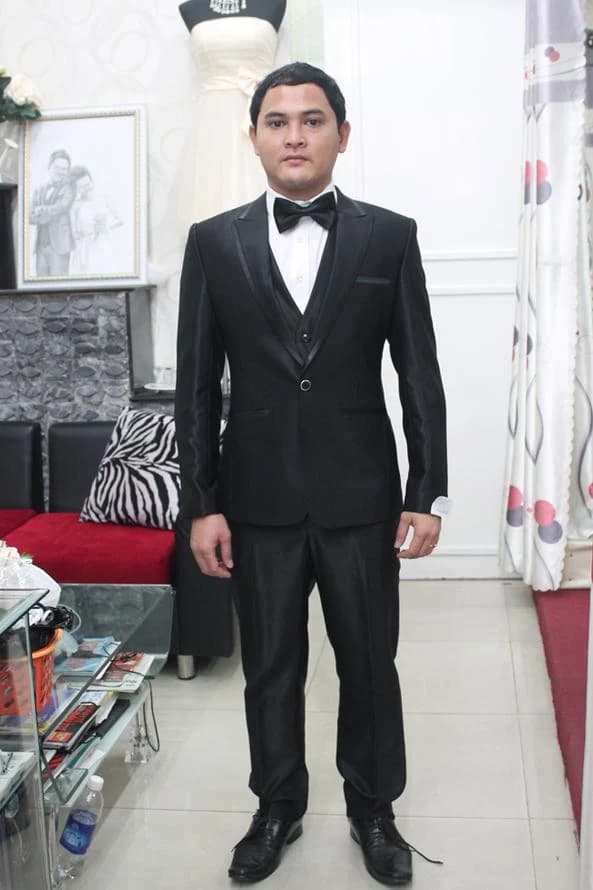
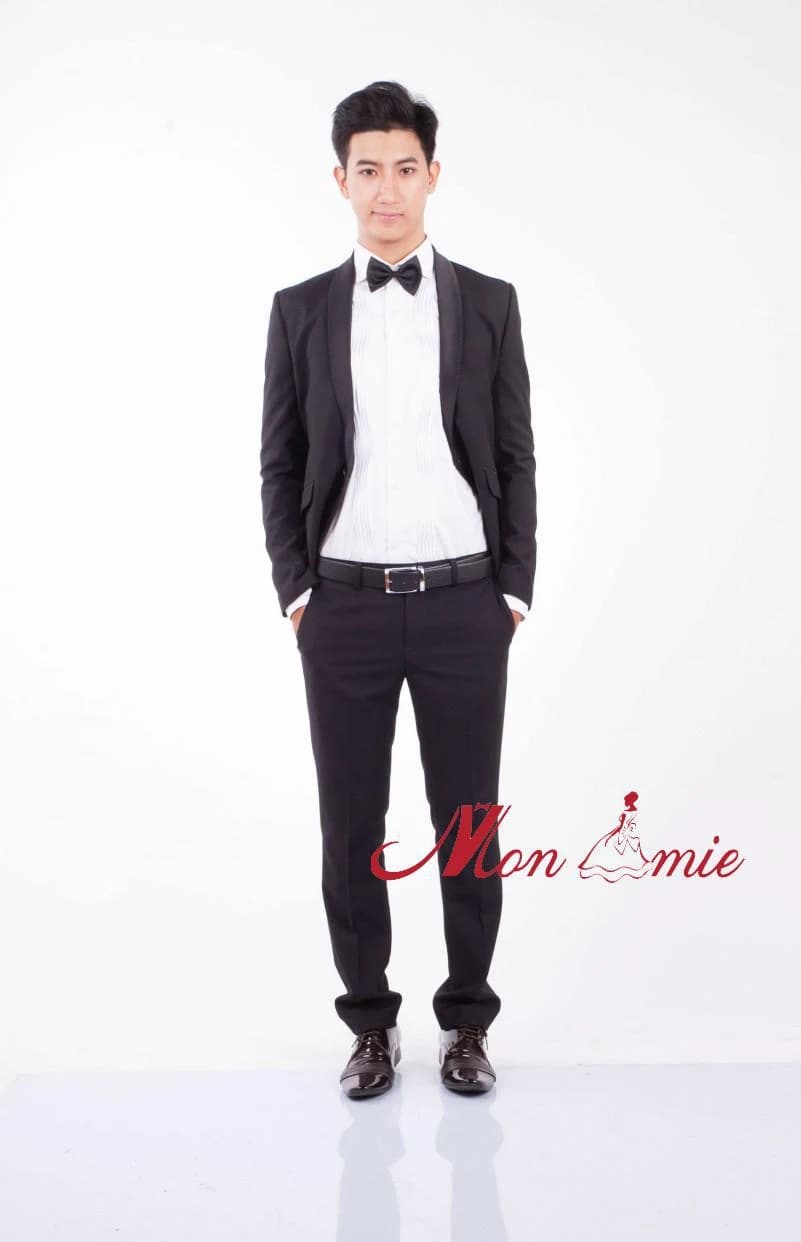
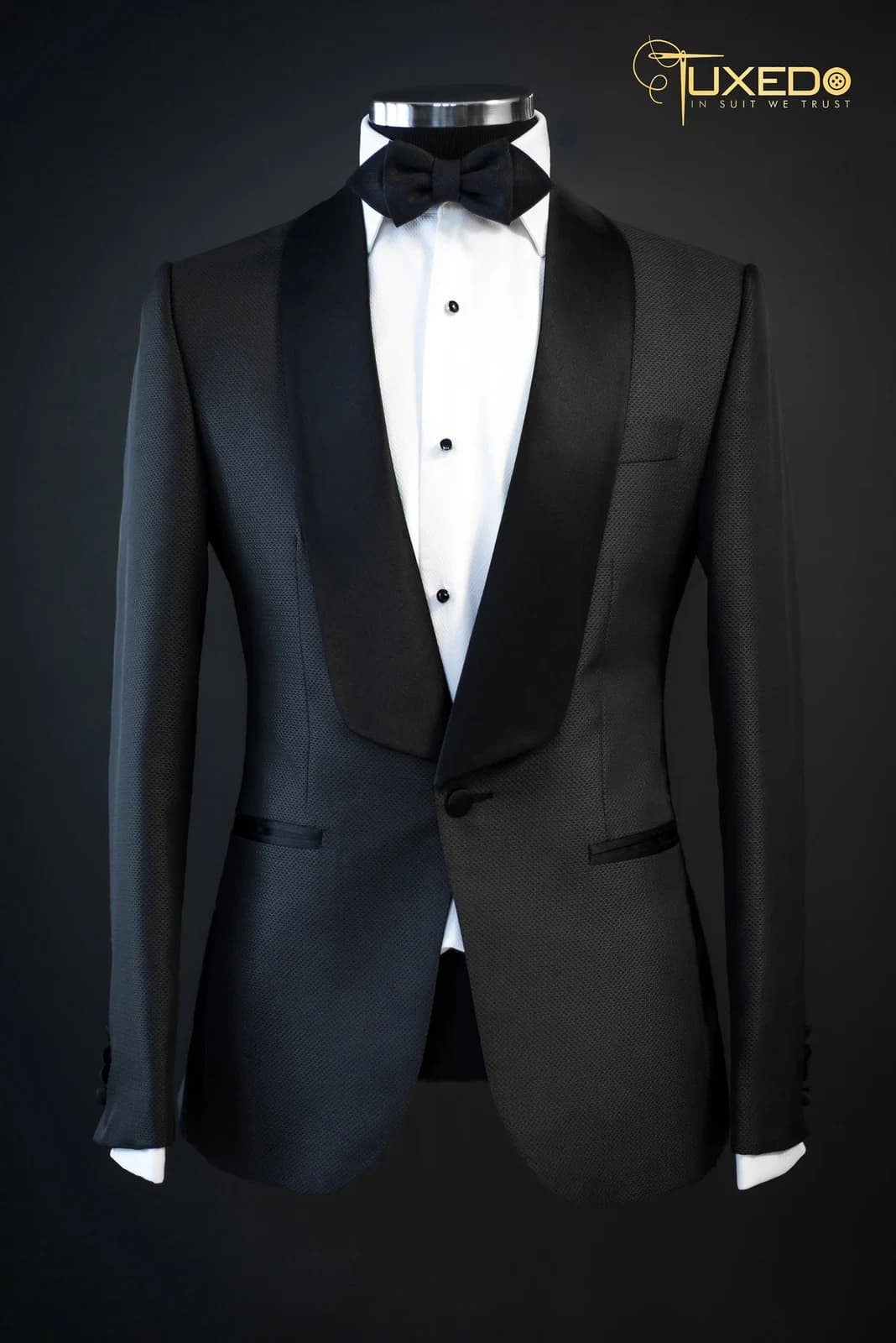
- A black tuxedo with shawl or peak lapels and a hand-tied bow tie, if the reception is in a hotel ballroom. TUX-001 is a black shawl-collar tuxedo with a woven texture.
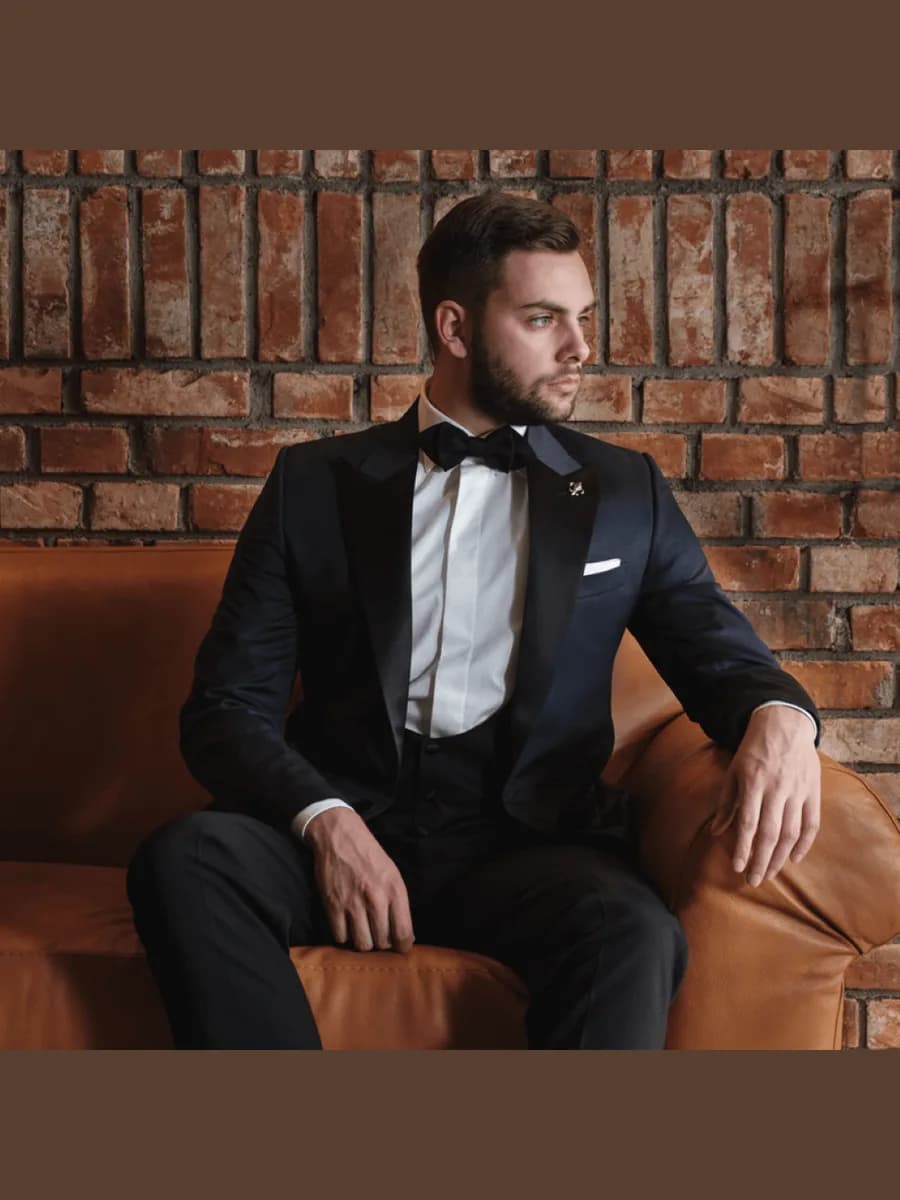
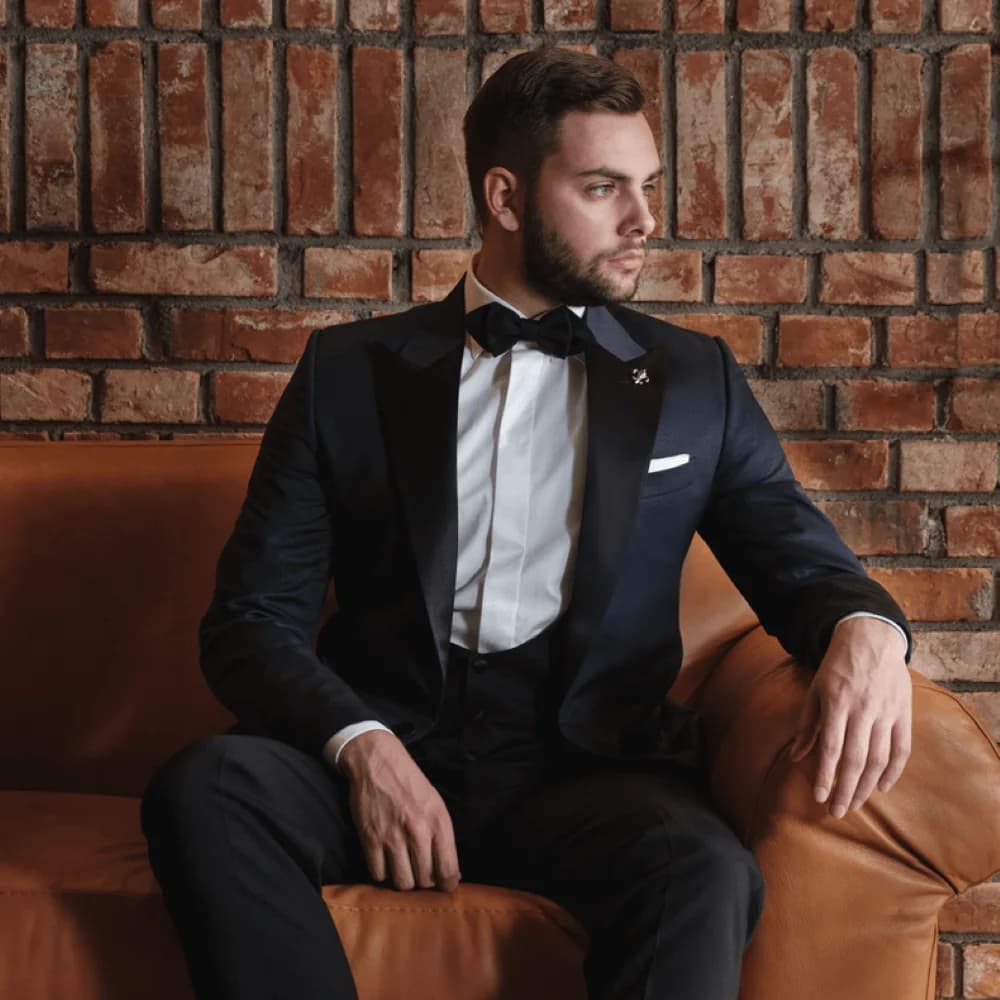
- Midnight blue, if the dinner is in a venue with warm golden lighting. TUX-105 is midnight navy with a black waistcoat and a white pocket square.
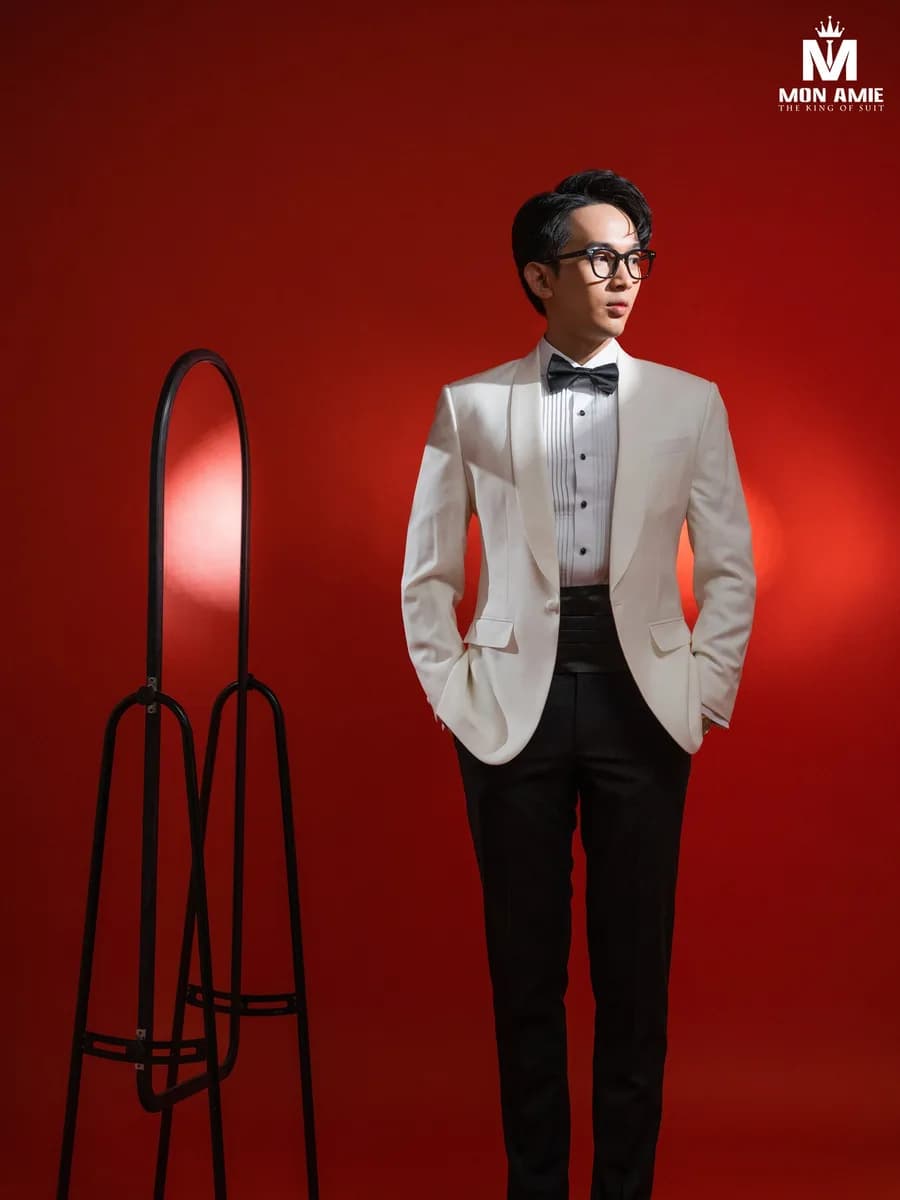
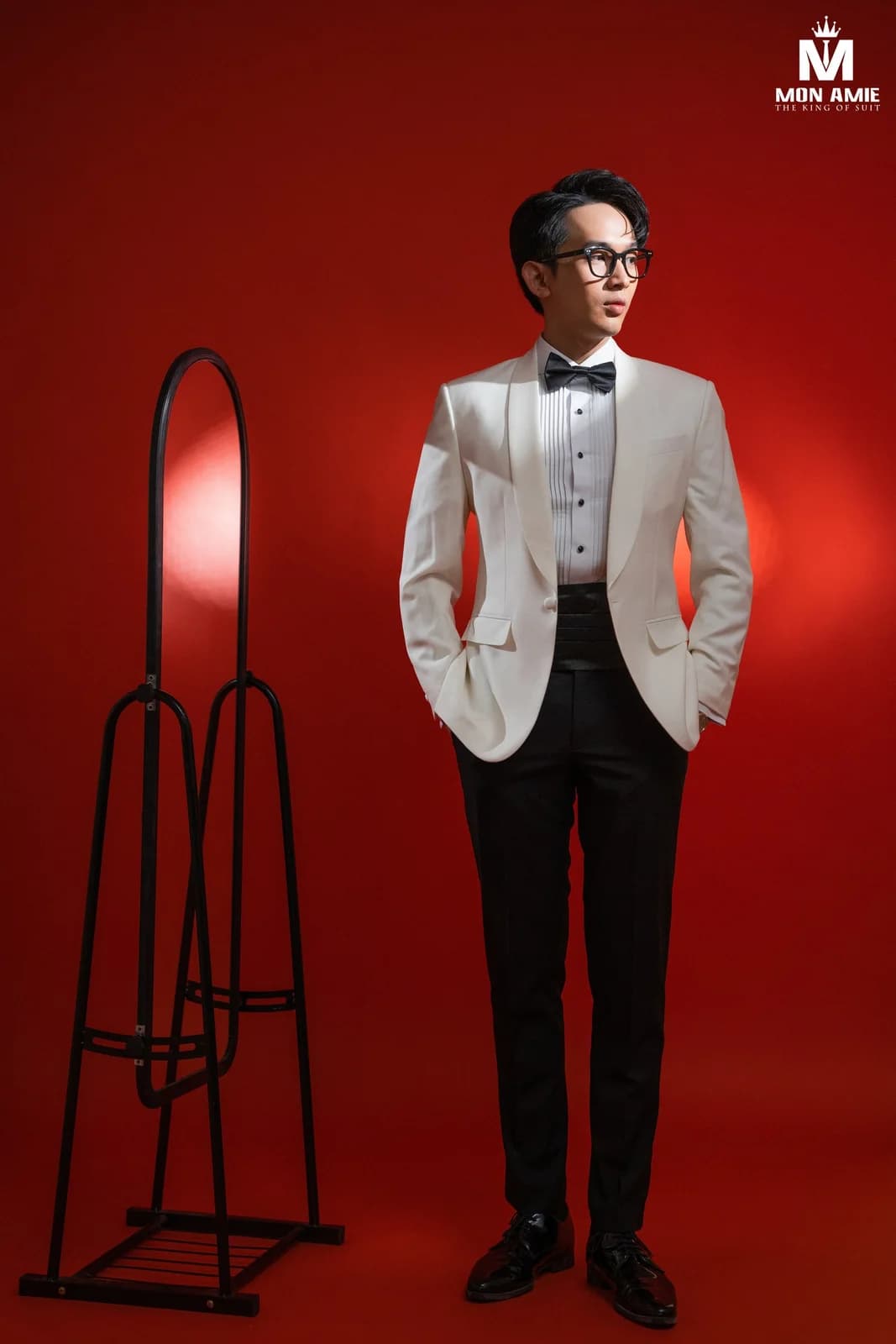
- An ivory dinner jacket, for an outdoor reception or hot weather. TUX-106 is an ivory shawl-collar tuxedo with a cummerbund and black trousers.
If you come from a country with a strict black tie tradition, tell the consultant so they can help you get the combination of bow tie, shirt and shoes right. The article on the groom's tuxedo covers colour and lapel choices.
Explaining customs to both families
The two families may not yet understand each other fully. A few things worth doing before the wedding:
- With the bride's family: explain that you will wear the ao dai at the rite, and ask them to walk you through the gestures such as bowing and offering tea. It builds closeness.
- With your own family: explain that this is a ceremony, not a costume. Show them photographs of the men's ao dai and say plainly that it is formal dress, the equivalent of a tuxedo in their culture.
- With both sides: agree the timetable for the day: the time of the rite, of the change of clothes, of the reception and of the photographs. Relatives on each side often worry about timing differently.
- For international guests: prepare a short English page about the rituals. Foreign guests often appreciate being able to follow.
If you are unsure where to begin, ask a relative on the bride's side who has organised an ancestral rite. They will tell you what the family cares about.
Sizing and your time in Vietnam
This is the practical point most often overlooked. A foreign groom often spends only a short stay in Vietnam before the wedding, while a made-to-measure suit needs a measuring session, a fitting and adjustments. A few approaches:
- Measure early. Contact a consultant before your flight to ask how to prepare, then come in for measuring as soon as you are in Vietnam and return for the fitting.
- Mention an unusual size. Western men often have broad shoulders, long arms and legs, and a large chest compared with the base measurements used for local clients. Made-to-measure solves this, but say so from the start.
- Reserve a last fitting. Weight and shape can change after a long flight, new food and the stress of preparation. Keep the last fitting close to the wedding.
- Choose a convenient showroom. Mon Amie has a showroom at the Caravelle Hotel, 19–23 Cong truong Lam Son, handy for visitors staying in the centre. Message the hotline or Zalo on 0888.111.118 beforehand.
- Speak English. The consultants can talk with you in English so you can explain your wishes on cut and colour.
Making time depends on the style and the fitting schedule, and your consultant will confirm it at the measurement, so get in touch as soon as the wedding date is fixed.
Book a fitting at Mon Amie
If you are planning a Vietnamese – international wedding, tell the consultant the date you arrive in Vietnam, the date of the rite and the date of the reception so the measuring and fitting can be scheduled sensibly. Browse more on the wedding tuxedo page or book a visit.
Published 26/11/2026 · 10:00 · Editor: Mon Amie